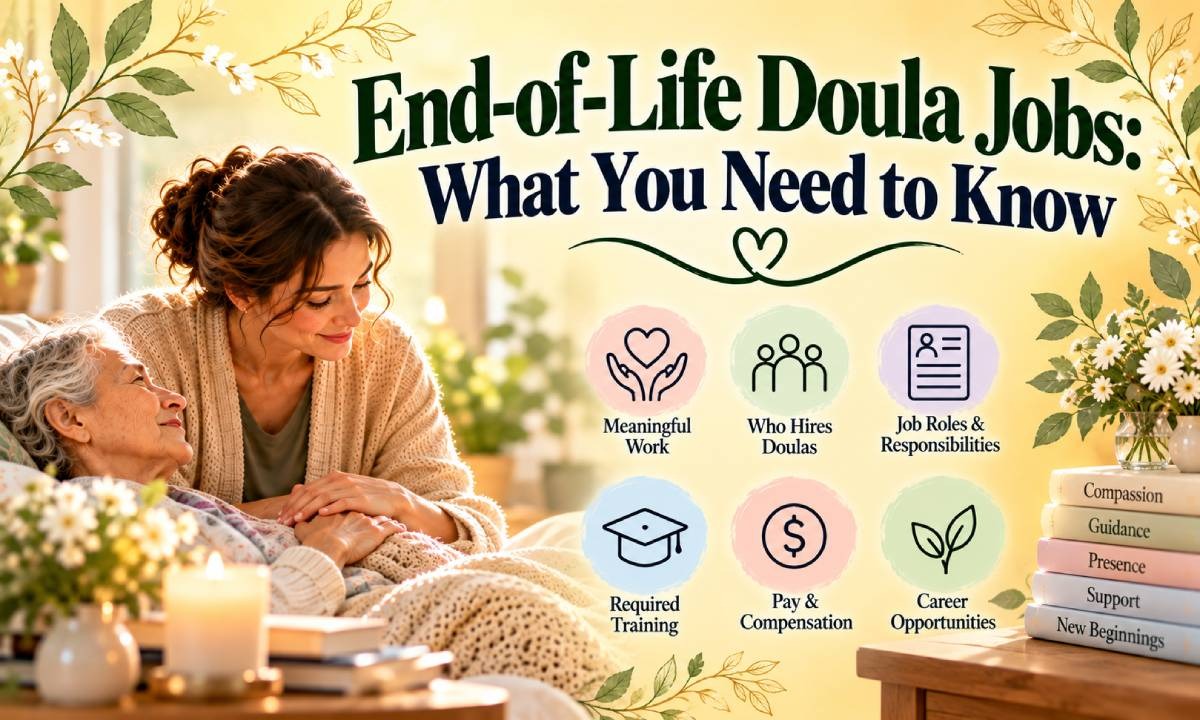
Death care is changing, and new career paths are opening up. End-of-life doula work is one of the fastest-growing roles in this space. If you’re considering it, you probably have a lot of questions.
End-of-Life Doula Jobs :This isn’t a typical medical job, and it doesn’t follow a typical career path. Pay, structure, and training all look different from most professions. Understanding these differences early makes the decision easier.
Below, you’ll find everything you need to know about this career. From pay to training to where to find actual job openings. By the end, you’ll know if this path is right for you.
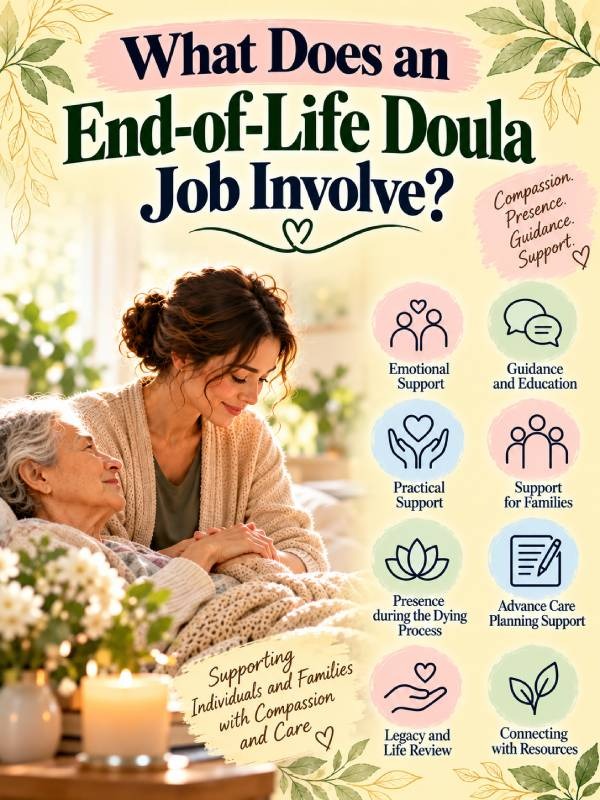
What Does an End-of-Life Doula Job Involve?
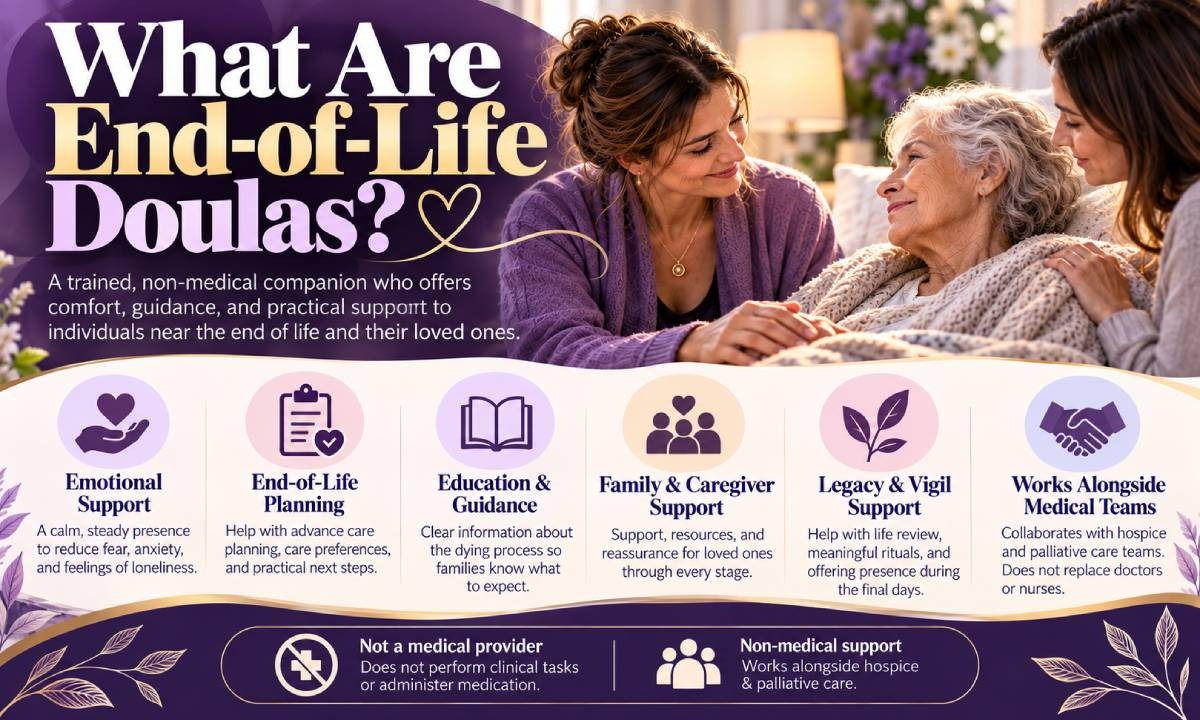
This job centers on presence, not procedures. Day-to-day work shifts depending on where a client is in their illness. No two days look exactly the same in this field. Here’s a general sense of what the work actually involves.
- Early work often means planning conversations. This includes helping clients document their final wishes.
- Mid-stage work involves regular check-ins. Visits increase as symptoms or needs change.
- Late-stage work centers on vigil support. This means sitting bedside during active dying.
- Legacy projects are a common task. Doulas often help record letters, stories, or memories.
- Family support is part of the job too. Much of the work involves easing stress for caregivers.
- Brief aftercare sometimes follows a death. Many doulas stay to support the family in the first hours after.
Types of End-of-Life Doula Work: Independent vs. Hospice-Affiliated
Doulas generally work in one of two main structures. Each comes with different pros, pay, and flexibility. Knowing the difference helps you choose the right path for you. Here’s how independent and hospice-affiliated work compares.
- Independent doulas run their own business. They set their own rates, hours, and client load.
- Independent work offers more flexibility. You choose which clients and cases to take on.
- Hospice-affiliated doulas work within an organization. This often means steadier scheduling and referrals.
- Hospice roles may offer more stability. A regular paycheck can replace inconsistent independent income.
- Independent doulas handle their own marketing. Building a client base takes real ongoing effort.
- Hospice-affiliated roles may have less autonomy. Policies and procedures shape how the work is done.
How Much Do End-of-Life Doula Jobs Pay?
Pay in this field varies more than in most traditional jobs. Much depends on whether you work independently or for an organization. Location and experience also play a big role. Here’s a general breakdown of what to expect.
- Hourly independent rates run $50 to $125. Experience and region both affect where you land.
- Package pricing can range from $500 to $3,500. This usually covers an entire client relationship.
- Hospice-affiliated pay is often salaried or hourly. This tends to be more predictable than independent income.
- Part-time income typically runs $10,000 to $30,000 yearly. This fits many doulas’ supplemental caseloads.
- Full-time income can reach $50,000 to $100,000. This depends heavily on reputation and caseload size.
- No official government data tracks this job yet. All figures come from industry surveys, not labor statistics.

Education and Certification Needed for End-of-Life Doula Jobs
No official license is required to work in this field. Still, most employers and clients expect real training. Certification signals seriousness and builds trust quickly. Here’s what that education path typically looks like.
- Training programs run from a weekend to eight weeks. Length depends on depth and provider.
- INELDA and NEDA are the most recognized providers. Both offer structured, well-known certification paths.
- Coursework covers physiology, ethics, and communication. This prepares doulas for the realities of bedside work.
- Some programs require documented client hours. This ensures real, hands-on experience before certification.
- University-affiliated programs also exist. Vermont’s certificate program is one well-known example.
- Continuing education often follows initial training. Many doulas keep building skills throughout their careers.
Where to Find End-of-Life Doula Job Openings
Job openings in this field don’t always look like typical listings. Many opportunities come through relationships, not job boards. Still, a few solid starting points exist. Here’s where to look first.
- Check hospice and palliative care organizations directly. Some now hire or partner with doulas formally.
- Search INELDA and NEDA’s job boards. Both occasionally list openings and referral opportunities.
- Network at death-positive community events. Death cafés and similar gatherings often surface leads.
- Reach out to local funeral homes. Some maintain referral relationships worth exploring.
- Join online doula communities. Many share job leads and collaboration opportunities.
- Consider building independent client relationships. Many doulas create their own opportunities rather than waiting for listings.
Skills Needed to Succeed as an End-of-Life Doula
This work asks for more than training alone. Certain personal qualities matter just as much as coursework. Strong skills here directly shape how well you can support families. Here are the ones that matter most.
- Active listening is essential. Families need to feel truly heard, not just spoken to.
- Emotional steadiness matters under pressure. Calm presence helps ground chaotic, emotional moments.
- Clear communication bridges gaps. Explaining things simply reduces confusion and fear.
- Patience supports a slower, human pace. This work can’t be rushed without losing its value.
- Cultural sensitivity shapes respectful care. Every family’s beliefs and traditions deserve real respect.
- Boundaries protect both the doula and the family. Clear limits keep the role sustainable long-term.
Is End-of-Life Doula Work Full-Time or Freelance?
This career doesn’t fit neatly into one employment category. Some doulas work full-time, others treat it as freelance work. The right structure depends on income needs and lifestyle. Here’s how the options generally break down.
- Many doulas start out part-time. This allows time to build experience and a client base.
- Full-time work usually comes later. It often follows a steady reputation and referral network.
- Freelance structure offers more flexibility. You choose your own hours and caseload.
- Hospice employment offers more structure. Set schedules replace the unpredictability of independent work.
- Many doulas blend both models. Some combine hospice shifts with private clients.
- Workload often depends on local demand. Busier regions may support more full-time opportunities.
📖 Read More
Learn more about this topic by visiting End-of-Life Doula Jobs ↗ .
How to Start a Career as an End-of-Life Doula
Starting this career usually follows a fairly predictable path. Each step builds the foundation for the next. There’s no single “right” way in, but most routes overlap. Here’s a general roadmap to get started.
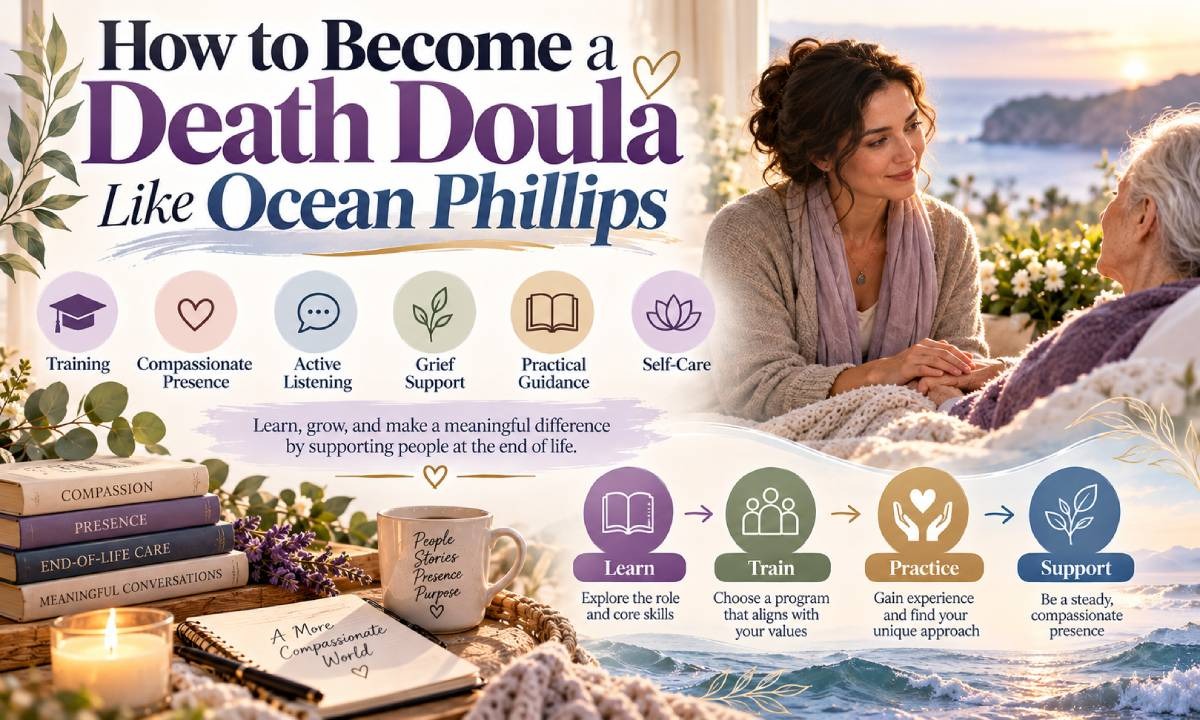
- Start with a recognized training program. This builds the core knowledge the work requires.
- Volunteer or shadow early on. Real exposure helps confirm this path is right for you.
- Build documented client experience. Many certifications require a minimum number of hours.
- Network with hospices and funeral homes. These relationships often become your first referral sources.
- Decide on independent or affiliated work. This shapes how you structure your early career.
- Keep learning as you go. Ongoing education strengthens your skills and credibility over time.

Frequently Asked Questions
Do you need a certification to work as an end-of-life doula?
No certification is legally required, though most clients and employers expect training from a recognized program.
Can you work as an end-of-life doula part-time?
Yes, many doulas start part-time and build their caseload gradually over time.
Do hospices hire end-of-life doulas directly?
Some do. A growing number of hospices now employ or formally partner with trained doulas.
How long does it take to become a certified end-of-life doula?
Training can take anywhere from a weekend to several months, depending on the program and required client hours.
What’s the career outlook for end-of-life doula jobs?
Jobs Demand is growing as more families seek non-medical support, though the field remains young and largely informal.
Can end-of-life doula work be done remotely or virtually?
Some planning and legacy work can happen virtually, but bedside vigil support typically requires being in person.
What’s the difference between volunteering and working as a paid end-of-life doula?
Volunteering is unpaid and often informal, while paid work usually involves set rates, contracts, and a defined scope of services.
Conclusion: Is an End-of-Life Doula Career Right for You?
This career isn’t for everyone, and that’s perfectly okay. It asks for patience, emotional steadiness, and real comfort with hard moments. If that sounds like you, it may be worth exploring further.
The rewards go beyond a paycheck for most doulas. Helping someone feel less alone at the end of life is meaningful work. If that pull feels real to you, this career might be exactly right.