Death is a part of life, yet many people never talk about it. When the time comes, families often feel scared and unsure. A death dula helps them feel calmer and less alone.
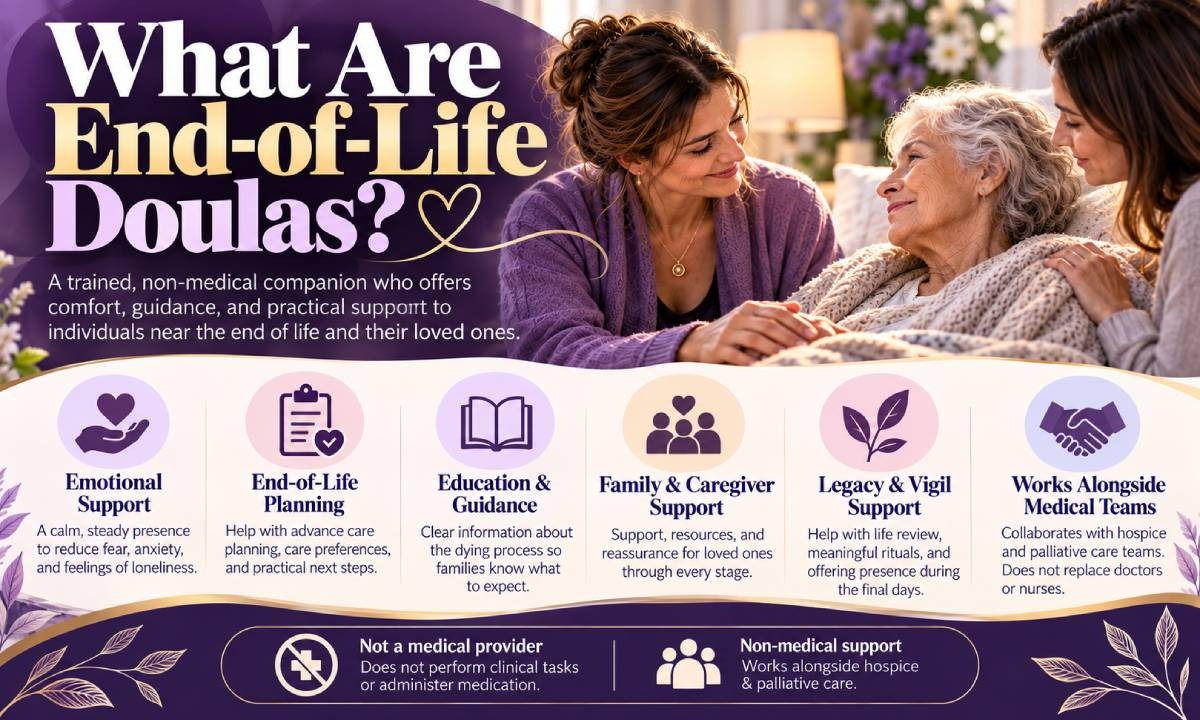
A death doula is a non-medical guide for the dying and their loved ones. They offer comfort, planning help, and a steady presence. They work beside doctors and hospice teams, never in place of them.
This guide covers the role, its history, training, jobs, and more. You will also find simple tips for finding a doula near you. Read it step by step or jump to the part you need.
Historical role of death doulas
For most of history, families and communities cared for the dying at home. The modern doula role brings that old habit back in a new form.
- In many cultures, women and elders sat with the dying. They guided families through the last days.
- Dying mostly happened at home in the past. Care was a shared community duty.
- Over time, death moved into hospitals. Families lost some of their role in the process.
- The hospice movement began to change this. It put comfort and dignity back at the center.
- The modern doula movement grew from hospice and “death positive” ideas. It gained strength in recent decades.
- Today, doulas fill the gap between medical and personal care. They bring back time, touch, and presence.
Legal controversy
Death doulas work in a field with few legal rules. This has led to questions about scope, safety, and trust.
- There is no federal license for death doulas in the United States. Rules differ from place to place.
- Some people worry about doulas stepping into medical roles. Good doulas stay strictly non-medical.
- Home funeral and body care laws vary by state and country. A doula should know the local rules.
- Doulas must not give legal or financial advice. They refer families to qualified professionals.
- Debates exist around end-of-life choices such as medical aid in dying. Doulas should follow the law and the family’s wishes without pushing views.
- A clear code of ethics and a written agreement protect everyone. Families should ask to see them.
Use of the word midwife
Some people use the word “midwife” for this work. Others prefer “doula” because it sounds less medical.
- “Death midwife” compares dying to birth. Both are big life passages that benefit from support.
- “Soul midwife” is another common name. It often points to a more spiritual style of care.
- A midwife in birth care is a medical professional. This is why the word can confuse people.
- Many now choose “doula” to avoid that mix-up. It makes the non-medical role clearer.
- Other names include end-of-life guide and death companion. All describe similar support.
- The title matters less than the training and ethics. Always ask what the person actually does.
Responsibilities
A death doula’s duties center on comfort, planning, and presence. They always stay within a non-medical scope.
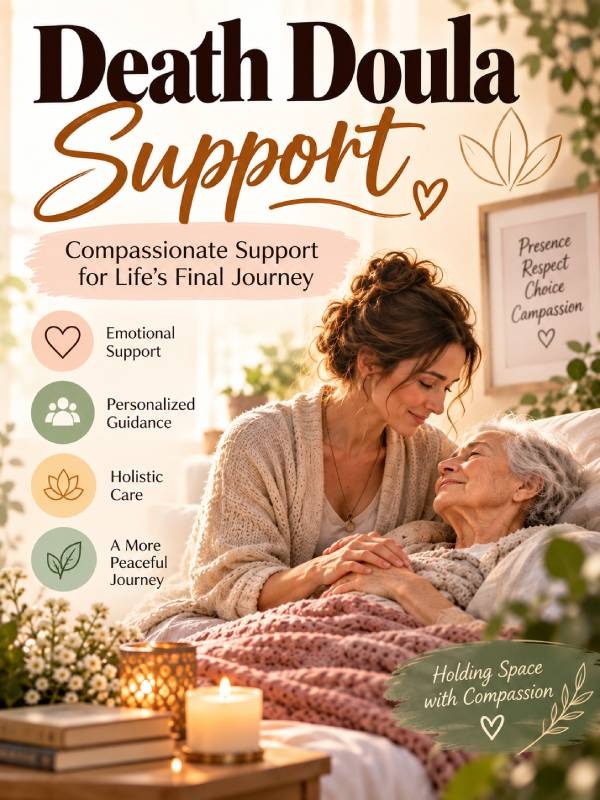
- They sit with the dying person and the family. Their calm presence helps everyone feel safe.
- They guide planning talks about wishes and comfort. These talks work best before a crisis.
- They help plan the vigil and the room atmosphere. Music, light, and readings can all play a part.
- They support legacy projects like letters and recordings. These become lasting gifts for loved ones.
- They give caregivers short breaks to rest. This helps prevent burnout.
- They offer support after death. This can include rituals and early grief help.
Information
Many families do not know what dying looks like. A doula shares clear, simple information so there are fewer surprises.
- They explain common changes near the end of life. Plain words lower fear.
- They describe what to expect in the final days. Families can prepare mentally and emotionally.
- They share what advance care planning means. They point to the right professionals for forms.
- They explain how hospice and palliative care work. This helps families use those services well.
- They outline options for memorials, funerals, and home care. Families can choose what fits them.
- They send medical questions to the care team. Doulas never replace clinical advice.
Support
Support is the heart of doula work. It covers feelings, daily needs, and relationships.
- Emotional support means listening without judgment. People can share fear, anger, and sadness.
- Practical support covers rest, planning, and simple tasks. Small help can ease a heavy load.
- Spiritual support honors any belief, or none. The person always leads.
- Social support helps family members talk to each other. Old tensions can soften.
- Support extends to children in the family. A doula can suggest age-appropriate ways to include them.
- Grief support continues after death. Families are guided toward counselors or groups when needed.
Motivations
People become death doulas for many reasons. Most share a wish to make a hard time kinder.
- Some have lost a loved one and want to help others. Their own experience guides them.
- Others come from nursing, social work, or chaplaincy. They want more time for personal care.
- Some feel called to this work as a spiritual path. They see it as service.
- Many want to change how society talks about death. They believe open talk heals.
- Some are drawn by the idea of a “good death.” They want every person to feel seen at the end.
- Others simply want meaningful work. Helping people at a key moment gives deep purpose.
Education and certification
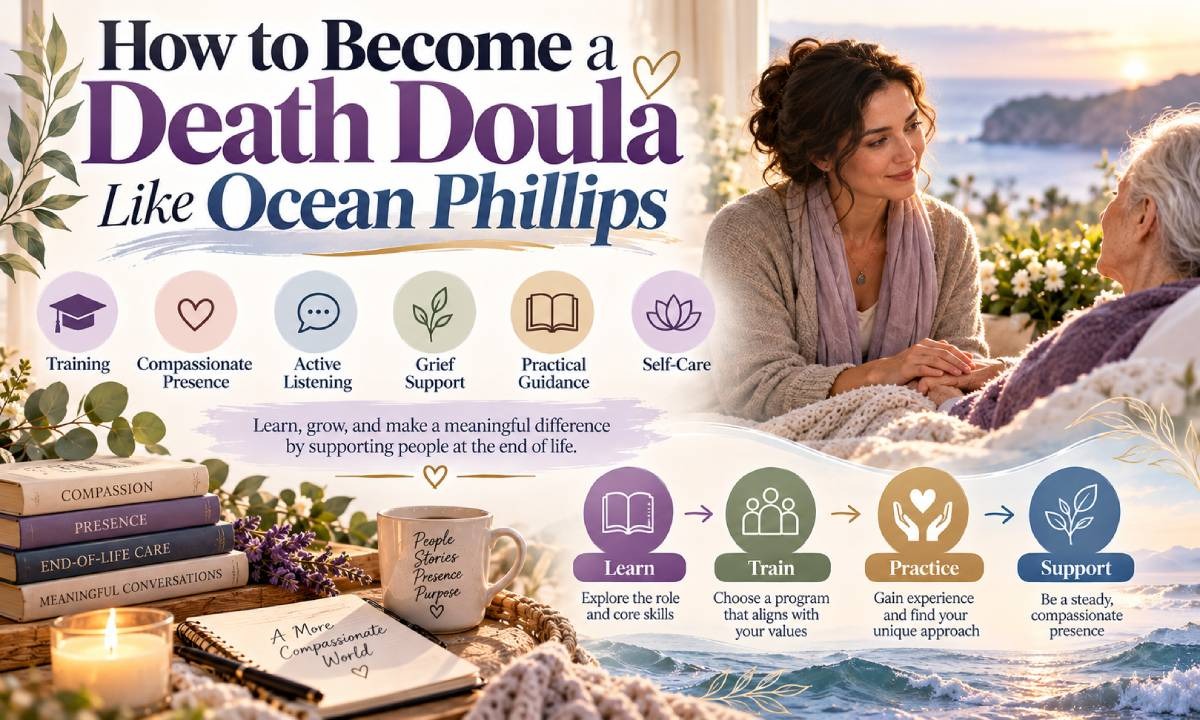
There is no single required path to become a death doula. Training options vary widely.
- Training ranges from short workshops to longer courses. Choose one that covers ethics and communication.
- Organizations such as INELDA and NEDA are part of the field. NEDA offers standards and a credentialing path.
- Good programs teach the dying process and boundaries. They also cover self-care for the doula.
- Hands-on experience matters. Many doulas volunteer with hospice or complete a practicum.
- Certification is usually optional. It can still build trust with families and employers.
- A background in healthcare or counseling helps but is not required. Compassion and training matter most.
“Doula” etymology
The word “doula” has a long history. Its roots help explain the role’s idea of service.
- “Doula” comes from a Greek word, often linked to a woman who serves. It points to care and support.
- The word became popular in modern birth support. Birth doulas helped bring it into daily use.
- It was later adopted for end-of-life care. The idea of guiding someone through a passage stayed the same.
- The Greek root can feel complex. Today, “doula” simply means a trained, non-medical helper.
- The word is short and easy to say. This has helped it spread worldwide.
- Many people like it because it feels gentle. It avoids sounding clinical.
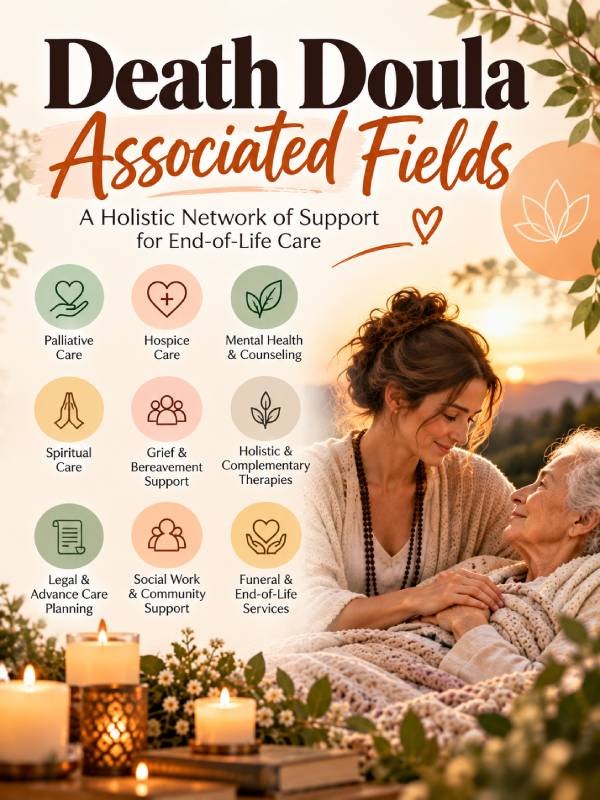
Associated fields
Death doulas work close to several other fields. Knowing them helps families see who does what.
- Hospice and palliative care handle medical comfort. Doulas add time and personal support.
- Chaplains offer formal spiritual care. Doulas offer broader, belief-friendly presence.
- Social workers help with resources and family needs. Doulas can work beside them.
- Grief counselors and therapists support healing after loss. Doulas refer families when needed.
- Funeral directors guide burial and cremation. Doulas can help families plan with them.
- Nurses and doctors lead clinical care. Doulas respect their decisions and limits.
Hospice care
Hospice care and doula care often go hand in hand. They serve different needs but share the same goal of comfort.
- Hospice gives medical care near the end of life. This includes medicine, equipment, and nursing visits.
- Visits are often short because teams are busy. A doula can stay longer.
- Doulas do not replace hospice. Most families benefit from having both.
- Some hospices now include doulas or volunteers with similar training. This trend is growing.
- A doula can help families make the most of hospice services. They help ask better questions.
- Together, they offer care for the body and the whole person. This is the strongest model.
Alternative death care movement
Many people want more personal and natural ways to approach death. The doula role fits well within this movement.
- Home funerals let families care for their loved one at home. Local laws differ, so check them first.
- Green burial uses simple, eco-friendly methods. It appeals to people who want less impact on nature.
- Death cafes invite open talk about dying over tea or coffee. They make the topic less scary.
- The “death positive” idea encourages honest conversation. Planning ahead becomes normal, not taboo.
- Families want more choice and control. Doulas help them shape meaningful goodbyes.
- Doulas often share information about these options. They never push one choice over another.
Death Doula books
Books are a gentle way to learn about death and dying. They help both families and future doulas.
- On Death and Dying by Elisabeth Kübler-Ross is a classic. It introduced the well-known stages of grief.
- Being Mortal by Atul Gawande looks at aging and end-of-life care. It is clear and thoughtful.
- Final Gifts by Maggie Callanan and Patricia Kelley shares hospice stories. It helps readers understand the dying process.
- Smoke Gets in Your Eyes by Caitlin Doughty is honest and often funny. It explores modern death care.
- Training programs often give reading lists. Ask for them before you enroll.
- Choose books that match your goals. Some focus on care, others on grief or ethics.
Death Doula salary
Pay for death doulas varies a lot. Many things shape what a doula earns.
- Many doulas are self-employed. They set their own fees.
- Some charge by the hour, and others offer packages. Packages may cover planning, vigil, and after-care.
- Some doulas volunteer, especially with hospice or community groups. Others work part-time.
- A few are employed by hospices, hospitals, or nonprofits. Pay in those roles depends on the employer.
- Location, experience, and training affect pricing. Check local rates for the best idea.
- Insurance rarely covers doula care at present. Families usually pay out of pocket, so ask about costs early.
Death Doula training
Good training builds skill and confidence. It also protects families.
- Look for programs that teach communication and ethics. These are the core of the work.
- Learn about the dying process and common changes. This helps you stay calm and clear.
- Study boundaries and scope of practice. Knowing your limits keeps families safe.
- Choose courses with mentorship or practical experience. Real-world learning matters.
- Many programs run online, and some meet in person. Pick the style that suits you.
- Ask about cost, time, and certification before enrolling. Compare a few options first.
Death doula near me
Finding a doula close to you is easier than it sounds. Start with trusted sources and ask good questions.
- Check NEDA’s directory of doulas. It is a good starting point.
- Ask your hospice or hospital team for local names. Many know doulas in the area.
- Search online with your city and “end-of-life doula.” Read each profile with care.
- Ask friends, faith groups, or community centers. Word of mouth can help.
- Ask about training, experience, references, and fees. A good doula answers openly.
- Meet or call first to see if it feels right. Trust is just as important as credentials.
📖 Read More
Learn more about this topic by visiting death dula ↗ .
Death doula reddit
Reddit has active communities where people talk about death doula work. They can be useful for real stories and questions.
- People share their training experiences. This can help you compare programs.
- Doulas talk about daily challenges and rewards. You get a human view of the work.
- Families ask questions about what to expect. Replies often come from people with experience.
- Members discuss finding clients and setting fees. These tips can help new doulas.
- Posts are personal opinions, not professional advice. Always check facts with trusted sources.
- Be careful with private details. Never share names or sensitive information online.
Death Doula jobs
Jobs for death doulas are growing but still vary. Many doulas build their own path.
- Many work in private practice. They find clients through word of mouth and online profiles.
- Hospices sometimes hire or train doulas and volunteers. This can be a steady option.
- Hospitals and care homes are starting to explore doula support. This is still developing.
- Nonprofits and community groups may offer paid or volunteer roles. They often focus on underserved families.
- Some doulas combine this work with nursing, counseling, or chaplaincy. This widens their options.
- Teaching, writing, and running workshops are other paths. Experienced doulas often share what they know.
Death Doula training near me
Local training lets you learn with real people and real mentors. It also helps you build a nearby network.
- Search for end-of-life doula courses in your city or state. Add your location to the search.
- Ask local hospices about volunteer training. Many offer hands-on learning.
- Check community colleges, libraries, and wellness centers. Some host workshops or short courses.
- Look for local death cafes and doula meetups. They are a good way to meet experienced doulas.
- Compare in-person, online, and mixed programs. Pick what fits your time and budget.
- Ask about ethics, practice hours, and certification. Choose a program you trust.
Death doula spiritual
Spiritual care is a big part of many doulas’ work. It is always guided by the person’s own beliefs.
- Spiritual support does not mean religious teaching. It means honoring what gives the person meaning.
- Doulas can support prayer, ritual, or quiet reflection. The person decides what feels right.
- They respect all faiths and also those with no faith. No one is asked to follow a set path.
- Meaning-making helps many people find peace. Life review is one gentle tool.
- Doulas can work alongside chaplains and faith leaders. They help bring them in when asked.
- Some doulas describe their own work as a spiritual calling. They still keep the family’s beliefs first.
Conclusion
Death doulas bring comfort, planning, and presence to a hard time. They care for the whole person, not just the illness. Their work fits beside hospice and medical care.
If you are planning ahead or helping a loved one, a doula can help. Ask about training, ethics, and fees, and choose someone you trust. You do not have to face this alone.