Facing the end of life is hard for any family. In Connecticut, many people look for calm and caring help close to home. A death doula can offer that support.
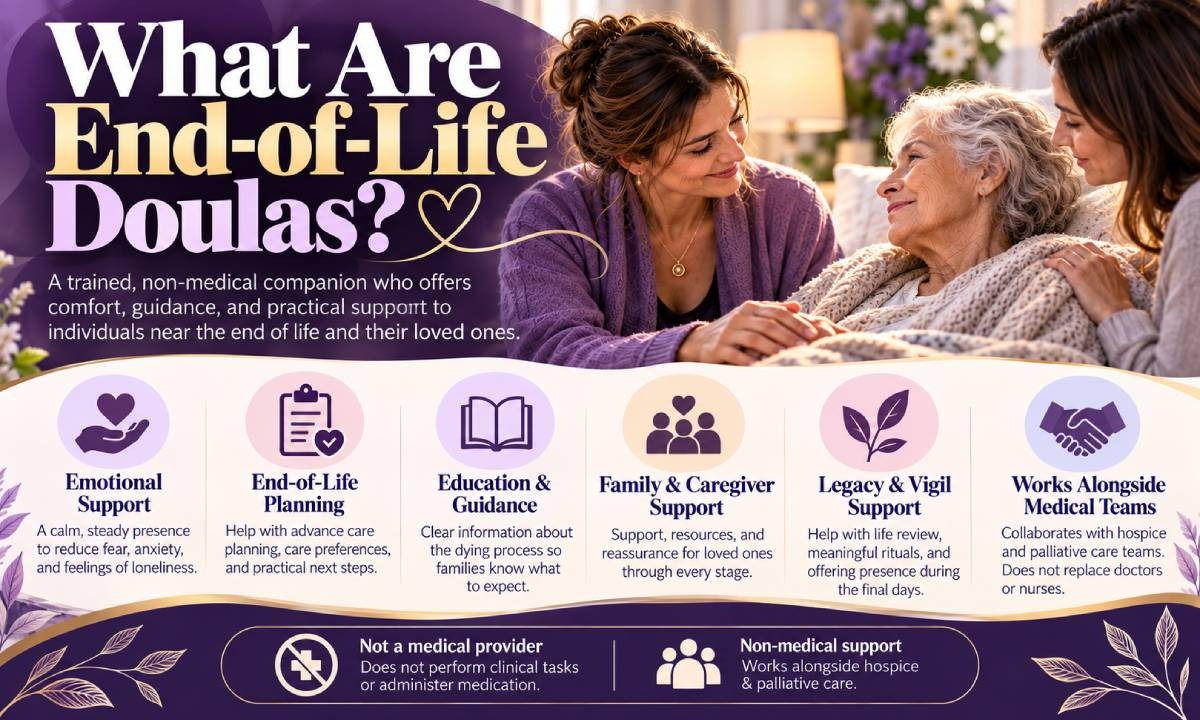
A death doula is a non-medical guide for the dying and their loved ones. They give comfort, planning help, and a steady presence. They work beside doctors and hospice teams, never in place of them.
This guide is for families and future doulas (death doula near me) in New Haven and Fairfield areas. You will learn about pay, training, jobs, and how to find help. Read it step by step or jump to the part you need.
Death Doula salary
Pay for death doulas varies a lot from place to place. Many things shape what a doula earns. This section explains the main ones in simple words.
- Many doulas are self-employed. They set their own fees.
- Some charge by the hour, and others offer packages. Packages may cover planning, vigil, and after-care.
- Some doulas volunteer with hospice or community groups. Others work part-time.
- A few are paid by hospices, hospitals, or nonprofits. Pay in those roles depends on the employer.
- Location, experience, and training affect pricing. Check local rates for the best idea.
- Insurance rarely covers doula care at present. Families usually pay out of pocket, so ask about costs early.
Death Doula training
Good training builds skill, trust, and confidence. It also keeps families safe during a hard time. This section shows what a strong program should teach.
- Look for programs that teach communication and ethics. These are the core of the work.
- Learn about the dying process and common changes. This helps you stay calm and clear.
- Study boundaries and scope of practice. Knowing your limits protects everyone.
- Choose courses with mentorship or hands-on practice. Real-world learning matters.
- Many programs run online, and some meet in person. Pick the style that suits you.
- Ask about cost, time, and certification before enrolling. Compare a few options first.
Death doula Atlanta
Atlanta has a growing community of people who care about end-of-life support. Families there can find doulas with a few simple steps. This section shows how to start your search.
- Search with “end-of-life doula” and “Atlanta” together. Read each profile with care.
- Ask local hospice and hospital teams for names. Many know doulas in the area.
- Check directories such as NEDA’s. They list doulas who follow professional standards.
- Look for local death cafes and community talks. They are good places to meet doulas.
- Ask about training, experience, references, and fees. A good doula answers openly.
- Meet or call first to see if it feels right. Comfort and trust matter as much as credentials.

Death Doula jobs near me
Jobs for death doulas are growing, but the path is not always fixed. Many doulas build their own way into this work. This section looks at the most common options.
- Many work in private practice. They find clients through word of mouth and online profiles.
- Hospices sometimes hire or train doulas and volunteers. This can be a steady option.
- Hospitals and care homes are starting to explore doula support. This is still developing.
- Nonprofits and community groups may offer paid or volunteer roles. They often serve families with fewer resources.
- Some doulas combine this work with nursing, counseling, or chaplaincy. This widens their options.
- Teaching, writing, and running workshops are other paths. Experienced doulas often share what they know.
Death Doula training near me
Local training lets you learn with real people and real mentors. It also helps you build a network close to home. This section shows where to look.
- Search for end-of-life doula courses in your city or state. Add your location to the search.
- Ask local hospices about volunteer training. Many offer hands-on learning.
- Check community colleges, libraries, and wellness centers. Some host workshops or short courses.
- Look for local death cafes and doula meetups. They are a good way to meet experienced doulas.
- Compare in-person, online, and mixed programs. Pick what fits your time and budget.
- Ask about ethics, practice hours, and certification. Choose a program you trust.
Free death doula training near me
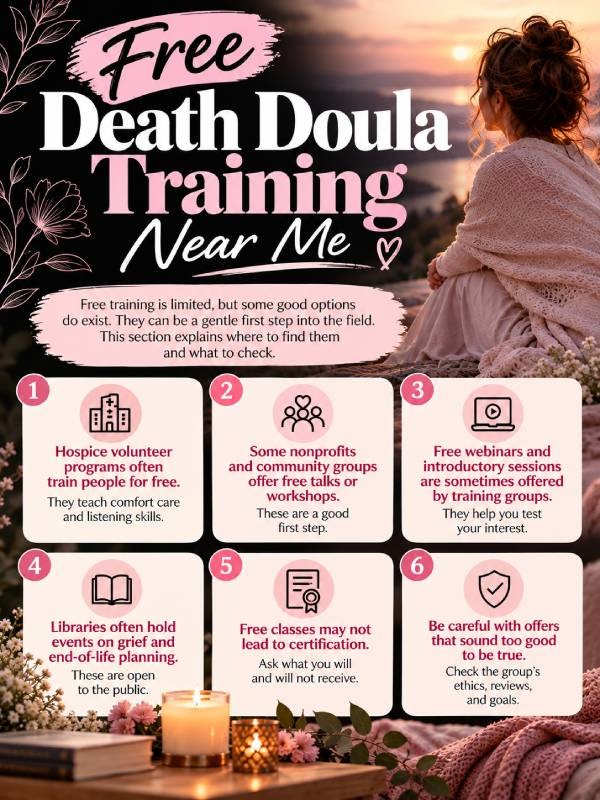
Free training is limited, but some good options do exist. They can be a gentle first step into the field. This section explains where to find them and what to check.
- Hospice volunteer programs often train people for free. They teach comfort care and listening skills.
- Some nonprofits and community groups offer free talks or workshops. These are a good first step.
- Free webinars and introductory sessions are sometimes offered by training groups. They help you test your interest.
- Libraries often hold events on grief and end-of-life planning. These are open to the public.
- Free classes may not lead to certification. Ask what you will and will not receive.
- Be careful with offers that sound too good to be true. Check the group’s ethics, reviews, and goals.
📖 Read More
Learn more about this topic by visiting death doula near me ↗ .
National death Doula association
Several national groups support death doulas across the United States. They offer standards, training, and a shared community. This section introduces the main ones, including NEDA.
- NEDA is a nonprofit that supports end-of-life doulas. It shares standards, ethics, and a professional community.
- It offers a credentialing path for doulas. This helps families feel more confident in their choice.
- NEDA also has a directory to help families find doulas. It is a useful starting point for your search.
- INELDA is another group known for training and certification. Many doulas begin their journey there.
- National groups cannot replace local laws. Always follow the rules of your state.
- Joining a national group connects doulas with peers. Shared support helps prevent burnout.
New Haven County
New Haven County includes cities such as New Haven, Hamden, Milford, and Waterbury. Families here can find end-of-life help through hospitals, hospices, and community groups. This section explains how to find a trusted doula nearby.
- Start by asking your hospice or hospital team for local doula names. Large medical centers in the area often know trusted guides.
- Search online with “end-of-life doula” and your town name. Read profiles, reviews, and training details.
- Check NEDA’s directory for doulas near you. Many list their services and areas.
- Ask faith groups and community centers for referrals. Word of mouth is often reliable.
- Many doulas offer support at home, in hospitals, and in care homes. Ask where each doula works.
- Meet or call first, and talk about fees up front. A good fit brings comfort to the whole family.
Fairfield County
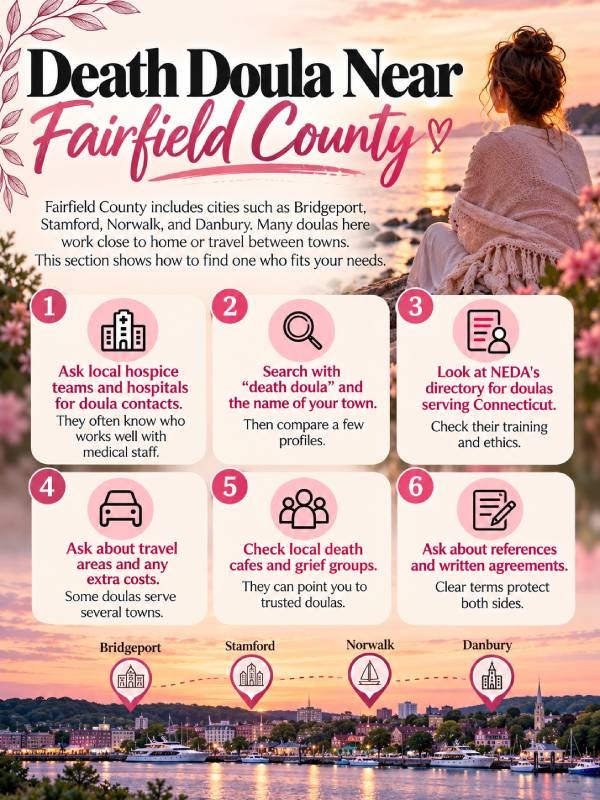
Fairfield County includes cities such as Bridgeport, Stamford, Norwalk, and Danbury. Many doulas here work close to home or travel between towns. This section shows how to find one who fits your needs.
- Ask local hospice teams and hospitals for doula contacts. They often know who works well with medical staff.
- Search with “death doula” and the name of your town. Then compare a few profiles.
- Look at NEDA’s directory for doulas serving Connecticut. Check their training and ethics.
- Ask about travel areas and any extra costs. Some doulas serve several towns.
- Check local death cafes and grief groups. They can point you to trusted doulas.
- Ask about references and written agreements. Clear terms protect both sides.
Conclusion
Death doulas bring comfort, planning, and presence to a hard time. They care for the whole person, not just the illness. Their work fits beside hospice and medical care.
If you live in New Haven or Fairfield County, help may be close by. Ask about training, ethics, and fees, and choose someone you trust. You do not have to face this alone.