End of Life Dula Facing the end of life is hard for any family. Many people feel unsure about what to do or who to ask. Some do not know what to expect in the final days. Others worry about doing the wrong thing. Silence often makes these fears grow. An end of life doula can offer calm, kind, and steady support.
A doula is a non-medical guide for the dying and their loved ones. They give comfort, planning help, and a steady presence. They support the family before, during, and after death. They work beside doctors and hospice teams, never in place of them. Their goal is that no one faces the end alone or unheard.
This guide explains what end of life doulas do and what they cost. You will learn how they differ from hospice and when to hire one. You will also find simple tips for finding a doula near you. We also cover the questions to ask and whether insurance helps. Read it step by step or jump to the part you need.
What Is an End of Life Dula?
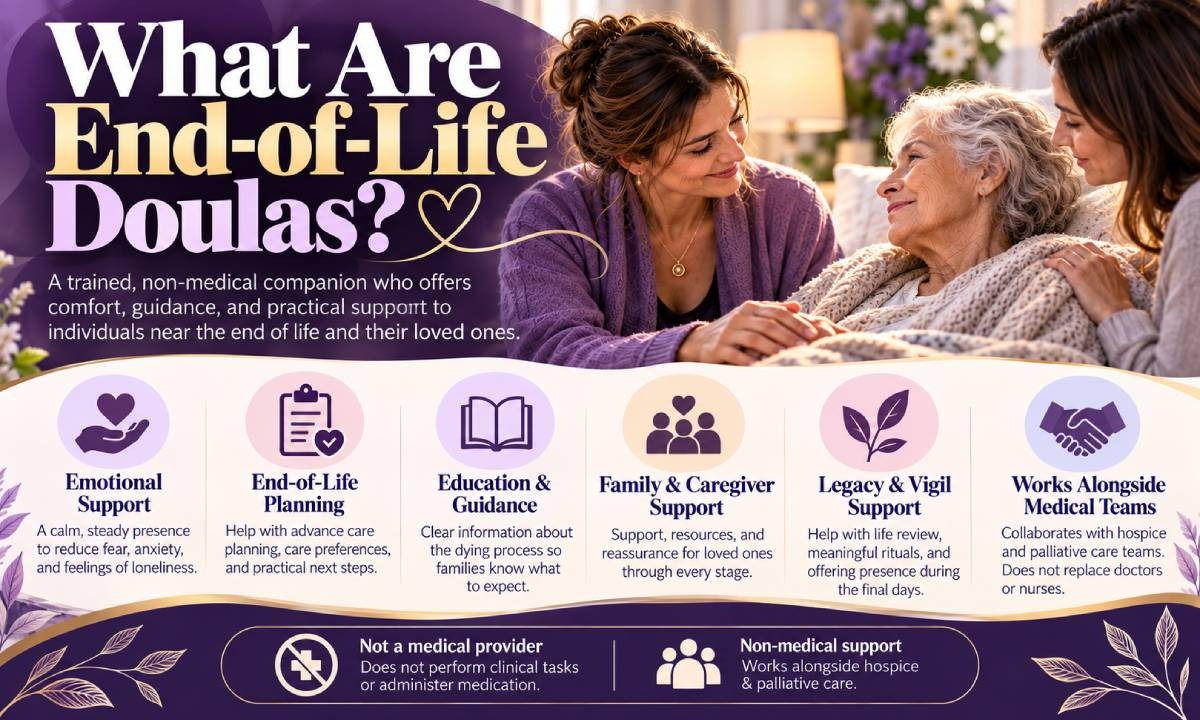
An end of life doula is a trained, non-medical companion for people near death. They support the dying person and the family together. The role is often compared to a birth doula, but at the other end of life. They never replace doctors or nurses. They add time, comfort, and steady presence where medical care cannot.
- An end of life doula gives emotional, practical, and spiritual support. They do not give medical care.
- The role is also called a death doula. Both names mean the same kind of care.
- The idea is often compared to a birth doula. It serves the other end of life.
- They work alongside hospice, nurses, and doctors. They never replace the medical team.
- They follow the wishes of the person and the family. Every journey looks different.
- There is no federal license for doulas in the United States. Training and standards vary, so ask about both.
What Does an End of Life Doula Do?
A doula’s work centers on presence, planning, and comfort. They stay close when families feel lost. Some days the work is a planning talk. Other days it is a quiet night at the bedside. The doula always follows the wishes of the person and the family.
- They sit with the person and the family. Their calm presence helps everyone feel safe.
- They listen without judging or trying to fix. People can share fear, anger, and sadness.
- They guide planning talks about wishes and comfort. These talks work best before a crisis.
- They help with legacy projects like letters and recordings. These become lasting gifts for loved ones.
- They help plan the vigil and set a peaceful room. Music, light, and readings can all help.
- They refer medical questions to the care team. A good doula always stays within scope.
Support for the Dying Person
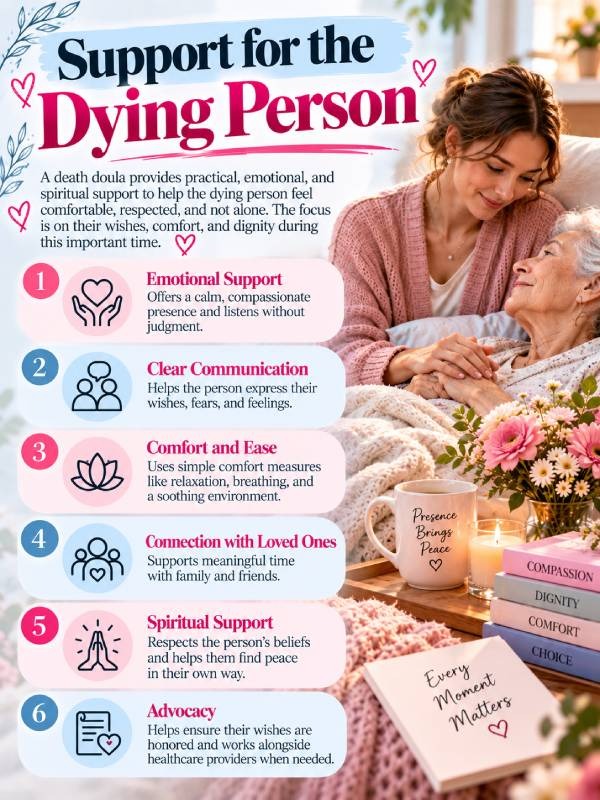
The dying person is at the center of the doula’s care. The goal is comfort, dignity, and being heard. A doula gives the person time to talk, to be quiet, or to simply rest. They never push their own beliefs or plans. The person always sets the pace.
- A doula listens to life stories and final wishes. This helps the person feel seen.
- They help the person speak about fears. Saying them aloud often brings relief.
- They support life review and meaning-making. Many people find peace in this.
- They honor any belief or no belief at all. The person always leads.
- They help create a calm, personal space. Small comforts can mean a lot.
- They stay present through the final days. No one should feel alone.
Support for Family and Loved Ones
Families need care too. Loved ones are often tired, scared, and unsure what to do. A doula helps them through the hardest moments. They explain, listen, and make space for every feeling. This support continues after death, when the quiet begins.
- A doula explains what to expect in plain words. This lowers fear and confusion.
- They give caregivers time to rest. Rest helps prevent burnout.
- They help families talk to each other. Old tensions can soften.
- They help include children in age-appropriate ways. Kids feel safe and heard.
- They support rituals, memorials, and home funeral choices. Families choose what feels right.
- They guide families toward grief support afterward. Healing takes time and help.
End of Life Doula vs. Hospice: What’s the Difference?
Hospice and doulas serve different needs but share one goal: comfort. Hospice is a medical service, and a doula is a non-medical companion. They are not rivals. They fill different gaps in the same circle of care. Most families benefit from having both.
- Hospice gives medical care near the end of life. This includes medicine, equipment, and nursing visits.
- A doula gives non-medical support. They offer time, presence, and planning help.
- Hospice visits are often short. A doula can stay longer and listen more.
- Hospice is usually covered by insurance or Medicare for eligible patients. Doula care is often paid privately.
- Doulas can help families get more from hospice. They help ask better questions.
- Together, they care for the body and the whole person. This is the strongest model.
How Much Does an End of Life Doula Cost?
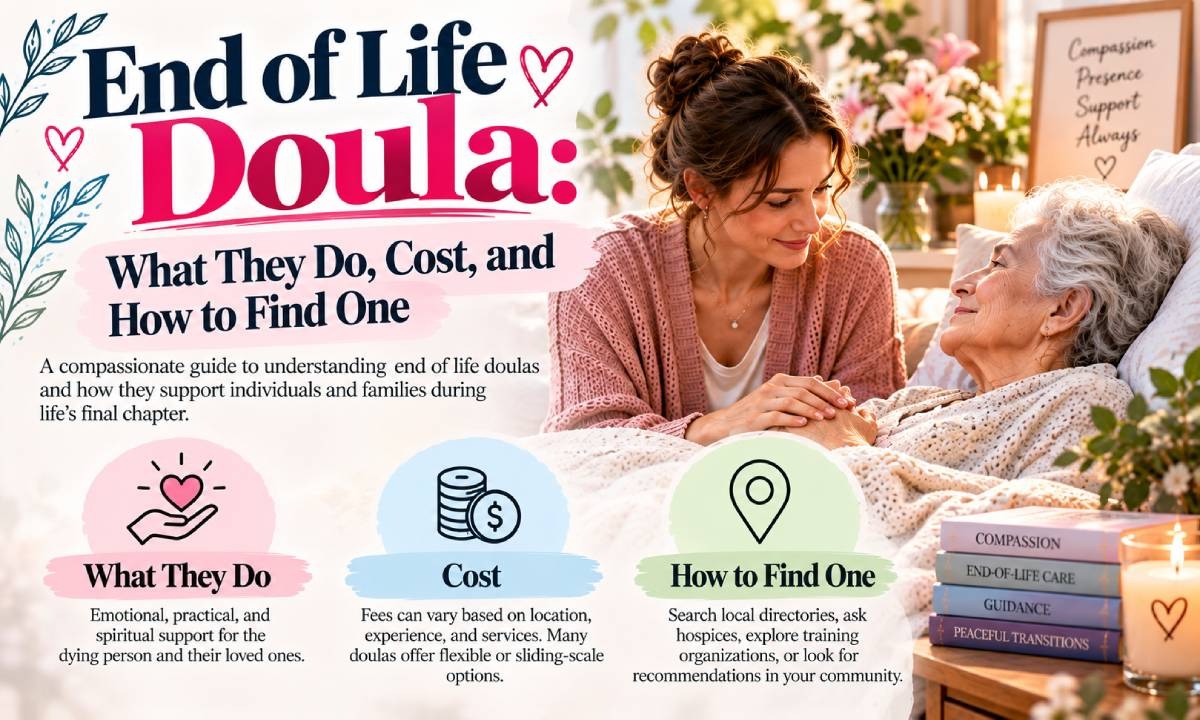
Costs vary a lot from one doula to another. Location, experience, and services all play a part. Some doulas offer simple hourly rates, while others offer full packages. There is no standard price across the field. The best step is to ask each doula for clear fees in writing.
- Many doulas are self-employed and set their own fees. Prices differ widely.
- Some charge by the hour, and others offer packages. Packages may cover planning, vigil, and after-care.
- Some offer a free first call. This helps you see if it feels right.
- Some doulas use sliding-scale fees or volunteer. Ask about options if cost is a concern.
- Extra costs may include travel or long overnight vigils. Ask about these up front.
- Always get fees in writing before you start. Clear terms protect both sides.
Benefits of Hiring an End of Life Doula
A doula adds time, comfort, and clarity to a hard season. Many families say it changed how they remembered the end. The benefits reach the dying person, the caregivers, and the whole family. They also last beyond the final days. A doula helps turn a frightening time into a more peaceful one.
- Families feel less alone. A steady guide makes hard days easier.
- Fear and confusion often go down. Plain explanations help.
- Wishes are shared and respected. This brings clarity and peace.
- Caregivers get rest and support. This protects their health.
- Meaningful moments are easier to create. Legacy work and rituals leave lasting memories.
- Support continues after death. Families do not face grief alone.
When Should You Hire an End of Life Doula?
Earlier is usually better, but a doula can help at any stage. Many families wait until a crisis and wish they had started sooner. Early support gives more time for planning and for building trust. Still, even a short time with a doula can bring comfort. There is no wrong moment to ask for help.
- After a serious or life-limiting diagnosis, support can begin right away. Early planning brings calm.
- Before a crisis hits, wishes are easier to discuss. Families avoid hard guesses later.
- When caregivers feel worn out, a doula can step in. Respite helps everyone.
- When hospice begins, a doula can add personal support. The two work well together.
- In the final days, a doula can help with the vigil. Even short notice can help.
- After death, a doula can support rituals and early grief. Support does not have to end at death.
How to Find an End of Life Doula Near You
Finding a doula is easier than it sounds. Start with trusted sources and take your time. Look for someone whose training, values, and style feel right to you. Trust matters as much as credentials. A short call can tell you a lot.
- Check directories like NEDA’s. They list doulas who follow professional standards.
- Ask your hospice, hospital, or palliative care team. Many know doulas in the area.
- Search online with your city and “end of life doula.” Read each profile with care.
- Ask friends, faith groups, and community centers. Word of mouth often works well.
- Look for local death cafes and community talks. They are good places to meet doulas.
- Meet or call first to see if it feels right. Trust matters as much as credentials.
Questions to Ask Before Hiring an End of Life Doula
Good questions help you find the right fit. A good doula will answer them openly and without pressure. Write your questions down before you call. Listen for clear answers about training, limits, and fees. Notice how comfortable you feel during the conversation.
- What training and certification do you have? Ask how long you have worked as a doula.
- Can you share references from past families? Their feedback shows how the doula works.
- What services do you offer, and what do you not do? Clear limits keep care safe.
- How do you work with hospice and medical teams? Teamwork matters.
- What are your fees, and how do you charge? Ask for them in writing.
- Are you available at night or on short notice? Ask how you can reach them.
📖 Read More
Learn more about this topic by visiting End of Life Dula ↗ .
Is an End of Life Doula Covered by Insurance?
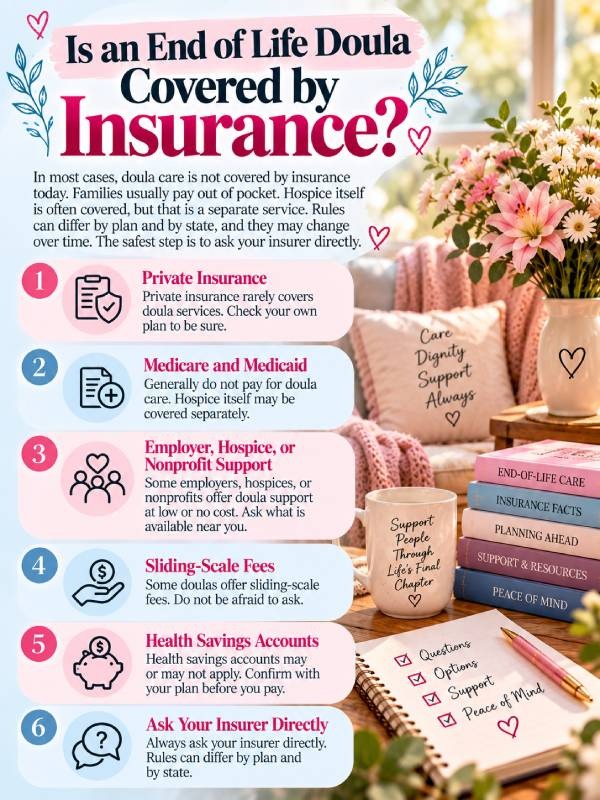
In most cases, doula care is not covered by insurance today. Families usually pay out of pocket. Hospice itself is often covered, but that is a separate service. Rules can differ by plan and by state, and they may change over time. The safest step is to ask your insurer directly.
- Private insurance rarely covers doula services. Check your own plan to be sure.
- Medicare and Medicaid generally do not pay for doula care. Hospice itself may be covered separately.
- Some employers, hospices, or nonprofits offer doula support at low or no cost. Ask what is available near you.
- Some doulas offer sliding-scale fees. Do not be afraid to ask.
- Health savings accounts may or may not apply. Confirm with your plan before you pay.
- Always ask your insurer directly. Rules can differ by plan and by state.
Frequently Asked Questions
What is an end of life dula?
An end of life doula is a non-medical guide who supports dying people and their families. They offer emotional, practical, and spiritual care.
What does an end of life doula do?
They listen, guide planning talks, and sit with families. They also help with legacy projects, vigils, and support after death.
How much does an end of life dula cost?
Costs vary by doula and by location. Many offer hourly rates or packages, and some offer sliding-scale fees.
Do I still need hospice if I have a dula?
In most cases, yes. Hospice gives medical care that a doula cannot.
How do I find an end of life dula near me?
Check directories like NEDA’s, ask your hospice team, and search online with your city. Then ask about training, references, and fees.
Is an end of life dula covered by insurance?
Usually not. Check your plan, and ask the doula about sliding-scale options.
Conclusion
End of life doulas bring comfort, planning, and presence to a hard time. They care for the whole person and support the family, not just the illness. Their work fits beside hospice and medical care.
If you or someone you love is facing the end of life, you do not have to do it alone. Ask good questions, and choose someone you trust. Starting early gives you the most time and peace.