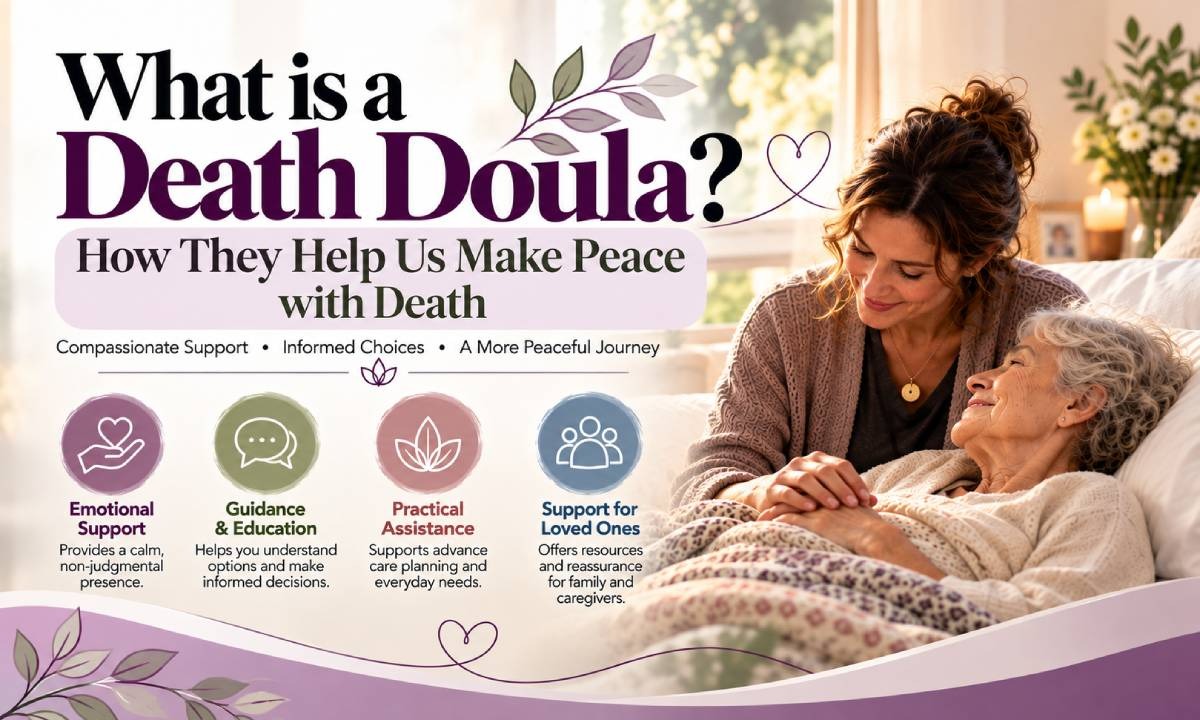
Death is something most of us try not to think about. Yet it comes to everyone, often without much warning. A death doula exists to make that moment a little less frightening.
They are not doctors, nurses, or religious leaders. Instead, they offer steady presence and honest conversation. Their goal is simple: help people feel less alone.
This guide explains exactly what a death doula is and does. You’ll learn their role, their training, and what they cost. By the end, death may feel a little more like peace than fear.
What is a death doula definition role responsibilities
A death doula’s definition keeps evolving as more families learn about the role. At its simplest, it means a trained companion for someone who is dying. Their role and responsibilities grow outward from that one core idea. Understanding this definition makes the rest of their work easier to follow.
- A death doula is a non-medical companion for the dying. They focus on comfort and presence, not treatment.
- Their role blends several functions. They are part planner, part listener, part guide.
- Their core responsibility is honoring wishes. They help ensure a person’s choices are heard and followed.
- They support the whole family, not just the patient. Their presence eases pressure on everyone involved.
- Their work spans before, during, and after death. Support often continues briefly into early grief.
- The definition keeps expanding as the field grows. New doulas bring new specialties to the role.
What Is a Death Doula?
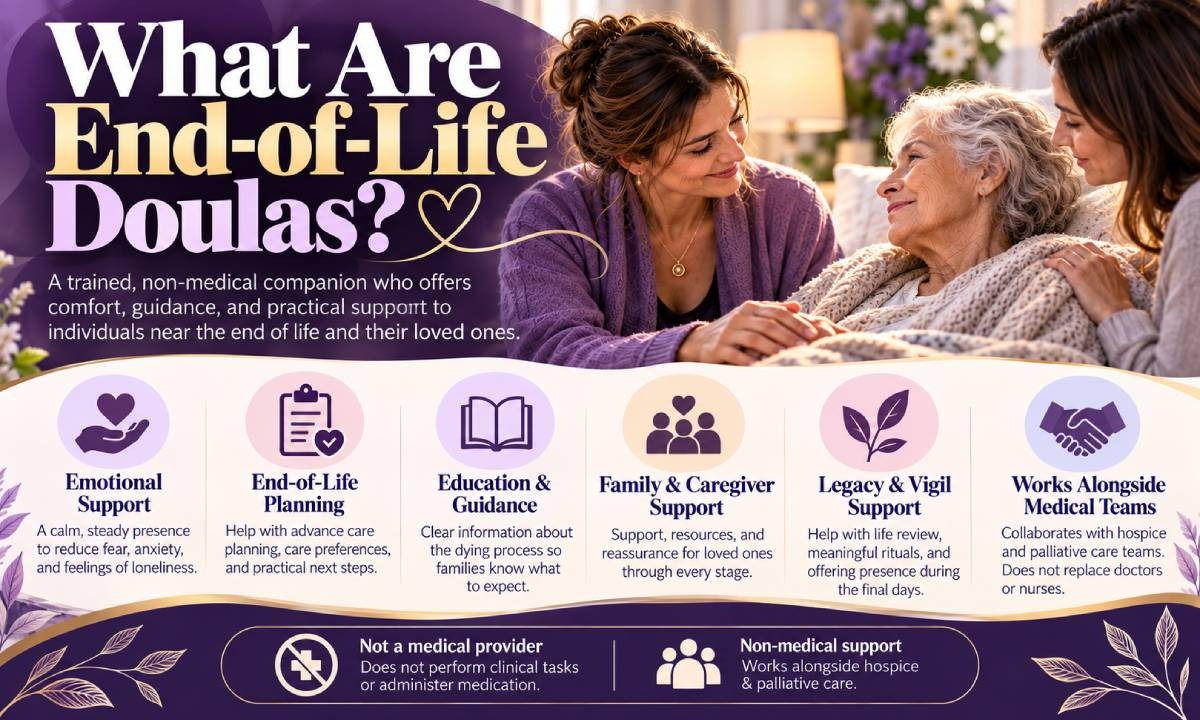
At its core, a death doula is a steady presence near the end of life. They are not a medical title, but a human one. Their work sits quietly alongside hospice and family care. This section breaks down exactly who they are and what they offer.
- A death doula sits with people as they approach death. They offer calm, steady companionship.
- They are not doctors, nurses, or clergy. Their support is entirely non-clinical and non-religious.
- Think of them as the birth doula’s counterpart. One welcomes life in, the other helps someone leave gently.
- They work alongside hospice, not instead of it. Medical care and doula care happen side by side.
- Every doula brings a slightly different style. Some focus on planning, others on bedside vigil.
- Their goal is simple: no one dies alone. Presence is the heart of everything they do.
Why People Fear Death Doulas And Why They Shouldn’t
The word “death doula” can sound unsettling before it’s understood. Much of that fear comes from unfamiliarity, not reality. Once people learn what the role actually involves, worry tends to fade. Here’s a closer look at common fears and why they rarely hold up.
- Many people confuse doulas with something clinical or spooky. In reality, their work is warm and practical.
- Some worry a doula means death is imminent. Doulas often start support long before the final days.
- Others fear losing control of decisions. A doula’s job is to protect your choices, not override them.
- The word “death” itself makes people uneasy. But avoiding the topic doesn’t make it less real.
- Fear often fades after one real conversation. Families usually feel relief once they understand the role.
- Doulas exist to soften fear, not add to it. Their entire purpose is comfort, not dread.
The Power of Legacy Planning
Legacy planning is one of the most meaningful parts of a doula’s work. It gives a dying person a way to be remembered on their own terms. It also gives families something lasting to hold onto afterward. This section looks at why that work matters so much.
- Legacy planning gives a person’s voice lasting form. Letters, recordings, and stories outlive the moment.
- It helps loved ones hold onto something personal. A recorded voice or message can comfort for years.
- It often brings unexpected peace to the dying person. Reflecting on life can ease fear of the unknown.
- It opens space for honest conversations. Families often say things they’d otherwise leave unsaid.
- It can include practical wishes too. This might cover funeral preferences or final messages.
- It turns an ending into something meaningful. Legacy work shapes how someone is remembered.

How Much Does a Death Doula Cost?
Cost is one of the first questions most families ask. Pricing varies based on experience, location, and services included. Knowing typical ranges ahead of time makes budgeting much easier. Here’s what families can generally expect to pay.
- Hourly rates typically run $50 to $125. Pricing depends on experience and location.
- Many doulas offer full-relationship packages. These often range from $500 to $3,500 or more.
- Sliding-scale pricing is common too. This keeps support accessible for families with fewer resources.
- Costs vary by what’s included. Vigil support, planning, and follow-up may be priced separately.
- Insurance typically doesn’t cover doula care. Most families pay out of pocket directly.
- Asking upfront avoids surprises later. A clear quote helps families budget with confidence.
What is a death doula salary
Salary looks different for a death doula than for most jobs. Most are self-employed, so income depends on their own caseload. Earnings can vary widely between part-time and full-time practitioners. Here’s a realistic look at what doulas typically earn.
- Most doulas work as independent contractors. Pay isn’t structured like a typical salaried job.
- Part-time doulas often earn $10,000 to $30,000 yearly. This reflects a smaller, supplemental caseload.
- Full-time doulas can earn $50,000 to $100,000 or more. Income depends on region and reputation.
- No official government data tracks this job. Figures come from industry surveys, not labor statistics.
- Bundled services often boost total income. Adding legacy work or training can increase earnings.
- Earnings grow with experience and referrals. A strong local reputation brings steadier income over time.
How Death Doulas Change Our Perspective
Spending time around death doulas often shifts how people see the end of life. Death starts to feel less like an emergency and more like a passage. Families often leave these experiences calmer than they expected. Here’s how that shift in perspective tends to happen.
- They reframe death as a process, not a failure. This shift alone eases a lot of fear.
- They show that presence matters more than words. Simply sitting with someone can be enough.
- They normalize talking about death openly. This makes planning conversations feel less taboo.
- They highlight beauty alongside grief. Families often find unexpected warmth in final days.
- They remind us that no one should die alone. Companionship becomes a quiet form of dignity.
- They shift death from a medical event to a human one. Care becomes personal again, not just clinical.
📖 Read More
Learn more about this topic by visiting What is a Death Doula ↗ .
Listen Now: What Is a Death Doula?
Some topics land better when they’re heard rather than read. Audio and podcast formats bring real doula stories straight to listeners. This makes a heavy topic feel more personal and approachable. Here’s why this format works so well for this subject.
- Audio and podcast formats make this topic more approachable. Hearing real stories often lands differently than text.
- Listening lets people absorb the topic at their own pace. It feels less heavy than reading alone.
- Many episodes feature doulas sharing real bedside experiences. These stories add depth beyond basic definitions.
- Audio content works well for caregivers on the go. It fits into drives, chores, or quiet moments.
- It’s a gentle way to introduce the topic to family. Listening together can open up conversation naturally.
- These formats often answer the same core question simply. What is a death doula, told through real voices.

What is a death doula role and responsibilities
A death doula’s role covers much more than just the final hours. Their responsibilities stretch from early planning to brief aftercare. Each stage asks for a slightly different kind of support. Here’s a closer breakdown of what that actually looks like.
- Their role centers on presence and comfort. Responsibilities grow from that single core purpose.
- They help with early planning conversations. This includes documenting wishes before a crisis hits.
- They support legacy and reflection work. Many help record letters, stories, or final messages.
- They provide vigil support during active dying. This means sitting bedside through the final hours.
- They coordinate gently with the hospice team. They aren’t clinical staff, but they stay in communication.
- They stay within a clearly non-medical scope. Diagnosis and treatment always stay with doctors.
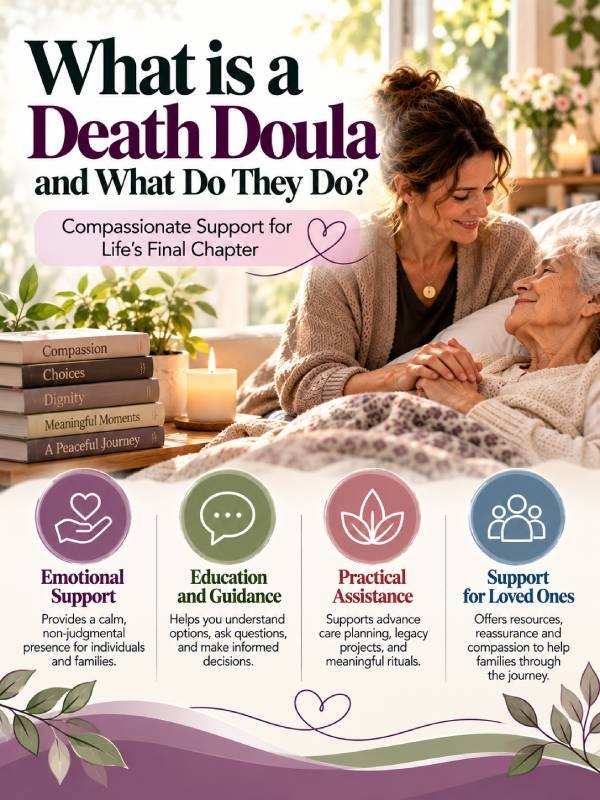
What is a death doula and what do they do
This question comes up often, since the role is still fairly new. In short, a death doula is a trained, non-medical companion. Their day-to-day work shifts depending on where a person is in their illness. Here’s a simple breakdown of what that work involves.
- A death doula is a trained, non-medical companion. Their focus is comfort, not clinical care.
- They help families understand what to expect. This reduces fear around the unknown parts of dying.
- They assist with planning before death arrives. This includes legacy work and documented wishes.
- They sit vigil during the final days or hours. Their presence means no one has to be alone.
- They offer brief support right after death too. This helps families through the immediate aftermath.
- They complement hospice care, not replace it. Medical needs stay with the clinical team throughout.
What is a death doula training
Training is how most doulas build the skills this work requires. Programs vary in length, depth, and the organization behind them. Good training covers both practical knowledge and emotional readiness. Here’s what a typical training path tends to include.
- Training programs range from a weekend to eight weeks. Length depends on the organization and depth of content.
- Courses cover the physiology of active dying. This helps doulas understand what families will witness.
- Communication and listening skills are core topics. Much of the work depends on how support is delivered.
- Ethics and boundaries are taught early on. This keeps the non-medical scope clear and consistent.
- INELDA and NEDA are the most recognized providers. Both offer structured, well-known certification paths.
- Continuing education often follows initial training. Most doulas keep building skills throughout their careers.
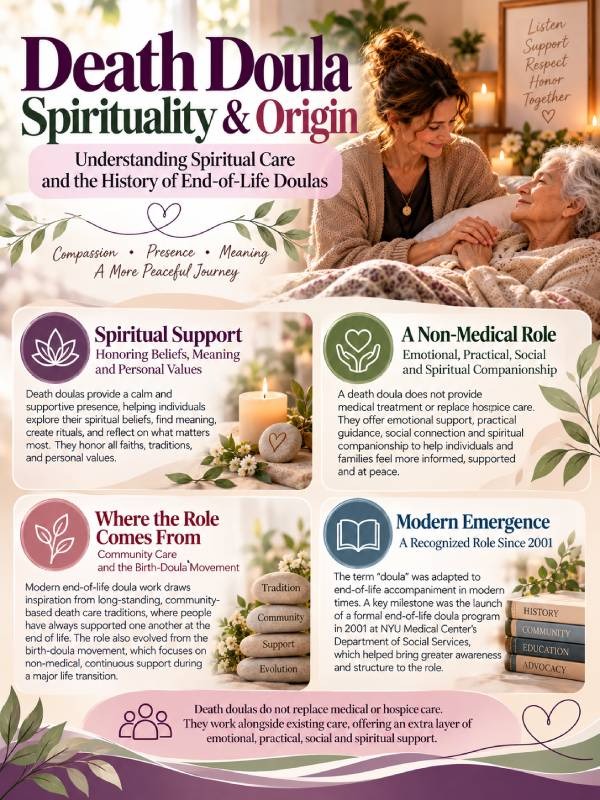
Death doula spiritual and Death doula origin
The spiritual side of this work is personal and never one-size-fits-all. Its roots also go back further than most people realize. Understanding its origin helps explain why the role feels so natural. Here’s a look at both its spiritual side and its history.
- The role isn’t tied to one religion or belief system. Doulas support spiritual needs however a family defines them.
- Some doulas incorporate rituals if a family requests them. Others keep the work entirely secular instead.
- The practice has roots in community-based death care. Before hospitals, neighbors and family handled this role.
- Modern death doula work emerged as a revival, not an invention. It brings older traditions into a structured modern form.
- The movement grew alongside the birth doula movement. Both emphasize presence over procedure.
- Its spiritual side is optional, shaped by each family. The constant is presence, not any specific belief.
Frequently Asked Questions
What is a death doula in simple terms?
A death doula is a trained companion who offers non-medical comfort and support to someone who is dying, and to their family.
Is a death doula religious or spiritual?
Not necessarily. A death doula can support any spiritual belief, or none at all, depending on what the family wants.
How is a death doula different from hospice?
Hospice provides medical care, while a death doula offers unhurried, non-clinical presence and emotional support alongside it.
Do death doulas help with funeral planning?
Not directly. Their focus is on the dying person’s final days, though they may refer families to funeral professionals.
How much does a death doula typically cost?
Most charge $50 to $125 an hour, or offer package pricing between roughly $500 and $3,500.
Where did death doulas come from?
The role grew out of community-based death care traditions, revived and formalized alongside the modern birth doula movement.
Conclusion
A death doula’s purpose is simple: no one should face death alone. They bring comfort, honesty, and calm presence to a hard moment. Their work helps families feel steadier, more prepared, and less afraid.
Understanding what a death doula does can ease a lot of fear. It turns an unfamiliar process into something more human and gentle. In the end, their work is really about making peace with death.