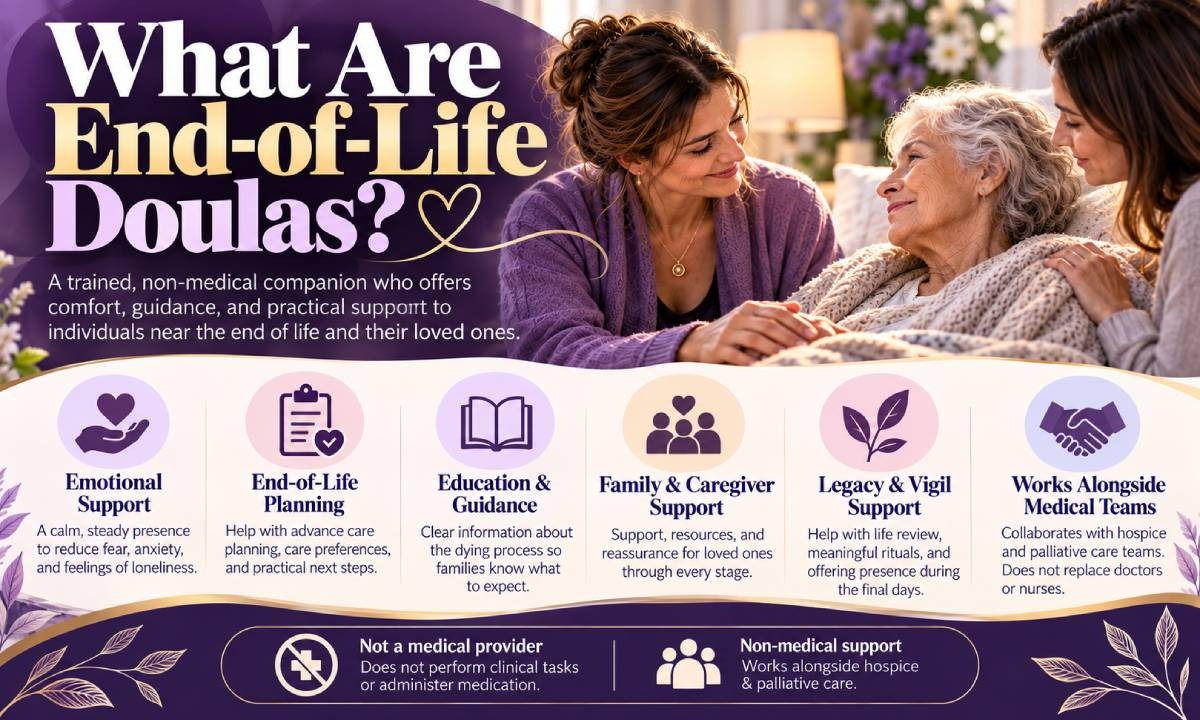

What is an end-of-life doula? An end-of-life doula provides compassionate, non-medical support to individuals and families during the final stages of life.
They aren’t doctors, nurses, or clergy members. Instead, they offer calm, non-medical presence and guidance. Their support fills a gap that clinical care often can’t.
Below, you’ll learn their role, their training, and how to find one. You’ll also see how they differ from hospice and other care roles. By the end, you’ll understand exactly what this support looks like.If you’re wondering what is an end-of-life doula, it’s important to understand that their support focuses on comfort, presence, planning, and guidance rather than medical treatment.
What Is an End-of-Life Doula and What Do They Do?
Understanding what is an end-of-life doula? can help families know what kind of emotional, practical, and spiritual support is available.This role covers more ground than most people expect. Their work shifts depending on where someone is in their illness. At every stage, the focus stays on comfort and presence. Here’s a closer look at what the work actually involves.
- They help with early planning conversations. This includes documenting wishes before a crisis hits.
- They support legacy and reflection work. Many help record letters, stories, or final messages.
- They provide vigil support during active dying. This means sitting bedside through the final hours.
- They help families understand what’s happening physically. This reduces fear around the unknown.
- They ease pressure on exhausted caregivers. Their presence gives family members room to rest.
- They offer brief support right after death too. This helps families through the immediate aftermath.
End-of-Life Doula vs. Hospice: What’s the Difference?
These two roles often get confused, even though they’re quite different. Hospice is a clinical service, while doula work is personal and non-medical. Understanding the difference helps families use both well. Here’s how the two compare directly.Knowing what is an end-of-life doula can make it easier to understand how their role differs from hospice and other professional care services.
- Hospice manages medical symptoms and medication. A doula never takes on any clinical tasks.
- Hospice visits are usually scheduled and brief. Doulas offer longer, more flexible time.
- Hospice involves a full clinical team. A doula typically works one-on-one with a family.
- Hospice eligibility requires a medical prognosis. Doula support can start much earlier, with no such requirement.
- Hospice is often covered by insurance. Doula care is almost always paid privately.
- Both roles can work together, not instead of each other. Many families use hospice and a doula side by side.
Non-Medical Support: What an End-of-Life Doula Is Not
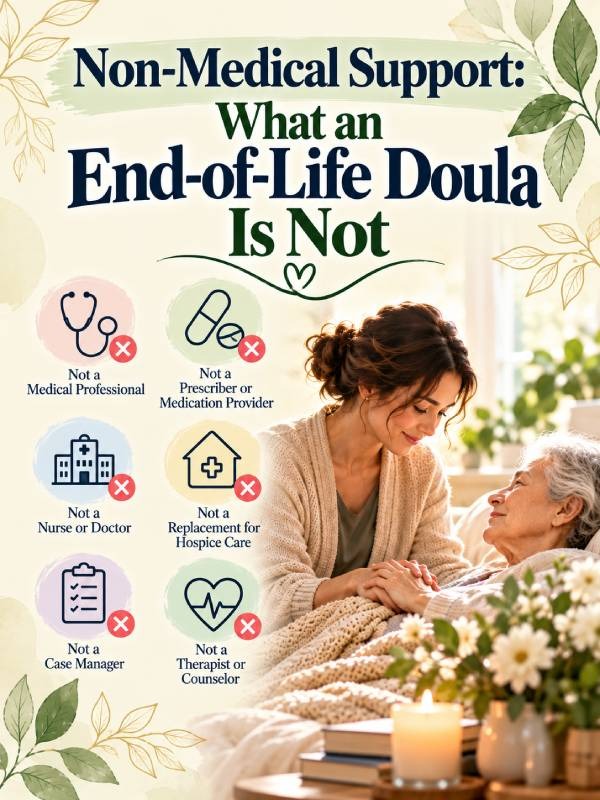
It’s just as important to know what this role isn’t. Doulas stay firmly outside any clinical or medical function. This boundary protects both the family and the doula. Here’s what falls outside their scope entirely.
- They are not nurses or doctors. They never administer medication or medical treatment.
- They do not diagnose any condition. That responsibility always stays with the medical team.
- They are not grief counselors long-term. Ongoing grief support is usually handed off to a licensed specialist.
- They are not religious officiants. Spiritual support is offered only if a family requests it.
- They are not legal or financial advisors. Estate and legal matters stay outside their role.
- They do not replace hospice care. Their support works alongside medical care, not in place of it.
Common Services an End-of-Life Doula Provides
Services vary somewhat from doula to doula. Still, most offer a similar core set of support options. Knowing these services helps families know what to ask for. Here are some of the most common ones.
- Planning sessions to document final wishes. These conversations happen well before a crisis.
- Legacy projects like letters or recordings. These become lasting keepsakes for the family.
- Vigil support during active dying. This means staying bedside through the final hours.
- Family education about the dying process. This helps everyone feel more prepared.
- Respite support for tired caregivers. A doula can sit in so family members can rest.
- Light after-death support. Many stay briefly to help with the immediate aftermath.
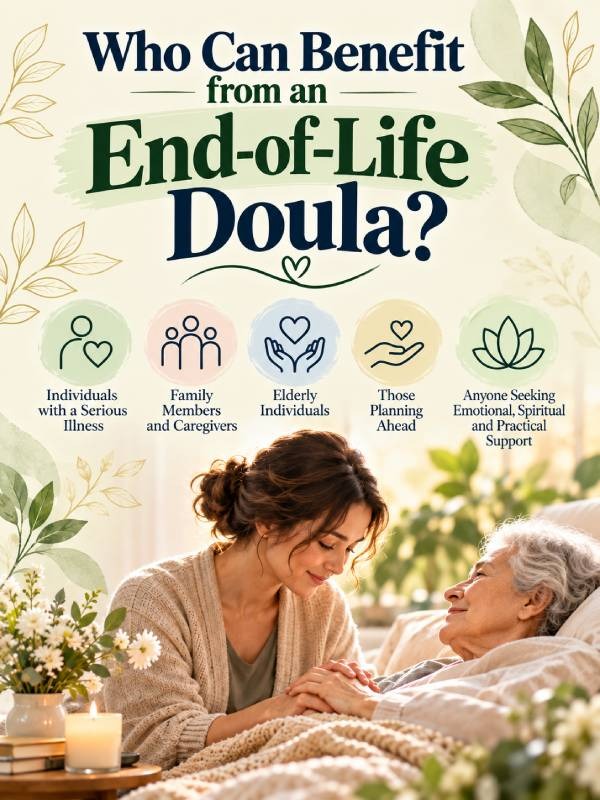
Who Can Benefit from an End-of-Life Doula?
This kind of support isn’t limited to one type of family. Many different situations can benefit from a doula’s presence. Recognizing your own situation can help you decide if it’s right for you. Here are some common groups who benefit most.
- Families facing a new terminal diagnosis. Early support helps them feel less overwhelmed.
- Adult children caring for a parent from a distance. A doula provides steady local presence they can’t.
- People without close family nearby. This prevents facing the process entirely alone.
- Anyone overwhelmed by caregiving duties. A doula eases the emotional and logistical load.
- People wanting help with legacy projects. This includes recording stories or writing letters.
- Hospitals and hospices themselves. Many now partner with doulas to fill care gaps.
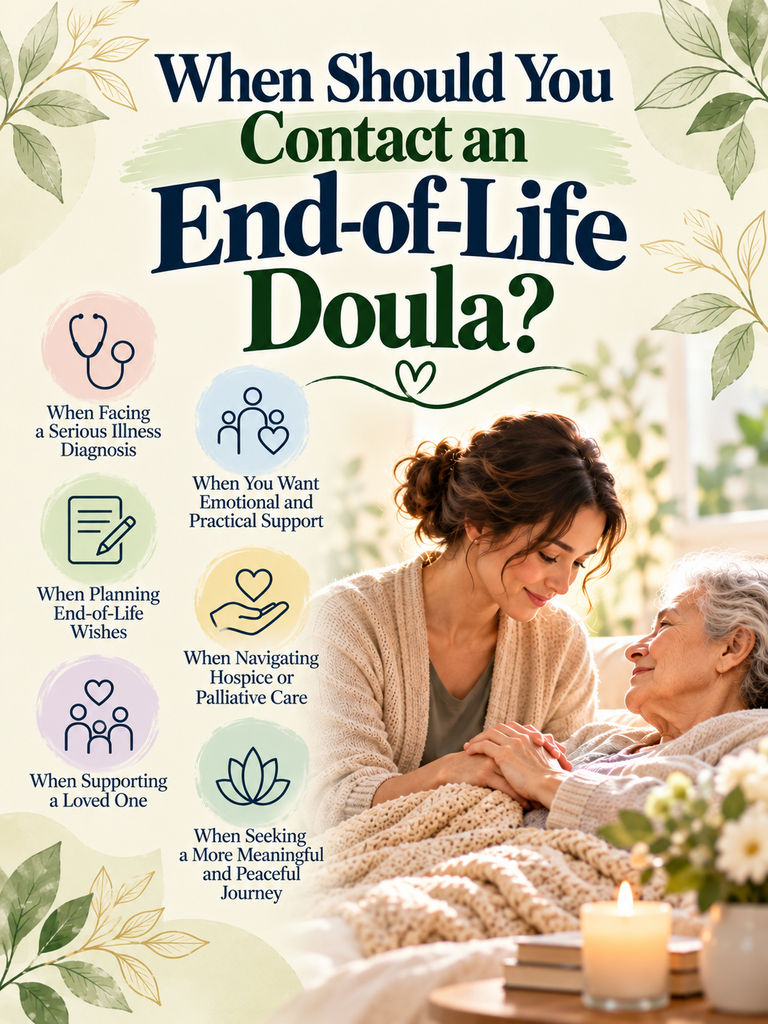
When Should You Contact an End-of-Life Doula?
Timing is more flexible than most people assume. There’s no single “right” moment to reach out. Earlier contact often means more time for meaningful support. Here’s a general guide for when to consider it.
- After a serious or terminal diagnosis. Early contact allows time for real planning.
- When caregiving starts to feel overwhelming. A doula can ease that load sooner rather than later.
- Before hospice eligibility even begins. Doula support doesn’t require a specific prognosis.
- When a family wants help with legacy work. This is often most meaningful earlier in an illness.
- As active dying approaches. This is when many families request vigil support specifically.
- Anytime support feels needed. There’s no wrong time to start the conversation.
How to Find a Qualified End-of-Life Doula Near You
Finding the right doula takes a bit of research. A few reliable sources make the search much easier. Personal referrals often work as well as formal directories. Here’s where to start looking.
- Search INELDA and NEDA’s directories first. Both list trained doulas searchable by location.
- Ask your local hospice team for referrals. They often know doulas working nearby.
- Check with local funeral homes. Many maintain informal referral relationships.
- Ask hospital chaplains for introductions. They frequently cross paths with doulas through shared cases.
- Attend a local death café event. These gatherings are a natural place to meet doulas.
- Ask for references before hiring. Past client feedback helps confirm a good fit.
📖 Read More
Learn more about this topic by visiting What Is an End-of-Life Doula? ↗ .
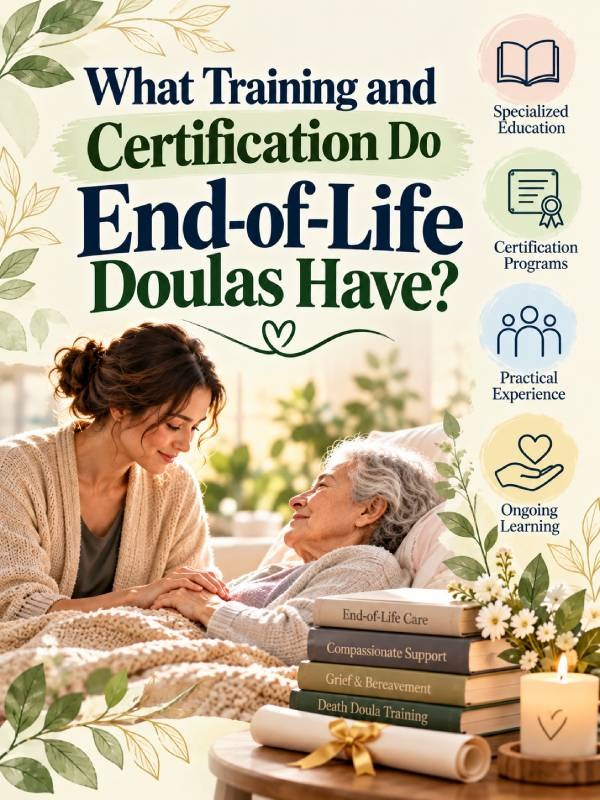
What Training and Certification Do End-of-Life Doulas Have?
No government body currently regulates this profession. Still, most reputable doulas complete real, structured training. Understanding their background helps you choose with confidence. Here’s what that training typically looks like.
- Programs run from a weekend to eight weeks. Length depends on the provider and depth of content.
- INELDA and NEDA are the most recognized providers. Both offer structured, well-known certification paths.
- Coursework covers physiology, ethics, and communication. This prepares doulas for real bedside work.
- Some certifications require documented client hours. This ensures hands-on experience, not just classroom learning.
- University-affiliated programs also exist. Vermont’s certificate program is one well-known example.
- Checking actual training matters more than the title “certified.” Certification titles aren’t standardized across the field.
Frequently Asked Questions
Is an end-of-life doula the same as hospice care?
No. Hospice provides clinical medical care, while an end-of-life doula offers non-medical, unhurried presence and support.
Can an end-of-life doula be present during the actual moment of death?
Yes, many doulas provide vigil support and stay present through the final moments, if the family wants that.
How much does an end-of-life doula typically cost?
Most charge $50 to $125 an hour, or offer package pricing between roughly $500 and $3,500.
Do end-of-life doulas work alongside medical staff and hospice teams?
Yes, doulas typically coordinate with hospice staff, even though they aren’t part of the clinical care team.
Can an end-of-life doula support family members, not just the dying person?
Yes, supporting the whole family, including caregivers, is a core part of their work.
Is an end-of-life doula a religious or spiritual role?
Not necessarily. They support any spiritual belief a family holds, or none at all, depending on what’s wanted.
How early in an illness should you contact an end-of-life doula?
As early as you’d like. Many families reach out right after a diagnosis, well before hospice is needed.
Conclusion
An end-of-life doula offers something simple but powerful: presence. They help fill the gap between clinical care and real human comfort. Their support can ease fear for both the dying person and their family.
Understanding this role makes it easier to ask for help when it’s needed. No family has to face the end of life entirely alone. That, more than anything, is what this work is really about.Now that you know what is an end-of-life doula, you can better understand the compassionate support they may offer during the end-of-life journey.