Discover what are end of life doulas do, how they support individuals and families, and 7 essential things to know about compassionate end-of-life care.Death is something every family will face, yet few of us learn what to expect. When a loved one is dying, people often feel lost, afraid, and alone. They may not know what to say or who to ask for help. Doctors and nurses care for the body, but families also need care for the heart. This is where an end-of-life doula can help.
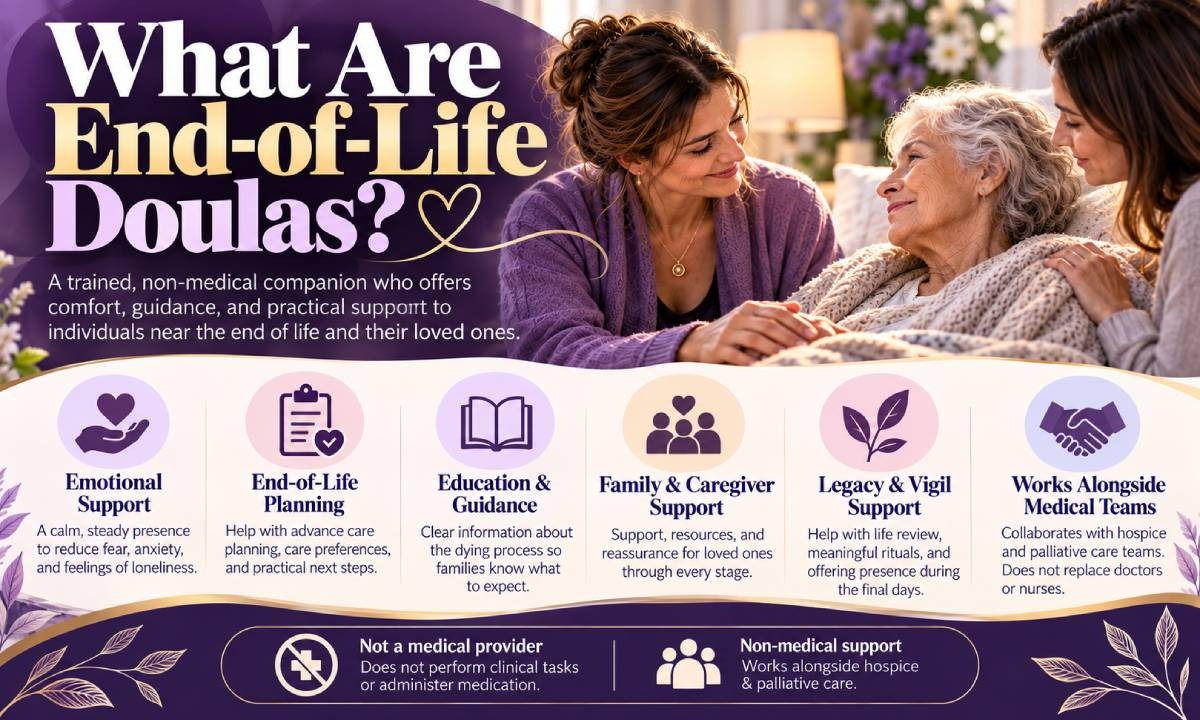
An end-of-life doula is a trained, non-medical guide for people near death and their loved ones. They offer comfort, planning help, and a calm, steady presence. They listen without judging and stay close through the hardest days. They do not replace doctors, nurses, or hospice teams. They work beside them to care for the whole person.
This guide explains what end-of-life doulas do and how they fit with hospice and palliative care. You will learn where to find a doula and what to ask before you choose one. We also cover pain medicines in palliative care, pay, jobs, and training. Read it from start to finish or jump to the part you need.
📖 Read More
Learn more about this topic by visiting What Are End-of-Life Doulas? ↗ .
Doulas and Hospice
Doulas and hospice teams serve different needs, but they share one goal: comfort. Hospice gives medical care near the end of life. A doula adds time, listening, and personal support. Together, they care for the body and the whole person. Many families find that having both brings more calm and less fear.
- Hospice manages pain, symptoms, and medicine. A doula does not give medical care.
- A doula offers unhurried time and companionship. Hospice visits are often short.
- Doulas can help families ask better questions of the hospice team. This helps them feel more confident.
- Hospice is usually covered by insurance or Medicare for eligible patients. Doula care is often paid for privately.
- A doula can sit with the family during long nights. Hospice staff cannot always be there.
- Doulas share medical concerns with the care team right away. Safety always comes first.
No Typical Cases
Every dying person and every family is different. There is no single script for how a doula works. Some families want help with planning, and others want quiet company at the bedside. A good doula follows the wishes of the person and the family. Flexibility and respect are at the heart of the work.
- Some clients begin support months before death. Others call only in the final days.
- Some want help with legacy projects like letters and recordings. Others simply want someone to listen.
- Families differ in culture, faith, and values. A doula respects each one.
- Some people die at home, and others in hospitals or care homes. A doula can support in any setting.
- Needs can change from day to day. A good doula adjusts with care.
- The doula never pushes a plan or a belief. The person and family lead.
Someone to Talk to and Cry With
Dying brings strong feelings, and many people have no safe place to share them. Family members may avoid the subject to protect each other. Friends may pull away because they do not know what to say. A doula offers a space where all feelings are welcome. Tears, anger, laughter, and silence are all allowed.
- A doula listens without trying to fix. People can say what they truly feel.
- They stay calm when emotions run high. This helps others feel steady.
- They make room for tears and for laughter. Both are part of saying goodbye.
- They help family members speak honestly to each other. Old tensions can soften.
- They support caregivers who feel worn out or alone. Helpers need care too.
- They know when to suggest a counselor or grief group. Extra support can help healing.
Where to Find a Doula
Finding a doula is easier than it sounds. Start with trusted sources and take your time. Look for someone whose training, values, and style feel right to you. Trust matters as much as credentials. A short call can tell you a lot.
- Check directories such as the one from NEDA. They list doulas who follow professional standards.
- Ask your hospice, hospital, or palliative care team. Many know doulas in your area.
- Search online with your city and “end-of-life doula.” Read each profile with care.
- Ask friends, faith groups, and community centers. Word of mouth often works well.
- Look for local death cafes and community talks. They are good places to meet doulas.
- Meet or call first to see if it feels right. Comfort and trust come first.
If You Choose a Doula
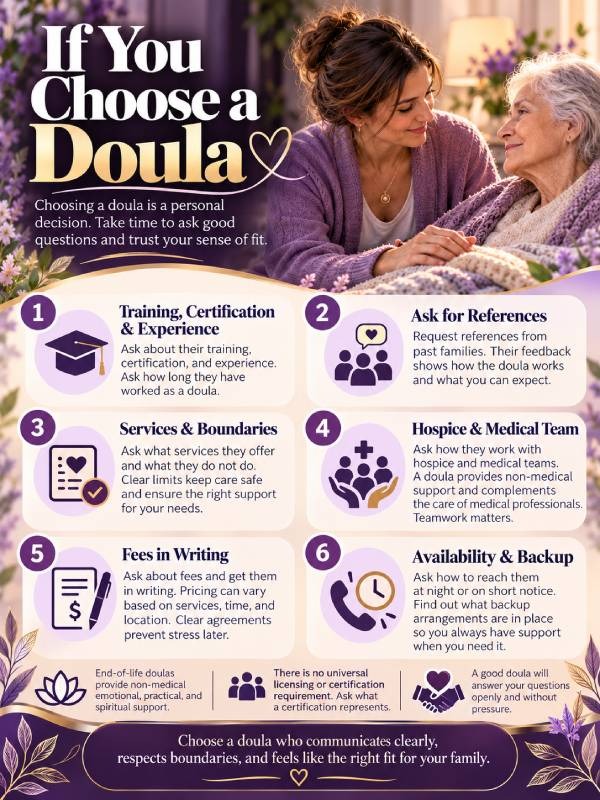
Choosing a doula is a personal decision. Take time to ask good questions and trust your sense of fit. A good doula will answer openly and without pressure. Clear terms protect both you and the doula. Write your questions down before you call.
- Ask about training, certification, and experience. Ask how long they have worked as a doula.
- Ask for references from past families. Their feedback shows how the doula works.
- Ask what services they offer and what they do not do. Clear limits keep care safe.
- Ask how they work with hospice and medical teams. Teamwork matters.
- Ask about fees and get them in writing. Clear terms prevent stress later.
- Ask how to reach them at night or on short notice. Know what to expect.
More On Palliative Care
Palliative care is care that focuses on comfort and quality of life during serious illness. It can ease pain, stress, and other symptoms. It is not only for the final days. It works alongside treatment meant to cure or slow illness. Many people live better with palliative care in place.
- Palliative care treats symptoms like pain, nausea, and breathlessness. The goal is comfort.
- It also supports emotional and spiritual needs. The whole person matters.
- It is given by a team that may include doctors, nurses, and social workers. They work together with you.
- It can begin at any stage of a serious illness. Earlier support can help more.
- It is different from hospice, which is for the final stage. You can have palliative care without hospice.
- A doula can help families understand these services. They can also help ask good questions.
Palliative Care: When and How It Can Help You
Palliative care can help as soon as a serious illness brings pain or stress. You do not have to wait until treatment ends. It can make daily life easier for both patients and families. It also helps people talk about their goals and wishes. Asking early often brings the most benefit.
- It can help when symptoms are hard to control. Better comfort can improve daily life.
- It can help when you feel overwhelmed by choices. The team explains options in plain words.
- It can support families who feel tired or anxious. Caregivers get help too.
- It helps you share your goals and wishes. Care then matches what matters to you.
- It can work alongside treatments like surgery or chemotherapy. You do not have to give up other care.
- You can ask your doctor for a referral at any time. Do not be afraid to ask.
How to Find Palliative Care
Finding palliative care starts with a conversation with your doctor. Many hospitals, clinics, and cancer centers have palliative care teams. Some programs also visit patients at home. Insurance rules differ, so it helps to ask early. Your care team can point you to the right service.
- Start by asking your doctor for a referral. They can connect you with a team.
- Ask your hospital if it has a palliative care service. Many large hospitals do.
- Ask about home-based palliative care if travel is hard. Some programs visit at home.
- Check with your insurance about coverage. Ask what is included and what is not.
- Look at national and local health directories. They may list programs near you.
- Ask your social worker or nurse for help. They often know local options.
Pain Medications for Palliative Care
Pain control is a key part of palliative care. Doctors choose medicines based on each person’s needs. They also watch for side effects and adjust care when needed. This information is general, and it is not medical advice. Always follow your own care team’s plan.
- Doctors may use different kinds of pain medicine, from mild to strong. The choice depends on the type and level of pain.
- Some pain, such as nerve pain, may need special medicines. The team picks what fits best.
- Side effects like drowsiness or constipation can be managed. Tell your team early if you notice them.
- Doses are set by your doctor and care team. Never change them on your own.
- Non-medicine options can help too, such as heat, massage, music, and gentle touch. These can add comfort.
- Report new or worsening pain right away. Your team can adjust the plan.
Topics Trending In Search and Social
People are talking more openly about death, grief, and end-of-life care. Search and social media show growing interest in doulas, hospice, and palliative care. This reflects a wish for more personal and less medical endings. These trends can open honest talks in families. Always check facts with trusted sources.
- More people are searching for end-of-life doulas. They want gentler, more personal care.
- “Death positive” ideas are spreading online. They encourage open talk about dying.
- Death cafes and community talks are gaining attention. They make the topic less scary.
- People share stories about caring for loved ones. These stories can bring comfort and ideas.
- Questions about pay, training, and jobs are common. Many people are curious about this career.
- Not everything online is accurate. Check important facts with trained professionals.
Explore More On Palliative Care
If you want to learn more, many trusted resources can help. Hospitals, hospices, and national health groups share plain-language guides. Learning early can bring peace of mind. It also helps you make clear choices. Take your time and ask questions.
- Read guides from trusted health organizations. They explain palliative care in simple words.
- Ask your care team for printed handouts. They can match them to your situation.
- Look for local classes and community talks. Hospices often host them.
- Read books on caregiving and end-of-life care. Many offer comfort and practical ideas.
- Talk with other families who have used palliative care. Real stories can help.
- Keep a notebook of questions for your next visit. This helps you use your time well.
Sign up for our free Good Health Newsletter
A health newsletter can be a simple way to learn more over time. Short emails can share tips on care, comfort, and well-being. This section is general, so please add your own newsletter details. Make sure any newsletter you join comes from a trusted source. You can unsubscribe at any time.
- A newsletter can deliver health tips to your inbox. It saves you time searching.
- Look for content that is clear and easy to read. Simple words help most.
- Choose a source that is trusted and well known. Good sources share accurate information.
- Check how often it sends emails. Pick a pace that suits you.
- Protect your privacy and read the sign-up terms. Share only what you are comfortable sharing.
- Remember that a newsletter is not medical advice. Talk with your doctor about personal concerns.
Get wellness tips to help you live happier and healthier
Caring for someone who is dying can be tiring, so your own well-being matters. Small daily habits can protect your health and mood. Healthy helpers give better care. These tips are general, so please adjust them to your needs. Talk with a professional for personal advice.
- Rest when you can, even in short breaks. Sleep helps your body and mind.
- Eat simple, regular meals. Steady food keeps your energy up.
- Move your body gently each day. A short walk can lift your mood.
- Stay connected with friends and family. Talking helps you feel less alone.
- Take quiet moments for breathing, prayer, or reflection. Calm moments add strength.
- Ask for help and accept it when offered. You do not have to do everything alone.
Death Doula salary
Pay for death doulas varies widely. The field is young, so exact figures are hard to give. Many doulas are self-employed and set their own fees. Some work part-time, and some volunteer. Location, training, and experience all affect what a doula earns.
- Many doulas work for themselves. They set their own rates and packages.
- Some charge by the hour, and others offer packages. Packages may cover planning, vigil, and after-care.
- Some doulas volunteer with hospices or community groups. Others mix paid and volunteer work.
- A few are paid by hospices, hospitals, or nonprofits. Pay in those roles depends on the employer.
- Training, experience, and location can change fees. Check local rates for the best guide.
- Insurance rarely covers doula care today. Families usually pay out of pocket.
What is the difference between a death doula and an end-of-life doula
In most cases, there is no difference. The two names describe the same role. Some people prefer one name over the other. Both mean a non-medical companion for the dying and their families. Other names, like death midwife or soul midwife, are also used.
- “Death doula” and “end-of-life doula” describe the same work. Both support the dying and their loved ones.
- Some people find “end-of-life” gentler. Others like “death doula” for its plain honesty.
- “Death midwife” and “soul midwife” are similar ideas. These names often lean more spiritual.
- None of these roles give medical care. They work alongside doctors and nurses.
- Training and style can differ more than the name. Always ask what a doula actually does.
- Check training, ethics, and references. The title matters less than the person.
End of life doula near me
Finding a doula close to you takes a few simple steps. Start with trusted sources and ask good questions. Look for someone whose training and style feel right to you. Trust matters as much as credentials. A short call can tell you a lot.
- Check directories like NEDA’s. They list doulas who follow professional standards.
- Ask your hospice, hospital, or palliative care team. Many know doulas in the area.
- Search online with your city and “end-of-life doula.” Read each profile with care.
- Ask friends, faith groups, and community centers. Word of mouth often works well.
- Ask about training, references, and fees. A good doula answers openly.
- Meet or call first to see if it feels right. Comfort and trust come first.
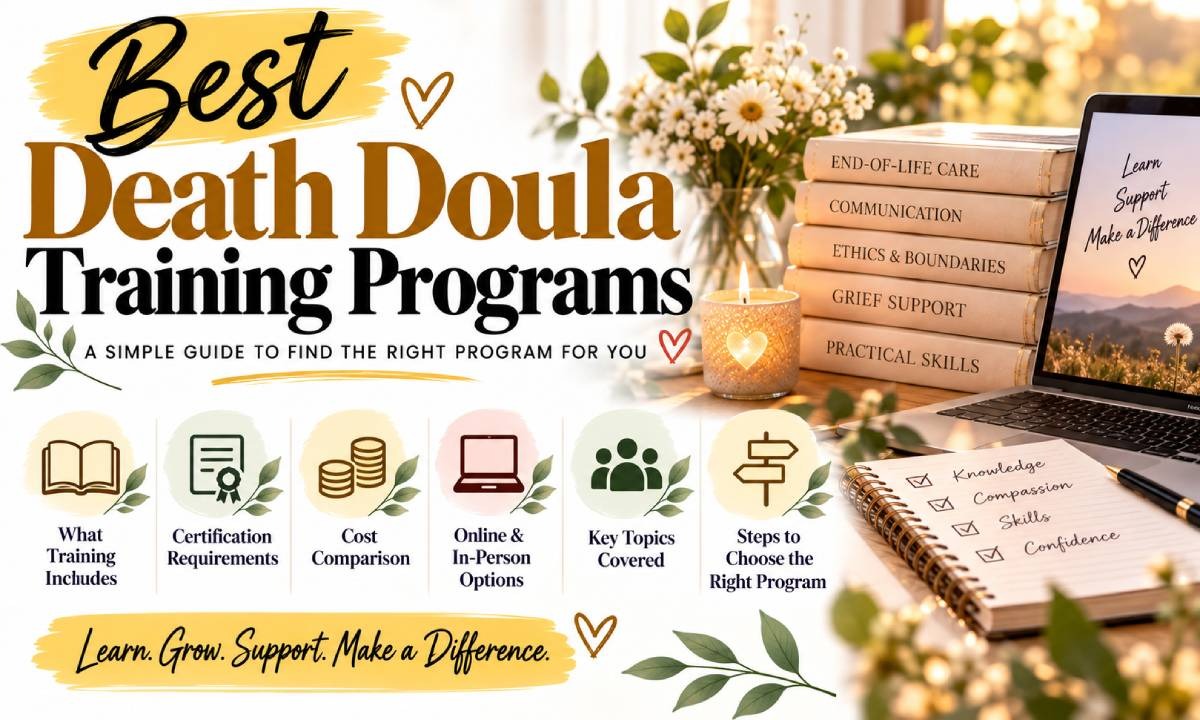
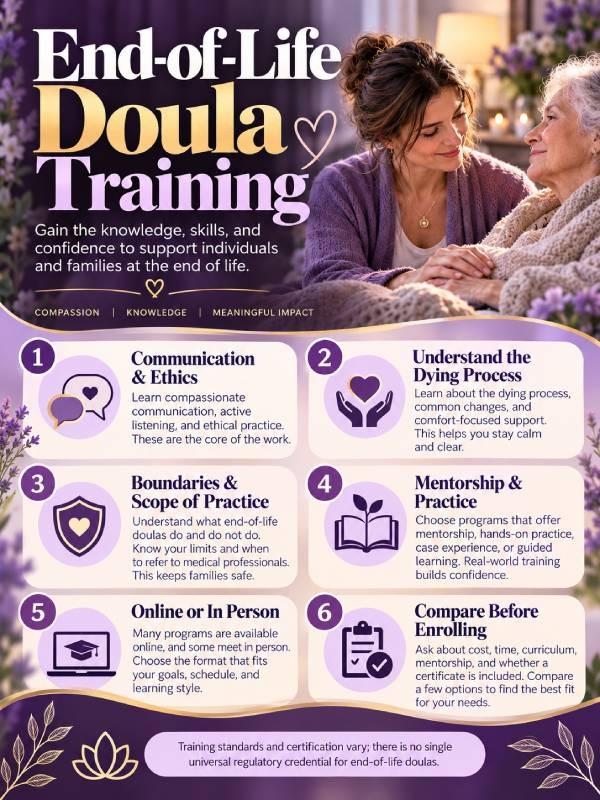
End-of-life Doula training
Good training builds skill, trust, and confidence. It also keeps families safe. Programs range from short workshops to full certification courses. There is no single required path. Choose one that fits your goals, budget, and learning style.
- Look for programs that teach communication and ethics. These are the core of the work.
- Learn about the dying process and common changes. This helps you stay calm and clear.
- Study boundaries and scope of practice. Knowing your limits keeps families safe.
- Choose courses with mentorship or hands-on practice. Real-world learning matters.
- Many programs run online, and some meet in person. Pick the style that suits you.
- Ask about cost, time, and certification before enrolling. Compare a few options first.
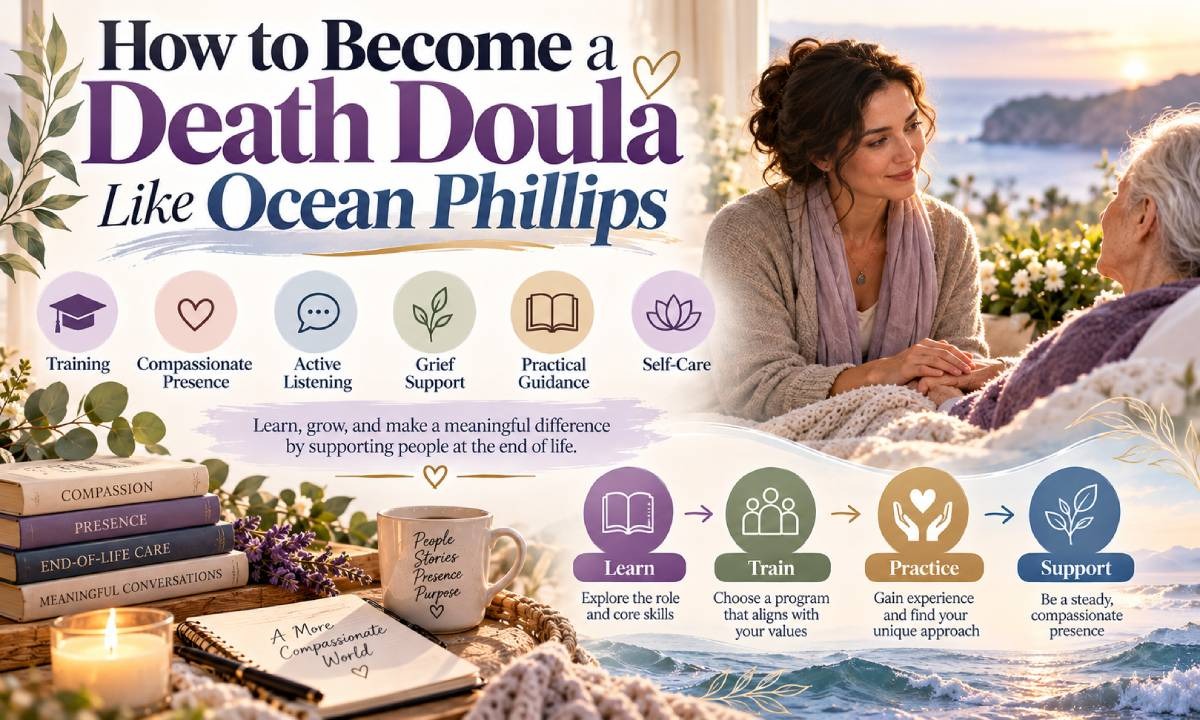
How to become an end-of-life doula
There is no single required path to become an end-of-life doula. Most people follow a few simple steps: learn, gain experience, train, and begin. Compassion and healthy boundaries matter most. Certification is usually optional, but it can build trust with families. You can move at your own pace.
- Start by learning about death, dying, and grief. Books, talks, and death cafes can help.
- Volunteer with a hospice or care home. Hands-on time builds comfort and skill.
- Choose a training program that fits your goals and budget. Look for ethics, communication, and mentorship.
- Complete your training and any practice hours. Steady effort builds confidence.
- Join a professional group such as NEDA. It offers standards, community, and a directory.
- Start with a few clients and grow with care. Set clear fees and written agreements.
End of life Doula jobs
Jobs for end-of-life doulas are growing, but the path is not fixed. Many doulas build their own way into this work. Some work for themselves, while others join hospices or nonprofits. Many combine doula work with another career. The field is still young, so options keep changing.
- Many work in private practice. They find clients through word of mouth and online profiles.
- Hospices sometimes hire or train doulas and volunteers. This can be a steady option.
- Hospitals and care homes are starting to explore doula support. This is still developing.
- Nonprofits and community groups may offer paid or volunteer roles. They often serve families with fewer resources.
- Some doulas combine this work with nursing, counseling, or chaplaincy. This widens their options.
- Teaching, writing, and running workshops are other paths. Experienced doulas often share what they know.
Do end of life doulas get paid
Yes, many end-of-life doulas are paid, but not all. Some charge fees, some volunteer, and some do both. Pay depends on where they work and how they set up their practice. Families should ask about fees early. Clear terms protect everyone.
- Many private doulas charge for their time. They set hourly rates or packages.
- Some doulas offer sliding-scale fees. This helps families with less money.
- Some volunteer through hospices or community groups. They may not charge at all.
- A few are paid employees of hospices, hospitals, or nonprofits. Their pay comes from the employer.
- Insurance rarely covers doula care today. Families usually pay out of pocket.
- Always ask about fees and get them in writing. This avoids surprises later.
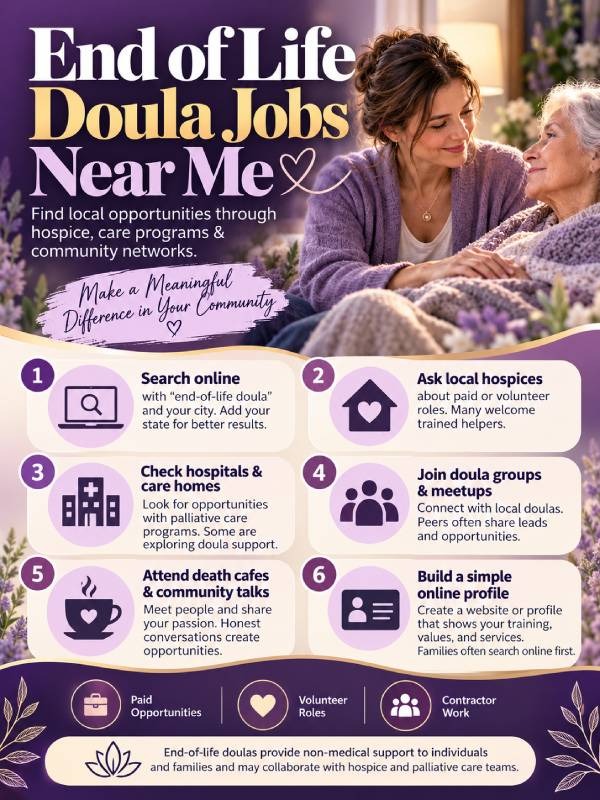
End of life Doula jobs near me
Finding doula work near you takes a little searching and a lot of connection. Local networks often lead to the best chances. Many doulas start small and grow slowly. Trust and reputation matter in this field. Be patient and keep learning.
- Search online with “end-of-life doula” and your city. Add your state for better results.
- Ask local hospices about paid or volunteer roles. Many welcome trained helpers.
- Check hospitals, care homes, and palliative care programs. Some are exploring doula support.
- Join local doula groups and meetups. Peers often share leads.
- Attend death cafes and community talks. People remember honest voices.
- Build a simple website or online profile. Families often search online first.
Frequently Asked Questions
What are end-of-life doulas?
End-of-life doulas are trained, non-medical guides who support dying people and their families. They offer emotional, practical, and spiritual care.
Do I still need hospice if I have a doula?
In most cases, yes. Hospice gives medical care that a doula cannot.
What is the difference between a death doula and an end-of-life doula?
There is usually no difference. Both names describe the same role.
How do I become an end-of-life doula?
Learn about death and dying, volunteer with hospice, complete a training program, and consider joining a professional group.
Do end-of-life doulas get paid?
Many do, but not all. Some charge fees, some volunteer, and some do both.
How do I find an end-of-life doula near me?
Check directories like NEDA’s, ask your hospice team, and search online with your city. Then ask about training, references, and fees.
Conclusion
End-of-life doulas bring comfort, planning, and presence to one of life’s hardest times. They care for the whole person and support the family, not just the illness. Their work fits beside hospice and palliative care, adding time and heart where medicine cannot. Families often say that this support changed how they remembered the end. A doula helps turn a frightening time into a more peaceful one.
If you or someone you love is facing a serious illness, you do not have to do it alone. Ask your care team about palliative care and hospice. Think about whether a doula could help your family. Ask good questions and choose someone you trust. If you feel called to this work, learn, train, and begin with care. Starting early gives everyone more time and more peace.