Choosing a death doula training program is a big step. There are many options, and each one looks a little different. Some are short and low cost, while others are long and more detailed. It is easy to feel lost when you start comparing them. A clear guide can save you time, money, and doubt.
Death doula training teaches you how to support people at the end of life. It covers listening, planning, comfort, and the dying process. Good programs also teach ethics and healthy boundaries. There is no single required path, so the choice is yours. The right program is the one that fits your goals, budget, and learning style.
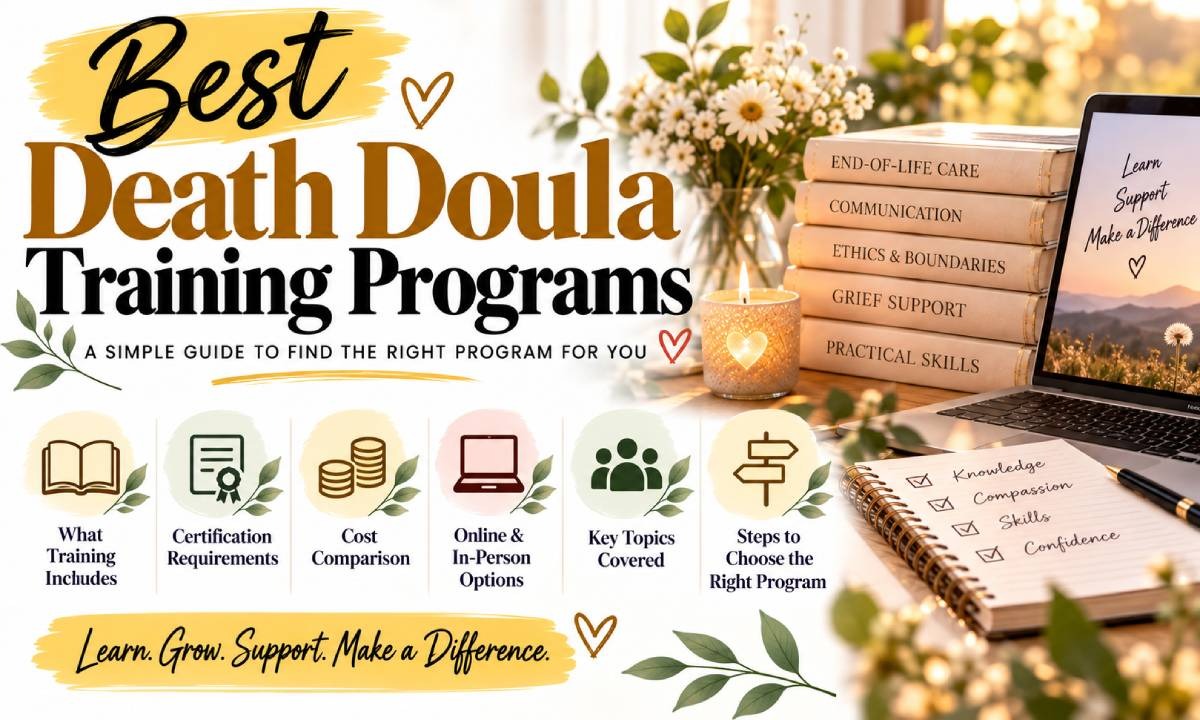
This guide covers the best death doula training programs to explore. You will learn what training includes and whether certification is required. We also compare cost, online and in-person options, and the topics most courses cover. At the end, you will find simple steps to choose the right program for you.
What Is Death Doula Training?
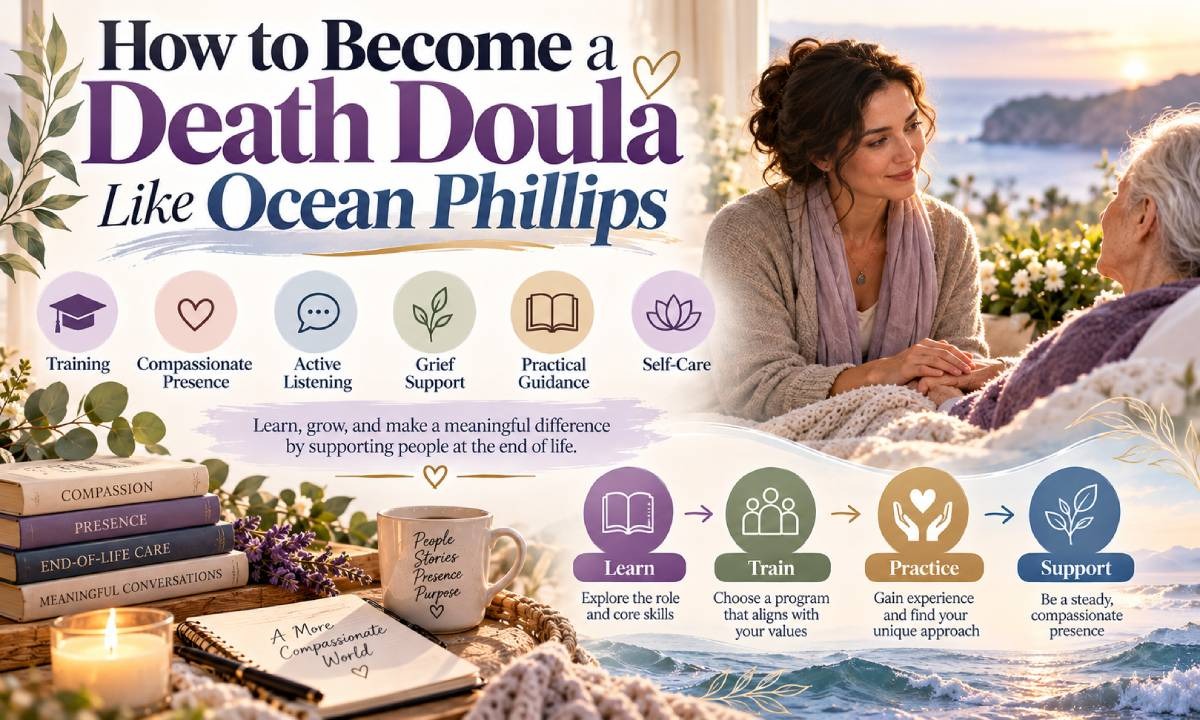
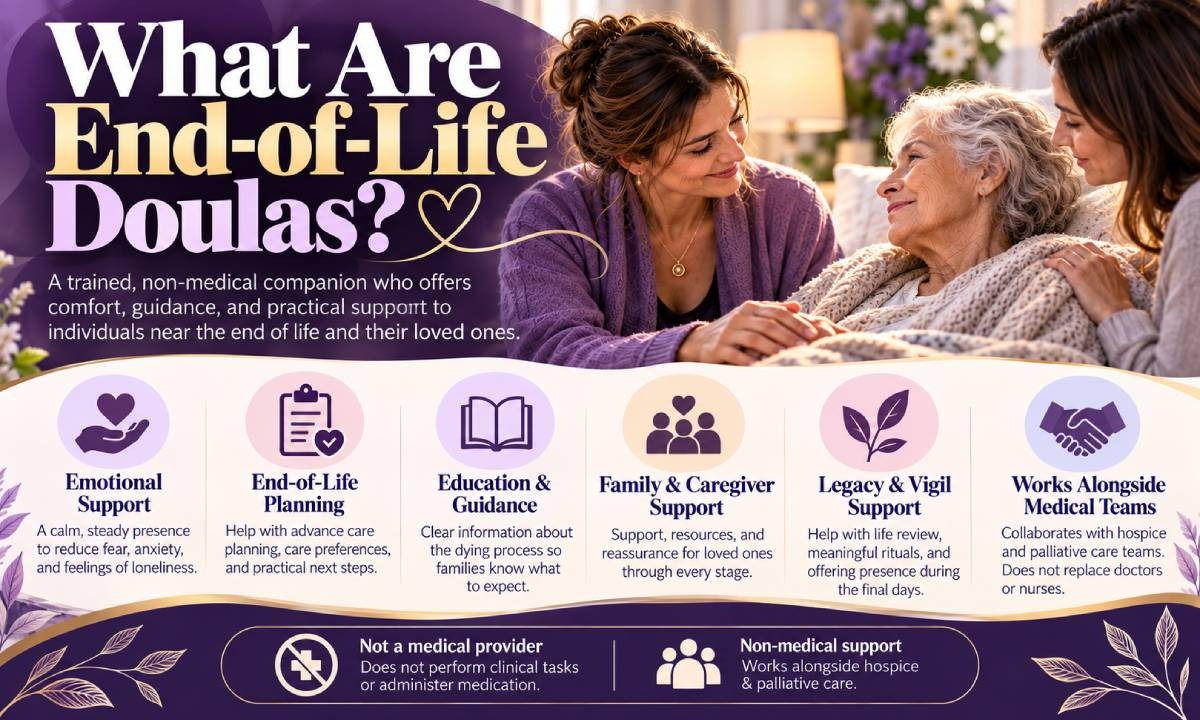
Death doula training prepares you to support dying people and their families in a non-medical way. It teaches both practical skills and emotional skills. Programs range from short workshops to full certification courses. Most mix lessons, discussion, and practice. The goal is to help you serve with confidence, care, and clear limits.
- Training teaches you how to sit with the dying and their loved ones. Presence and listening are the core skills.
- It explains the physical and emotional changes near the end of life. This helps you stay calm and clear.
- It covers planning talks, legacy work, and vigil support. These are the heart of daily doula work.
- It teaches ethics, scope of practice, and boundaries. Knowing your limits keeps families safe.
- Many programs include self-care lessons. Healthy doulas give better care.
- Some offer mentorship or practice hours. Hands-on learning builds real confidence.
Is Death Doula Certification Required by Law?
No, there is no federal law that requires death doula certification in the United States. The field is still young and mostly unregulated. Rules can differ by state or country, so always check locally. Even so, many doulas choose certification to build trust. It shows families and healthcare teams that you have real training.
- No federal license is needed to work as a death doula. This is why training quality varies.
- Certification is usually optional. It can still help clients feel more confident in you.
- Doulas must stay non-medical. They never give medical, legal, or financial advice.
- Some laws affect body care and home funerals. Learn the rules where you live and work.
- Hospices and care homes may prefer trained doulas. Credentials can open doors.
- A code of ethics and written agreements protect everyone. Ask any program how it handles them.
How We Evaluated the Best Death Doula Training Programs
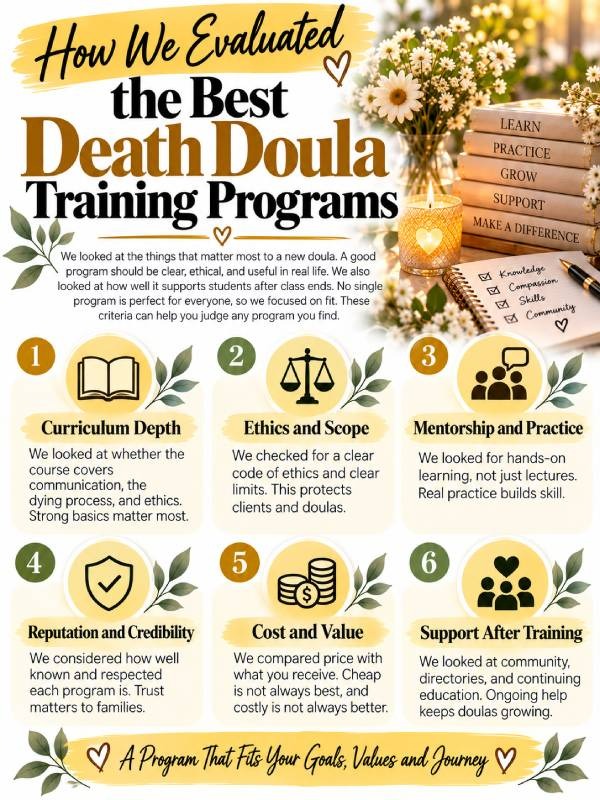
We looked at the things that matter most to a new doula. A good program should be clear, ethical, and useful in real life. We also looked at how well it supports students after class ends. No single program is perfect for everyone, so we focused on fit. These criteria can help you judge any program you find.
- Curriculum depth: We looked at whether the course covers communication, the dying process, and ethics. Strong basics matter most.
- Ethics and scope: We checked for a clear code of ethics and clear limits. This protects clients and doulas.
- Mentorship and practice: We looked for hands-on learning, not just lectures. Real practice builds skill.
- Reputation and credibility: We considered how well known and respected each program is. Trust matters to families.
- Cost and value: We compared price with what you receive. Cheap is not always best, and costly is not always better.
- Support after training: We looked at community, directories, and continuing education. Ongoing help keeps doulas growing.
Best Death Doula Training Programs
Several programs stand out for different reasons. Each one has its own strengths, style, and focus. Some are best for credibility, while others are best for cost or mentorship. Think about what matters most to you before you choose. Always confirm the latest details on each official website.
- INELDA is known for its nonprofit alignment. It is a popular first step for many doulas.
- The University of Vermont offers an academic certificate. It suits people who value formal education.
- NEDA focuses on standards and micro-credentials. It also supports doulas with community.
- The DNT Network certification is noted for affordability. It may suit those on a smaller budget.
- Lifespan Doula Association is a good fit for beginners. It offers a gentle start.
- Going With Grace is known for hands-on mentorship. It suits people who want close guidance.
INELDA (International End-of-Life Doula Association) — Best for Nonprofit Alignment
INELDA is a well-known group for doula education and certification. It is often chosen by people who like its nonprofit approach and mission. Many doulas begin their journey here. The program covers core skills like communication, the dying process, and care for families. Requirements, formats, and fees can change over time. Please confirm the latest details on the official site.
- It offers training for new and aspiring doulas. The lessons cover the basics of the work.
- Its mission is rooted in nonprofit values. This appeals to people who want purpose-driven learning.
- Topics often include communication, planning, and bedside care. These are key skills for any doula.
- Certification may involve training and practice steps. Check the current requirements.
- A growing community of doulas can offer support. Connection helps you stay steady.
- Fees and formats may change. Always check the official website before you apply.
University of Vermont End-of-Life Doula Certificate — Best for Academic Credibility
The University of Vermont offers an academic certificate for end-of-life doulas. It is a good option for people who want a university-backed credential. Academic programs often feel more structured and formal. This can add weight when you work with hospitals or care teams. Course details, length, and cost may change. Please confirm the latest information on the university’s site.
- It carries the name of a respected university. This can build trust with healthcare partners.
- The structure is often more formal and organized. It suits people who like clear learning paths.
- Content typically covers the dying process, ethics, and communication. These are core doula topics.
- Online learning may make it easier to join from anywhere. Check the current format.
- An academic certificate can support your professional image. Families may find it reassuring.
- Fees, dates, and requirements may change. Confirm everything on the official page.
NEDA (National End-of-Life Doula Alliance) — Best for Standards & Micro-Credentials
NEDA is a nonprofit alliance that supports end-of-life doulas. It is known for its focus on standards, ethics, and professional community. Its approach helps doulas show clear, recognized skills. It also has a directory that helps families find doulas. Credential steps and membership details can change. Please check the official site for current information.
- NEDA shares a code of ethics and a scope of practice. These guide safe and respectful care.
- It offers a credentialing path for doulas. This helps build family trust.
- Micro-credentials can show specific skills. This lets you grow step by step.
- A directory helps families find doulas. Joining may help you be found.
- It connects doulas with peers and resources. Community reduces isolation.
- Membership and credential details may change. Verify them on the official site.
DNT Network End-of-Life Doula Certification — Best for Affordability
The DNT Network End-of-Life Doula Certification is noted here as a budget-friendly choice. Cost is a big concern for many new doulas, and lower prices can open the door. Still, value is more than price. Check what the program teaches and what support it gives. (Please add DNT Network’s real course details, since I do not have them.)
- Lower cost can make training reachable for more people. This is helpful for beginners.
- Look at what the price includes. Materials, mentorship, and certification may differ.
- Check the topics covered. Communication, ethics, and the dying process should be included.
- Ask about support after training. Community and resources add value.
- Read reviews and ask for references. Real feedback gives a true picture.
- Confirm current fees and terms with the program. Prices can change.
Lifespan Doula Association — Best for Beginners
Lifespan Doula Association is a good fit for people new to this field. It offers a gentle, welcoming way to learn the basics. Beginners often need clear lessons and a friendly pace. A good starter program helps you test your interest without feeling overwhelmed. Course details and fees may change, so confirm them on the official site.
- It suits people with no prior doula experience. The pace is meant to be easy to follow.
- Lessons introduce the core ideas of end-of-life care. This builds a solid base.
- Beginners can learn about boundaries and ethics early. This sets good habits.
- It can work as a first step before deeper training. You can build on it later.
- A supportive community can help new doulas feel less alone. This matters when you start.
- Check current formats, fees, and certification terms. Details can change.
Going With Grace — Best for Hands-On Mentorship
Going With Grace is known for its hands-on, personal style of teaching. It is a good fit for people who want close guidance from experienced doulas. Mentorship helps you learn from real stories and real situations. It can also build confidence faster than lessons alone. Program details and costs may change. Please confirm the latest information on the official site.
- Mentorship gives you personal feedback. This helps you grow with confidence.
- Learning from real experience brings the work to life. Stories teach what books cannot.
- Hands-on practice can prepare you for real bedside moments. Skills grow through doing.
- Small groups or close guidance can make learning feel safe. You can ask questions freely.
- It may suit people who learn best through conversation. Check the format first.
- Fees, schedules, and formats may change. Verify them before you enroll.
How Much Does Death Doula Training Cost?
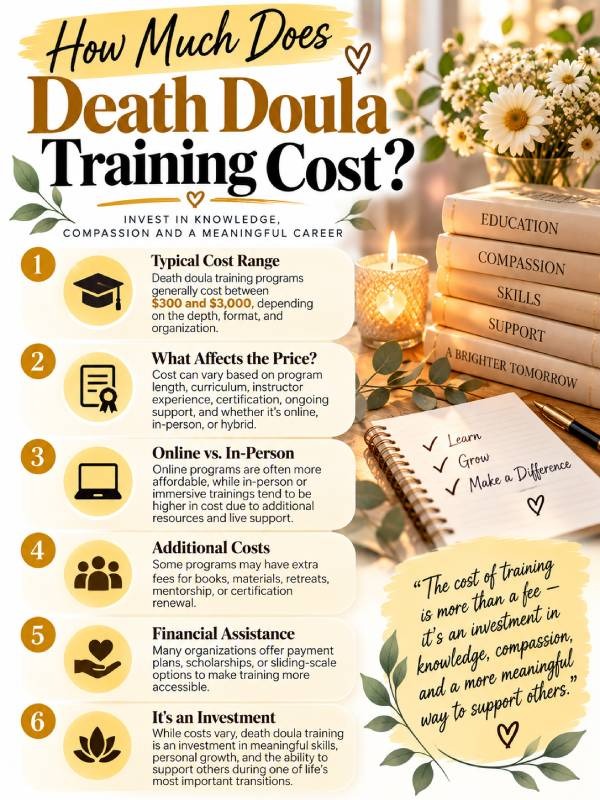
Costs vary widely from one program to another. Short workshops cost less, and full certification courses cost more. University programs may sit at a different price level again. Extra costs can add up, so ask about them early. Compare the full value, not just the price tag.
- Free or low-cost options exist, such as hospice volunteer training. They are a good first step.
- Short workshops and webinars are usually more affordable. They suit beginners.
- Full certification programs often cost several hundred to a few thousand dollars. Prices differ by provider.
- Extra costs may include books, exam fees, and membership dues. Ask about these up front.
- Some programs offer payment plans or scholarships. Always ask before you enroll.
- Value matters as much as price. Mentorship, community, and support are worth weighing.
Online vs. In-Person Death Doula Training
Both formats can work well, and the best one depends on you. Online training is flexible and often easier to fit into a busy life. In-person training offers close contact and shared emotional space. Some programs mix the two. Think about how you learn best before you decide.
- Online training lets you learn from home. It saves travel time and cost.
- In-person training builds closer bonds with teachers and classmates. Shared presence can deepen learning.
- Online programs often have more flexible schedules. This helps people who work or care for family.
- In-person programs may include more live practice. Role play feels natural face to face.
- Mixed formats offer the best of both. Check if a program provides them.
- Ask how each program handles mentorship and support. Good support matters in any format.
What Death Doula Training Programs Cover
Most programs cover a similar set of core topics. The depth and style can differ, but the goal is the same. You should leave with the skills to support people with care and clear limits. Good programs also help you look after yourself. Always check the course outline before you enroll.
- Understanding the dying process and common changes. This helps you stay calm and clear.
- Communication and active listening skills. These are the heart of doula work.
- Advance care planning conversations and wishes. Doulas guide but do not give legal advice.
- Legacy work, vigil planning, and comfort care. These create meaningful moments for families.
- Grief, loss, and bereavement support. This helps you support families after death.
- Ethics, scope of practice, and self-care. These keep you and your clients safe.
📖 Read More
Learn more about this topic by visiting Best Death Doula Training Programs ↗ .
How to Choose the Right Death Doula Training Program for You
The right program is the one that fits your goals, budget, and style. Take your time and compare a few options. Read the course outlines and talk to past students. Trust your sense of how a program feels. A good match will help you grow with confidence.
- Start with your goals. Decide if you want a quick start, a formal credential, or close mentorship.
- Set a realistic budget. Include extra fees like books and membership dues.
- Compare what each program teaches. Look for communication, ethics, and the dying process.
- Check for mentorship and practice hours. Hands-on learning builds real skill.
- Read reviews and ask for references. Real feedback is valuable.
- Confirm the latest details on each official site. Fees, formats, and requirements can change.
Frequently Asked Questions
What is the best death doula training program?
There is no single best program for everyone. The best one fits your goals, budget, and learning style.
Do I need certification to be a death doula?
No law requires it in the United States. Certification is optional but can build trust with families and employers.
How much does death doula training cost?
Costs vary widely. Options range from free volunteer training to full paid certification programs.
Is online death doula training worth it?
Yes, for many people. It is flexible and affordable, but check that it includes real support and practice.
How long does death doula training take?
It depends on the program. Some take a few weeks, while others take months, especially with practice hours.
Can I become a death doula without a medical background?
Yes. Compassion, listening skills, and good training matter most.
Conclusion
The best death doula training program is the one that fits you. Think about your goals, your budget, and how you like to learn. Compare a few options, read the details, and ask questions. A thoughtful choice now will help you serve families with more confidence later.
This work asks for heart, honesty, and healthy boundaries. A good program will help you build all three. When you feel ready, take your first step and enroll with care.