Death is something every family faces, yet few of us learn how to walk beside someone who is dying. Many people feel afraid of saying the wrong thing. Others feel alone in their care. A good companion can change that. They bring calm, kindness, and steady presence to a hard time.
An end of life companion is someone who sits with the dying and their loved ones without trying to fix the pain. They listen, they stay, and they honor each person’s wishes. Some companions are doulas, and some are caregivers, volunteers, or counselors. Books, guides, and support groups can also help us learn this gentle work. Caring for yourself matters just as much as caring for others.
This guide looks at the idea of companioning the dying and the bereaved. It covers helpful books and resources, the link with hospice, and how doula work fits in. You will also learn about salary, training, finding a doula near you, and common questions. Read it from start to finish or jump to the part you need.
The End of Life Companion
An end of life companion is a person who walks beside the dying with presence, patience, and respect. The role is about being with, not fixing. A companion honors each person’s story and pace. They support the family as well. Anyone with compassion can learn to do this work.
- A companion listens without judging. People can share fear, sadness, and love safely.
- They stay present even when words run out. Quiet company can be a deep comfort.
- They follow the wishes of the dying person. The person always leads the care.
- They support family members and caregivers. Loved ones need care too.
- They work alongside nurses, doctors, and hospice teams. They never replace medical care.
- They keep healthy boundaries and care for themselves. A rested companion gives better care.
Companioning the Dying: A Soulful Guide for Caregivers
This book title points to a gentle, heart-centered way of caring for the dying. It is written for caregivers who want to offer more than tasks. The idea is to be a fellow traveler, not an expert with answers. Readers often look to it for comfort and guidance. Please add the author and publisher details from the official listing.
- The title speaks to caregivers, both family and professional. Many people in these roles feel unsure and tired.
- A soulful approach focuses on presence and respect. It values the dying person’s own journey.
- Books like this can offer language for hard moments. This helps caregivers feel less lost.
- They can remind caregivers that they do not need to fix everything. Simply being there matters.
- Reading may help you reflect on your own fears about death. Self-awareness makes you a steadier companion.
- Check the publisher’s page for the latest edition and details. Information can change over time.
Companioning You! A Soulful Guide to Caring for Yourself While You Care for the Dying and the Bereaved
This title speaks to the caregiver’s own needs. Caring for the dying and the grieving can drain the heart. Self-care is not selfish, it is part of the work. A guide like this reminds helpers to tend to themselves. Please add the author and publisher details from the official listing.
- Caregivers often put their own needs last. This can lead to exhaustion and burnout.
- A soulful approach treats self-care as a deep, steady practice. It goes beyond a bath or a day off.
- Helpers also carry grief of their own. They need space to feel and heal.
- Simple habits can protect your energy. Rest, movement, and time with friends all help.
- Peer support can lighten the load. Sharing stories helps helpers feel less alone.
- Check the publisher’s page for the latest details on contents. Descriptions may change.
Related products
Many helpers look for books, videos, and guides that support their work. Related products often cover grief, caregiving, and healing after loss. They can be useful for individuals, families, and support groups. Choose items that match your role and needs. Always check each product’s official page for the latest details.
- Books on grief can help you understand common feelings. They often offer simple, practical ideas.
- Handbooks and guides can support counselors and group leaders. They give structure to hard conversations.
- Videos can reach people who prefer to watch and listen. They also work well in group settings.
- Support group guides help leaders run safe, caring groups. They are useful for hospices and community centers.
- Look for materials that match the age and need of your audience. Teens and adults grieve in different ways.
- Read reviews and previews before you buy. Make sure the content fits your goals.
The Handbook for Companioning the Mourner: Eleven Essential Principles
This title suggests a guide built around eleven key principles for supporting people in grief. It is aimed at helpers who walk beside the bereaved. The focus is on presence and respect, not quick fixes. A book like this can be helpful for counselors, clergy, and volunteers. Please add the author and publisher details from the official listing.
- The title points to eleven guiding principles. Principles give helpers a clear base to work from.
- Companioning means being with the mourner, not treating them. This respects each person’s grief.
- Helpers learn to listen more than they speak. Deep listening is a core skill.
- Mourners are seen as experts in their own grief. This builds trust and dignity.
- Such handbooks may help in hospice, faith, and community settings. Many helpers can use them.
- Check the publisher’s page for the full list of principles and the latest edition. Do not rely on a summary alone.
A Teen’s View of Grief DVD
This DVD title suggests a resource that shares how teens experience grief. Teens often grieve in ways adults do not expect. Videos can help them feel seen and less alone. They can also help parents, teachers, and counselors understand. Please add the producer details and contents from the official listing.
- Teens may hide their grief or show it in different ways. Anger, silence, or distraction are common.
- Hearing from other teens can help them feel understood. Shared stories reduce isolation.
- Video can be an easier way to start a hard talk. It gives families a gentle opening.
- Adults can use it to learn how teens feel. This helps them respond with care.
- It may suit schools, support groups, and hospice programs. Many settings can use it.
- Check the official page for length, format, and content notes. Make sure it fits your audience.

Transcending Divorce Support Group Guide
This title points to a guide for leading support groups about divorce. Divorce also brings loss and grief. Group leaders often need clear structure and gentle tools. A guide like this can help them create a safe, caring space. Please add the author and publisher details from the official listing.
- Divorce can feel like a death of a dream. People often grieve the life they planned.
- Support groups give people a place to share and heal. Hearing others helps them feel less alone.
- A group guide gives leaders a clear plan. It helps keep sessions safe and focused.
- Good facilitators listen more than they teach. They let each person tell their story.
- Such guides can be used in faith groups, clinics, and community centers. Many leaders can benefit.
- Check the official page for contents and any training needs. Details may change.
The end of life companion hospice
Hospice and companions often work side by side. Hospice provides medical care and comfort near the end of life. A companion adds time, presence, and personal support. Together, they care for the body and the whole person. Many hospices also train volunteers to sit with patients.
- Hospice manages pain, symptoms, and medicine. This is medical work that companions do not do.
- A companion offers unhurried time and listening. Hospice visits are often short.
- Hospice teams include nurses, doctors, social workers, and chaplains. A companion can join this circle of care.
- Many hospices have volunteer programs. These volunteers often serve as companions.
- A companion can help families ask better questions of the hospice team. This helps them feel more confident.
- Always share concerns about symptoms with the hospice team. Safety comes first.
The end of life companion episodes
If you are looking for episodes of a series or program, the first step is to check its official channel. Content can change, move, or be updated over time. Episodes on end-of-life care often share stories, tips, and expert views. They can be helpful for families and caregivers. Please add the specific series details from the official source.
- Check the official website or channel for a full episode list. This helps you find the latest content.
- Watch with an open heart, since topics can be emotional. Take breaks when you need them.
- Episodes may include stories from families and caregivers. Real voices can bring comfort.
- Expert talks can explain the dying process in plain words. This lowers fear and confusion.
- Share useful episodes with family and friends. It can open honest conversations.
- Remember that videos are not medical advice. Speak with your care team about health questions.
End of life Doula salary
Pay for end of life doulas varies widely. The field is young, so exact figures are hard to give. Many doulas are self-employed and set their own fees. Some work part-time, and some volunteer. Location, training, and experience all affect what a doula earns.
- Many doulas work for themselves. They set their own rates and packages.
- Some charge by the hour, and others offer packages. Packages may cover planning, vigil, and after-care.
- Some doulas volunteer with hospices or community groups. Others mix paid and volunteer work.
- A few are paid by hospices, hospitals, or nonprofits. Pay in those roles depends on the employer.
- Training, experience, and location can change fees. Check local rates for the best guide.
- Insurance rarely covers doula care today. Families usually pay out of pocket.
How to become an end-of-life doula
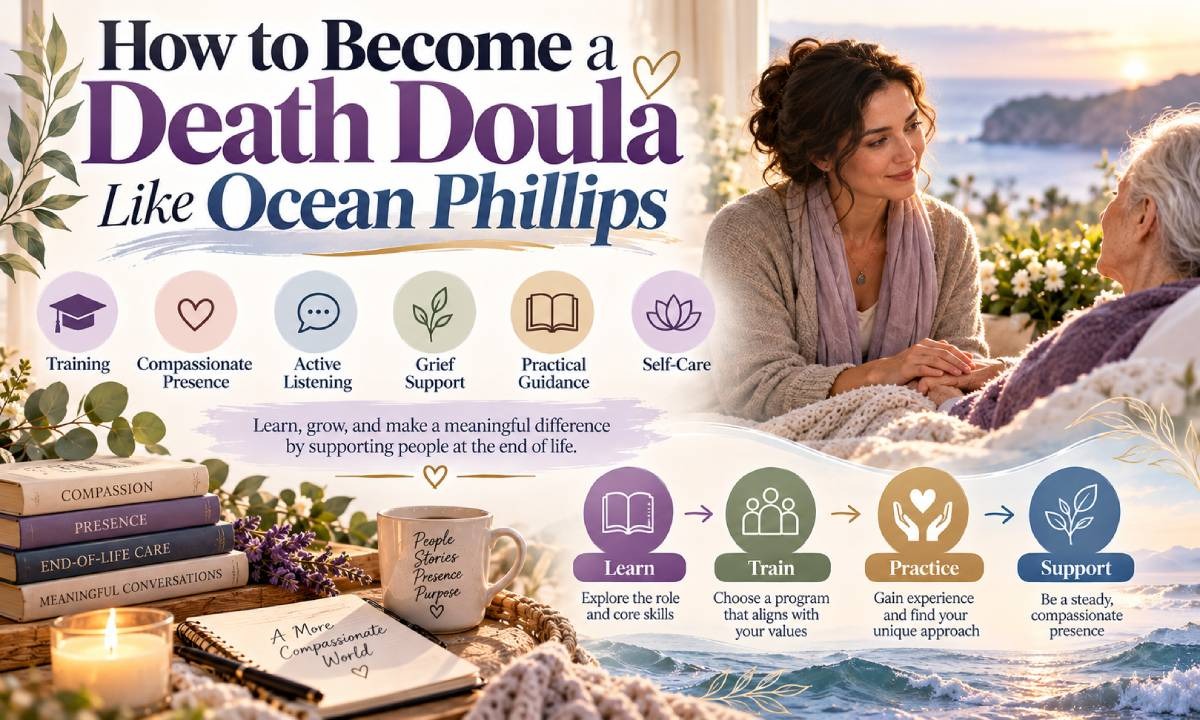
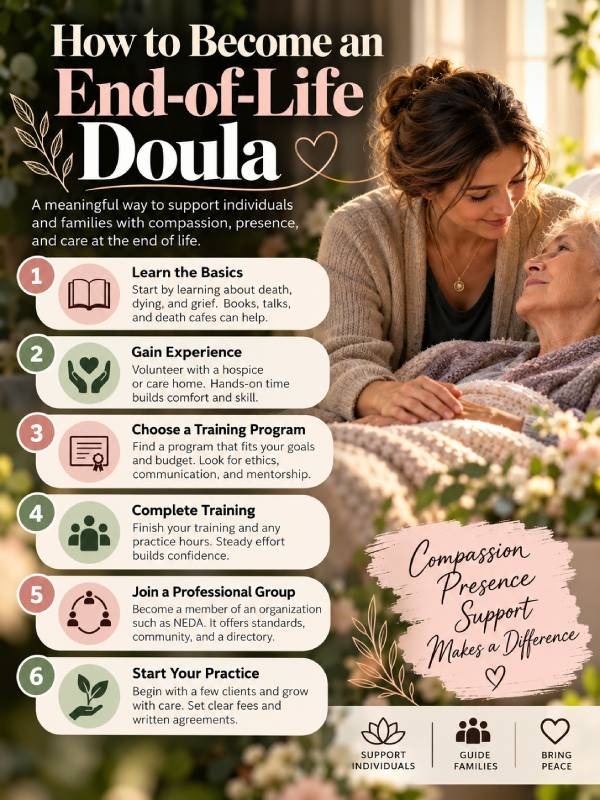
There is no single required path to become an end-of-life doula. Most people follow a few simple steps. They learn, gain experience, train, and begin. Compassion and good boundaries matter most. Certification is usually optional but can build trust.
- Start by learning about death, dying, and grief. Books, talks, and death cafes can help.
- Volunteer with a hospice or care home. Hands-on time builds comfort and skill.
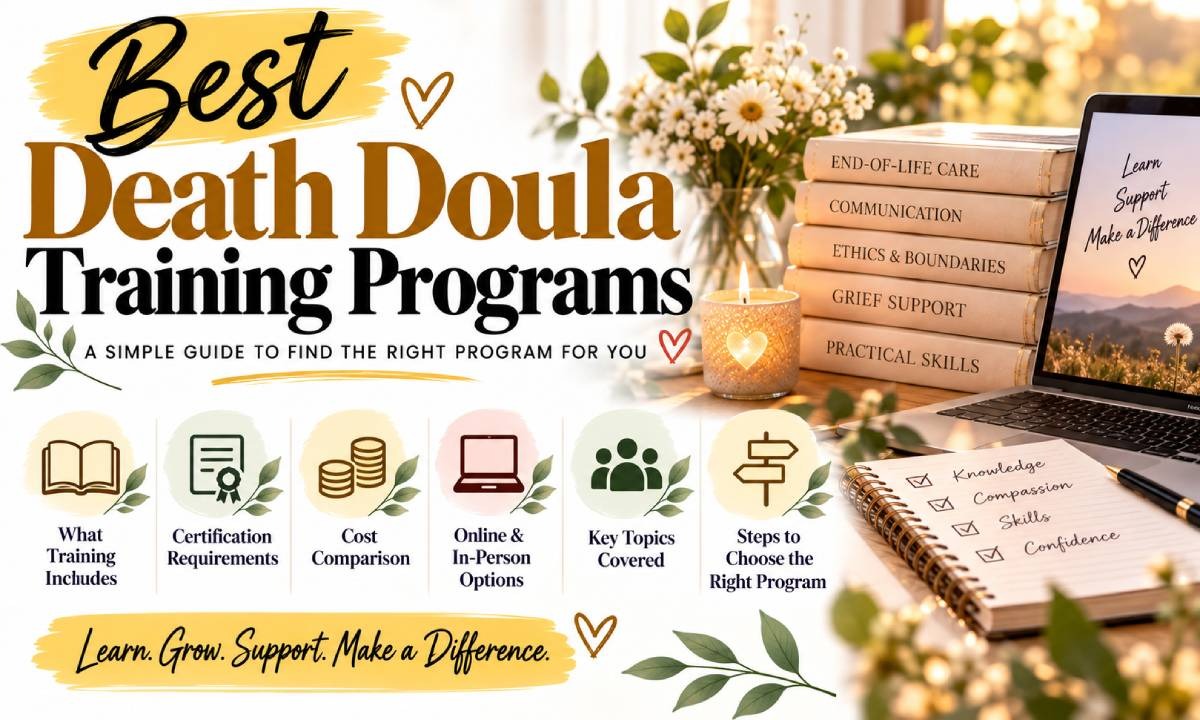
- Choose a training program that fits your goals and budget. Look for ethics, communication, and mentorship.
- Complete your training and any practice hours. Steady effort builds confidence.
- Join a professional group such as NEDA. It offers standards, community, and a directory.
- Start with a few clients and grow with care. Set clear fees and written agreements.
What is the difference between a death doula and an end-of-life doula
In most cases, there is no difference. The two names describe the same role. Some people prefer one name over the other. Both mean a non-medical companion for the dying and their families. Other names, such as death midwife or soul midwife, are also used.
- “Death doula” and “end-of-life doula” are used for the same work. Both support the dying and their loved ones.
- Some people find “end-of-life” gentler. Others like “death doula” for its plain honesty.
- A “death midwife” or “soul midwife” is a similar idea. These names often lean more spiritual.
- None of these roles give medical care. They work alongside doctors and nurses.
- Training and style can differ more than the name. Always ask what a doula actually does.
- Check a doula’s training, ethics, and references. The title matters less than the person.
End of life doula reddit
Reddit has communities where people talk about end-of-life doula work. They can be helpful for real stories and honest questions. Members share training tips, daily challenges, and support. Posts are personal views, not professional advice. Always check facts with trusted sources.
- People share their training experiences. This can help you compare programs.
- Doulas talk about daily rewards and hard moments. You get a human view of the work.
- Families ask what to expect near the end of life. Replies often come from people with experience.
- Members discuss finding clients and setting fees. New doulas can learn from these tips.
- Opinions can differ, and not every post is accurate. Cross-check important facts.
- Protect privacy by never sharing names or private details. Be kind in every post.
What is an end-of-life doula
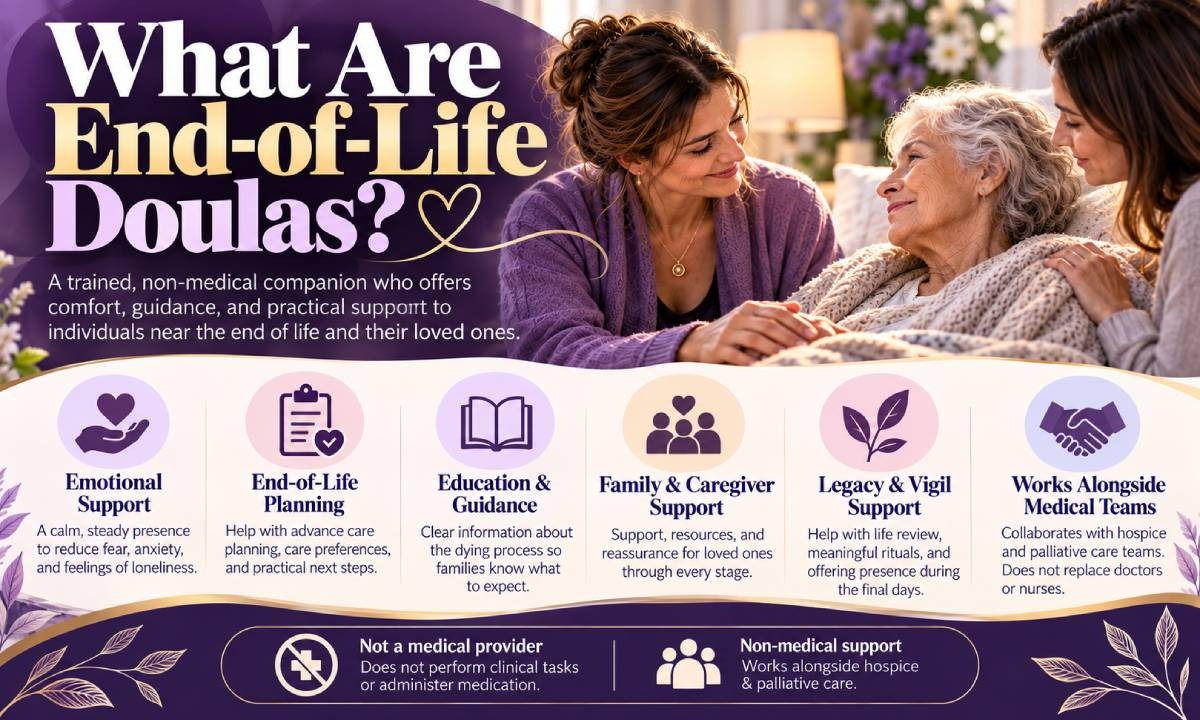
An end-of-life doula is a trained, non-medical companion for people near death. They support the dying person and the family together. The role is often compared to a birth doula, but at the other end of life. They never replace doctors or nurses. They add time, comfort, and steady presence.
- They give emotional, practical, and spiritual support. They do not give medical care.
- They guide planning talks about wishes and comfort. These talks work best before a crisis.
- They help with legacy projects like letters and recordings. These become lasting gifts for loved ones.
- They help plan the vigil and set a peaceful room. Music, light, and readings can all help.
- They support families after death. This can include rituals and early grief help.
- There is no federal license in the United States. Training and standards vary, so ask about both.
📖 Read More
Learn more about this topic by visiting end of life companion ↗ .
Death doula near me
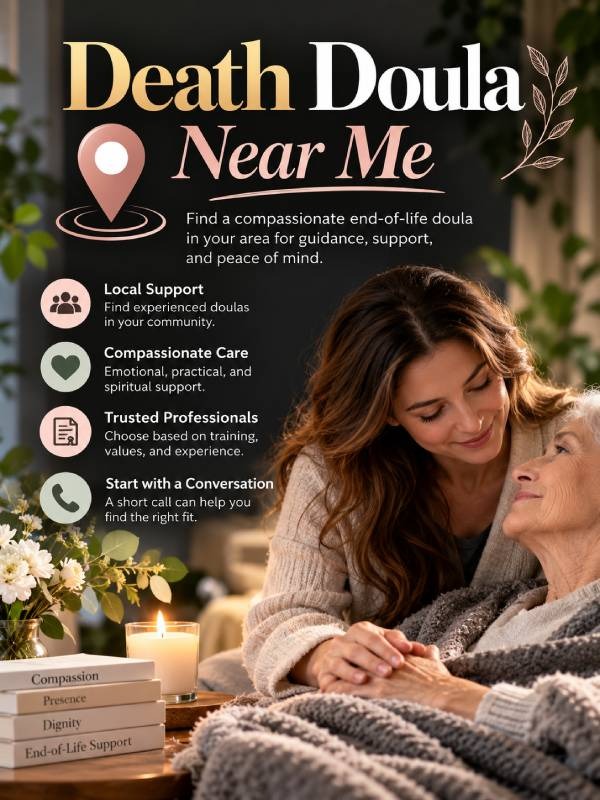
Finding a doula close to you is easier than it sounds. Start with trusted sources and take your time. Look for someone whose training, values, and style feel right. Trust matters as much as credentials. A short call can tell you a lot.
- Check directories like NEDA’s. They list doulas who follow professional standards.
- Ask your hospice, hospital, or palliative care team. Many know doulas in the area.
- Search online with your city and “end-of-life doula.” Read each profile with care.
- Ask friends, faith groups, and community centers. Word of mouth often works well.
- Ask about training, references, and fees. A good doula answers openly.
- Meet or call first to see if it feels right. Comfort and trust come first.
Frequently Asked Questions
What is an end-of-life companion?
An end-of-life companion is someone who sits with the dying and their loved ones. They offer presence, listening, and support without giving medical care.
What is an end-of-life doula?
An end-of-life doula is a trained, non-medical guide for the dying and their families. They offer emotional, practical, and spiritual support.
What is the difference between a death doula and an end-of-life doula?
There is usually no difference. Both names describe the same role.
How do I become an end-of-life doula?
Learn about death and dying, volunteer with hospice, complete a training program, and consider joining a professional group.
How much does an end-of-life doula earn?
Pay varies widely by location, training, and experience. Many doulas are self-employed and set their own fees.
How do I find a death doula near me?
Check directories like NEDA’s, ask your hospice team, and search online with your city. Then ask about training, references, and fees.
Conclusion
Companioning the dying is quiet, meaningful work. It asks for presence, patience, and respect. Whether you are a family member, a caregiver, or a future doula, small acts of care matter. Books, training, and support can help you do this work with confidence.
Remember to care for yourself as you care for others. A rested and supported helper gives the best comfort. If you or someone you love is facing the end of life, you do not have to do it alone.