The end of life doula meaning is becoming increasingly important as families seek compassionate support during the final stages of life. Death is something every family faces, yet few of us learn what to expect. When a loved one is dying, people often feel lost, afraid, and alone. They may not know what to say or who to ask for help. Doctors and nurses care for the body, but families also need care for the heart. This is where an end-of-life doula can help.
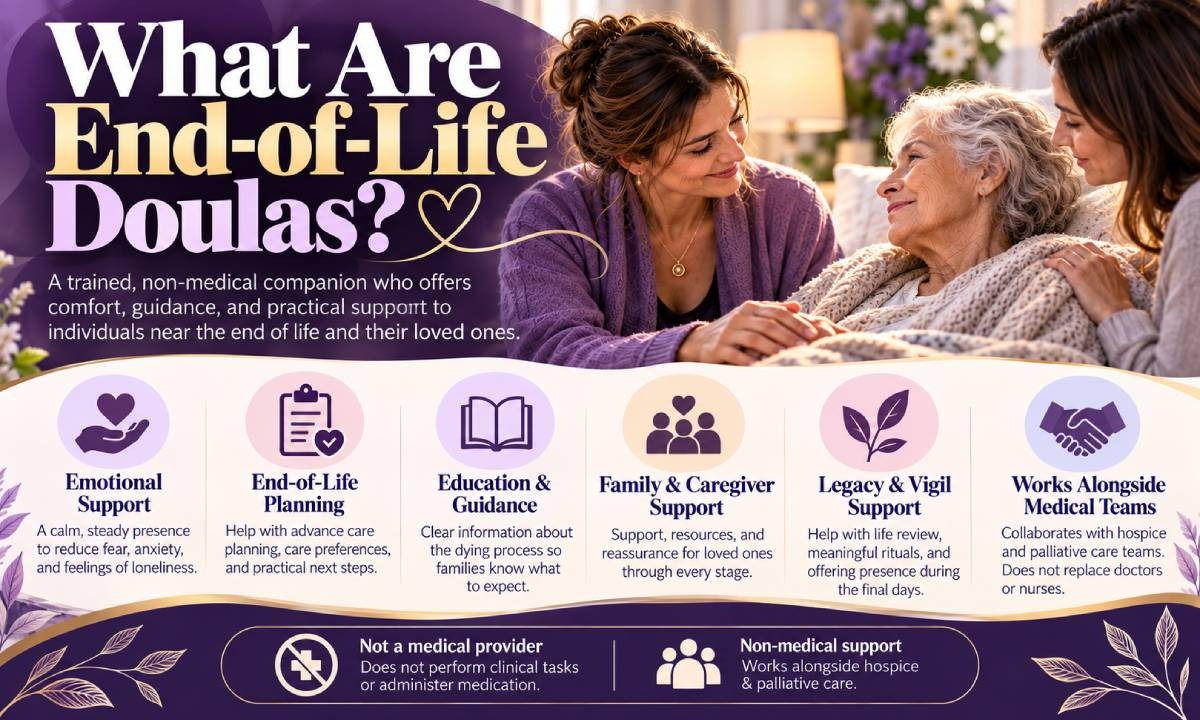
An end of life doula is a trained, non-medical guide for people near death and their loved ones. The word “doula” comes from a Greek word linked to one who serves. The role is often compared to a birth doula, but it serves the other end of life. A doula offers comfort, planning help, and a calm, steady presence. They work beside doctors and hospice teams, never in place of them.
This guide explains what an end of life doula means and what they do. You will learn about pay, training, jobs, cost, and the spiritual side of the work. You will also find tips for finding a doula or training near you. Read it from start to finish or jump to the part you need.
Death Doula salary
Pay for death doulas varies widely. The field is young, so exact figures are hard to give. Many doulas are self-employed and set their own fees. Some work part-time, and some volunteer. Location, training, and experience all affect what a doula earns.
- Many doulas work for themselves. They set their own rates and packages.
- Some charge by the hour, and others offer packages. Packages may cover planning, vigil, and after-care.
- Some doulas volunteer with hospices or community groups. Others mix paid and volunteer work.
- A few are paid by hospices, hospitals, or nonprofits. Pay in those roles depends on the employer.
- Training, experience, and location can change fees. Check local rates for the best guide.
- Insurance rarely covers doula care today. Families usually pay out of pocket.
Death Doula training
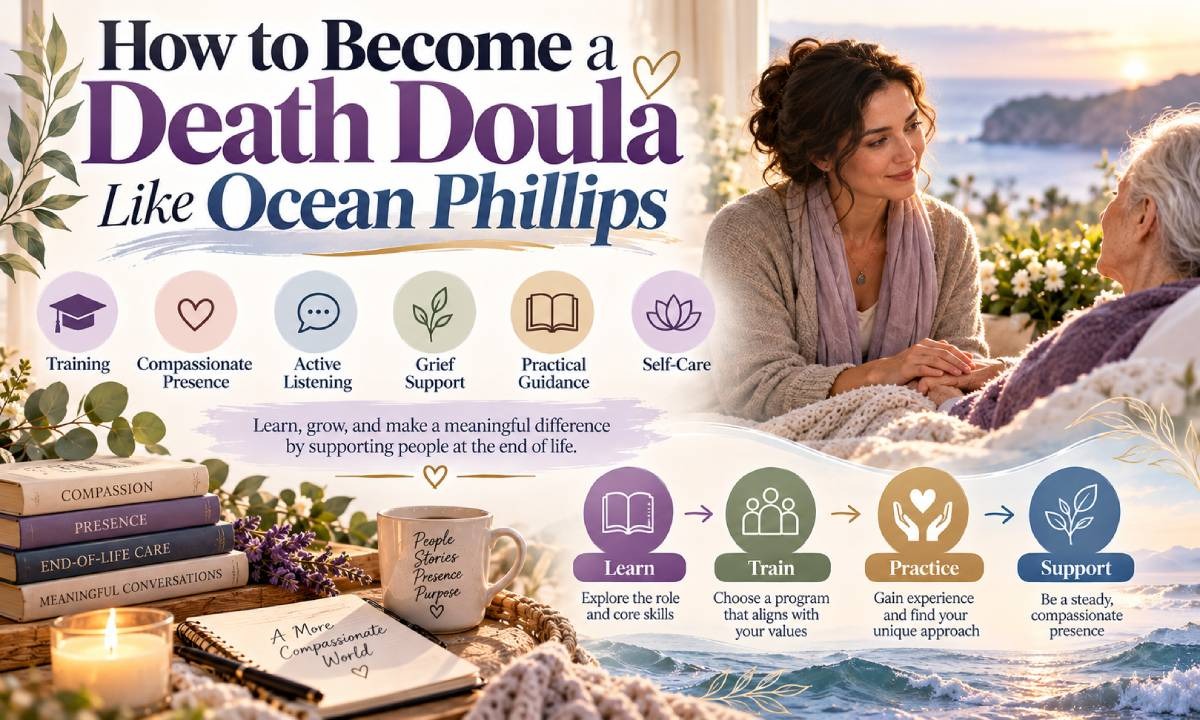
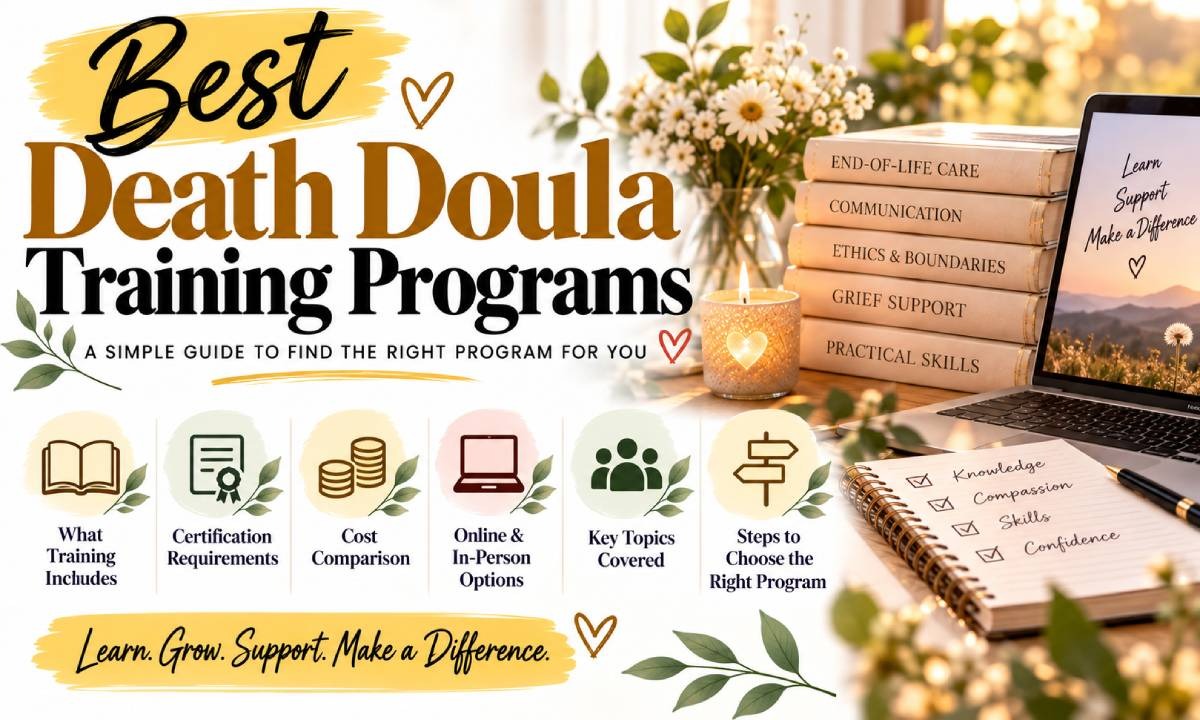
Good training builds skill, trust, and confidence. It also keeps families safe during a hard time. Programs range from short workshops to full certification courses. There is no single required path. Choose one that fits your goals, budget, and learning style.
- Look for programs that teach communication and ethics. These are the core of the work.
- Learn about the dying process and common changes. This helps you stay calm and clear.
- Study boundaries and scope of practice. Knowing your limits keeps families safe.
- Choose courses with mentorship or hands-on practice. Real-world learning matters.
- Many programs run online, and some meet in person. Pick the style that suits you.
- Ask about cost, time, and certification before enrolling. Compare a few options first.
What is the difference between a death doula and an end-of-life doula
In most cases, there is no difference. The two names describe the same role. Some people prefer one name over the other. Both mean a non-medical companion for the dying and their families. Other names, like death midwife or soul midwife, are also used.
- “Death doula” and “end-of-life doula” describe the same work. Both support the dying and their loved ones.
- Some people find “end-of-life” gentler. Others like “death doula” for its plain honesty.
- “Death midwife” and “soul midwife” are similar ideas. These names often lean more spiritual.
- None of these roles give medical care. They work alongside doctors and nurses.
- Training and style can differ more than the name. Always ask what a doula actually does.
- Check training, ethics, and references. The title matters less than the person.
End of life doula near me
Finding a doula close to you takes a few simple steps. Start with trusted sources and take your time. Look for someone whose training, values, and style feel right to you. Trust matters as much as credentials. A short call can tell you a lot.
- Check directories like NEDA’s. They list doulas who follow professional standards.
- Ask your hospice, hospital, or palliative care team. Many know doulas in the area.
- Search online with your city and “end-of-life doula.” Read each profile with care.
- Ask friends, faith groups, and community centers. Word of mouth often works well.
- Ask about training, references, and fees. A good doula answers openly.
- Meet or call first to see if it feels right. Comfort and trust come first.
📖 Read More
Learn more about this topic by visiting end of life doula meaning ↗ .
End of life Doula jobs
Jobs for end of life doulas are growing, but the path is not fixed. Many doulas build their own way into this work. Some work for themselves, while others join hospices or nonprofits. Many combine doula work with another career. The field is still young, so options keep changing.
- Many work in private practice. They find clients through word of mouth and online profiles.
- Hospices sometimes hire or train doulas and volunteers. This can be a steady option.
- Hospitals and care homes are starting to explore doula support. This is still developing.
- Nonprofits and community groups may offer paid or volunteer roles. They often serve families with fewer resources.
- Some doulas combine this work with nursing, counseling, or chaplaincy. This widens their options.
- Teaching, writing, and running workshops are other paths. Experienced doulas often share what they know.
Death doula spiritual meaning
Many people see death doula work as a deeply spiritual calling. Spiritual care here does not mean teaching a religion. It means honoring what gives each person meaning, peace, and comfort. The doula follows the person’s own beliefs, or no beliefs at all. The focus is on presence, respect, and quiet support.
- Spiritual support honors any faith or no faith. The dying person always leads.
- A doula may support prayer, ritual, music, or quiet reflection. The person decides what feels right.
- Life review helps people find meaning in their story. Many find peace in sharing it.
- Presence itself can feel sacred. Simply sitting with someone can bring deep comfort.
- Doulas can work alongside chaplains and faith leaders. They help bring them in when asked.
- Some doulas feel called to this work as service. They still keep the family’s beliefs first.
End-of-life Doula cost
Costs vary a lot from one doula to another. Location, experience, and services all play a part. Some doulas charge by the hour, while others offer full packages. There is no standard price across the field. The best step is to ask each doula for clear fees in writing.
- Many doulas are self-employed and set their own fees. Prices differ widely.
- Some charge by the hour, and others offer packages. Packages may cover planning, vigil, and after-care.
- Some offer a free first call. This helps you see if it feels right.
- Some doulas use sliding-scale fees or volunteer. Ask about options if cost is a concern.
- Extra costs may include travel or long overnight vigils. Ask about these up front.
- Insurance rarely covers doula care today. Check your own plan to be sure.
End-of life Doula training near me
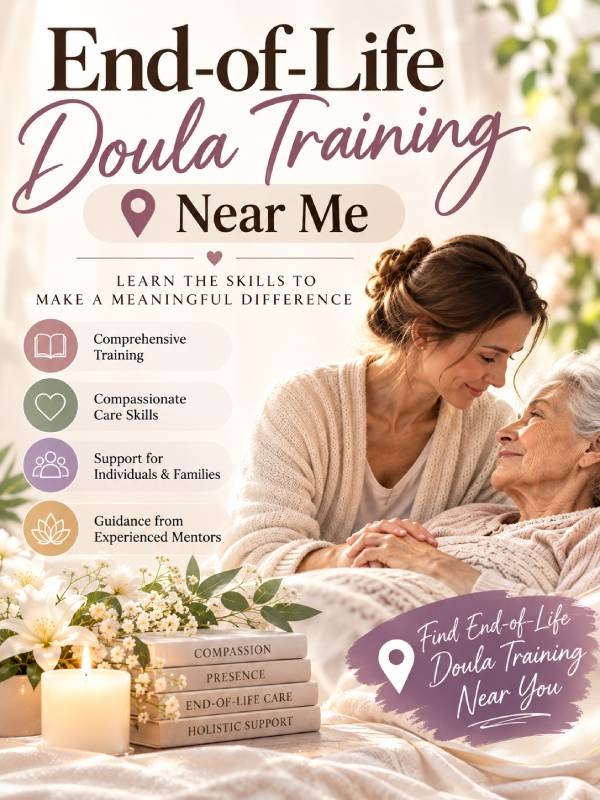
Local training lets you learn with real people and real mentors. It also helps you build a network close to home. Options can include hospice programs, community classes, and online courses. Compare a few before you decide. Choose a program you trust.
- Search for end-of-life doula courses in your city or state. Add your location to the search.
- Ask local hospices about volunteer training. Many offer hands-on learning.
- Check community colleges, libraries, and wellness centers. Some host workshops or short courses.
- Look for local death cafes and doula meetups. They are a good way to meet experienced doulas.
- Compare in-person, online, and mixed programs. Pick what fits your time and budget.
- Ask about ethics, practice hours, and certification. Confirm the latest details before you enroll.
Frequently Asked Questions
People have many questions when they first hear about end of life doulas. The answers below are short and simple. They cover the meaning, pay, training, and cost. Every situation is a little different. Speaking with a doula or your care team can give more personal guidance.
What is an end of life doula meaning?
An end of life doula is a trained, non-medical guide who supports dying people and their families. They offer emotional, practical, and spiritual care.
What is the difference between a death doula and an end-of-life doula?
There is usually no difference. Both names describe the same role.
Do I still need hospice if I have a doula?
In most cases, yes. Hospice gives medical care that a doula cannot.
How much does an end-of-life doula cost?
Costs vary by doula and by location. Many offer hourly rates or packages, and some offer sliding-scale fees.
How do I become an end-of-life doula?
Learn about death and dying, volunteer with hospice, complete a training program, and consider joining a professional group.
How do I find an end of life doula near me?
Check directories like NEDA’s, ask your hospice team, and search online with your city. Then ask about training, references, and fees.
Conclusion
An end of life doula brings comfort, planning, and presence to one of life’s hardest times. They care for the whole person and support the family, not just the illness. Their work fits beside hospice and medical care, adding time and heart where medicine cannot. Many families say this support changed how they remembered the end. A doula helps turn a frightening time into a more peaceful one.
If you or someone you love is facing the end of life, you do not have to do it alone. Ask good questions about training, fees, and fit, and choose someone you trust. If you feel called to this work, learn, train, and begin with care. Look after yourself as you care for others. Starting early gives everyone more time and more peace.