There are important moments, relationships and transitions in life. One of the most individual transitions in life can occur at the end of life and for the person and those around them. The months thereafter can be trying without support, with questions, emotions and concerns about the practicalities. A death doula cares and empowers individuals and families to be heard, supported and respected on their journey.
The principles of caring, being present, spiritual companionship and valuing people’s values form the core of caring at the end of life at Homecoming Journeys. The way it works is to understand each life story is unique and support is based on the person’s wishes, beliefs and needs.
But What Exactly Does a Death Doula Do?
A death doula is a nurturing non-medical professional who supports families and persons on their death journey. This can be listening, helping to explore wishes, facilitating meaningful conversation and an unrushing presence during a time of uncertainty.
A death doula wouldn’t be a medical professional or diagnose health issues or treat illnesses as a replacement for hospice or other medical care. Rather, emotional, practical, spiritual and informational support is offered, based on the person’s needs and scope of practice of a doula.
The Ways in Which a Death Doula Is Able to Help Individuals and Families
The needs of each person are unique. A death doula can be a companion in the way that they want and that’s suitable for the person in their circumstance. Some may want to talk about their fears or hopes, others may require support in developing meaningful rituals, in sharing their memories or with family members. A death doula can be a comforting companion as people make choices about what is important to them.
Support may include:
- Compassionate listening: Listening without judgment to questions, feelings, memories and concerns.
- End-of-life conversations: Supporting and helping people to think about what they want, values and priorities.
- Family support: Opportunities to have rich conversations and support with family members.
- Be able to be present: Calm at a vigil as required and agreed.
- Legacy projects: Letters, stories being recorded, memory books or other means to tell a person’s life story.
- Rituals and remembrance: Talking about personal and/or religious customs that are meaningful and comforting.
A death doula does not take away the ambiguity which can come from death. To help others not feel alone and more supported in their experience.
Mental Health Is a Need for Spiritual Companionship
In times of severe illness and at the end-of-life, meaning, identity, faith, connection and what matters most can be more important questions. It might be a good time for people to think about their beliefs, consider significant relationships or just discuss what they’re feeling.
A death doula can create space for these conversations without a religion or belief system or answer. Values, understanding shapes spiritual companionship. It may be a prayer, or perhaps a routine or something that some of you might do, but for others it could be time to attend to reflection, discuss with individuals or time with loved ones.
It is performed at Homecoming Journeys in an open and respectful way. Not to convince anyone to abandon his belief but to honor his positive value he bestows on his life.
Who Might See a Death Doula?
This type of assistance is not required at a specific time. Some call us after a serious diagnosis and some others would like to discuss their end-of-life wishes before the crisis. Families and caregivers can also find a way to connect when they don’t know where to start their challenging conversations.
A death doula can be beneficial for anyone who:
- Looks for someone he/she can turn to for support when thinking about end-of-life issues.
- Expresses own desires and preferences with family members.
- Is interested in creating a legacy project or meaningful ritual.
- Wants to be friends and supported as well as medically cared for/hospice.
- Supports family member who is nearing the end of life and would benefit from extra support.
A death doula can assist with planning and preparing along with a shared responsibility and facilitate connection and positive experiences.
What Is Homecoming Journeys’ Key to Personalization?
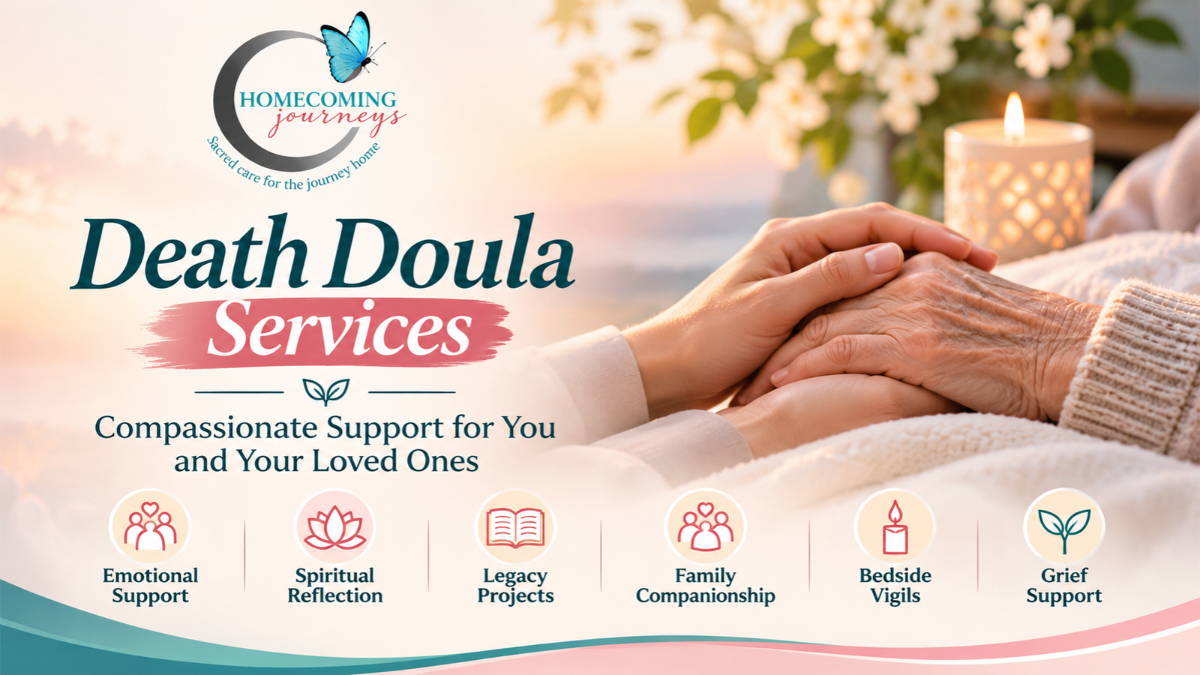
Homecoming Journeys is a reflective journey into the end-of-life care. It offers Spiritual support, Bedside support, VIGIL support, Advance-care conversations, Legacy projects, Rituals, Family/Caregiver support, Grief support and mentoring.
Ocean Phillips has been trained in spiritual and end-of-life care. The whole approach is based on listening, being present and respecting the individual’s journey. The nature of a connection between a death doula and the family member is founded on trust, communication and understanding of what is on offer and what isn’t.
Homecoming Journeys is not a medical service nor a replacement for medical or health care providers. Rather, it is about supporting people and families by the human, emotional and spiritual aspects of the process.
How to Choose the Right Support
Choosing a death doula is a personal choice. Having a preliminary discussion of the person’s experience, approach, availability, and services can be beneficial. Everyone and every family should feel free to ask questions and know what sort of help could be useful.
Consider discussing:
- How are they helpful to you when you aren’t ill?
- How does the doula approach personal beliefs and/or spiritual differences?
- Do family members/caregivers have the opportunity to be involved in discussions?
- Are they given bedside support/vigil support and if so, what is it?
- What services are covered and how are they linked (coordinated) to medical and hospice services?
Setting expectations can help all parties feel clear about what to expect and help decide if the relationship is appropriate or not.
How To Make Significant Moments
There can be moments during the end-of-life process that bring up challenging emotions, and then there are moments of connection, reflection and expressions of love. A death doula can create the space for delayed conversations, stories to be shared, and rituals to exemplify the meaning to the person.
Help doesn’t have to be complicated to be helpful. At times it starts with listening. This may be helping a person to write a letter, gather the family stories or sitting quietly with the person and their family. The appropriate companion form for each person will be based on their desires and circumstances.
Have a Conversation with Homecoming Journeys
If you or those you love are thinking about end-of-life care, Homecoming Journeys is a place of compassion and understanding to share your questions, concerns and needs. Talk with them will help to decide whether there is a need for spiritual companionship, presence, legacy, family support or another service.
A death doula is not a substitute for medical, hospice or mental health services. Instead, this non-medical position can be a supportive one, providing presence, listening and thought-filled companionship.
Homecoming Journeys invites you to speak with them and find out what you are considering next, and what can be done, free of charge for a 45-minute consultation. No need to have all the questions answered prior to seeking assistance.
Frequently Asked Questions
1. What Is a Death Doula?
A death doula is someone who provides non-medical support and companionship to a person and/or family on their end-of-life path. This may relate to listening, talking with wishes and legacies, ritual and being present at the bedside.
2. Is a Death Doula Considered a Medical Professional?
No. A death doula is NOT a physician and does not diagnose, prescribe or treat. The position is not a medical one, and is not meant to be a substitute for doctors, nurses, hospice teams or other health care providers.
3. Can Provide Death Doula Assistance to Loved Ones?
Yes. Depending on the services that are agreed upon, a death doula can offer support for family and caregivers, facilitate discussion, create space and be a companion during this difficult time.
4. When Is It Time for a Death Doula?
Individuals might make contact with them following a serious diagnosis, when preparing for the future, supporting a loved one, or any time they feel extra companionship in addition to medical care is required.
5. What Are Some Starter Activities to Do with Homecoming Journeys?
Talk with Homecoming Journeys about your needs and arrange a no-cost 45-minute consultation. It’s a time to ask and/or decide whether or not the services are appropriate for you.
Conclusion
The last phase of life is an intensely personal one and it is all the more important for each individual to be treated with respect, compassion and dignity. A death doula can help communities and families with a consistent and non-medical support to carry them through the process of discussion, recollection, spirituality, and significant moments.
Homecoming Journeys is a process of reflection, of celebrating the story of every person and of caring for those who accompany them on the journey. When you’re ready, you can begin to make the call for this conversation, which may be a soft approach to obtaining assistance that feels like the right one for you.