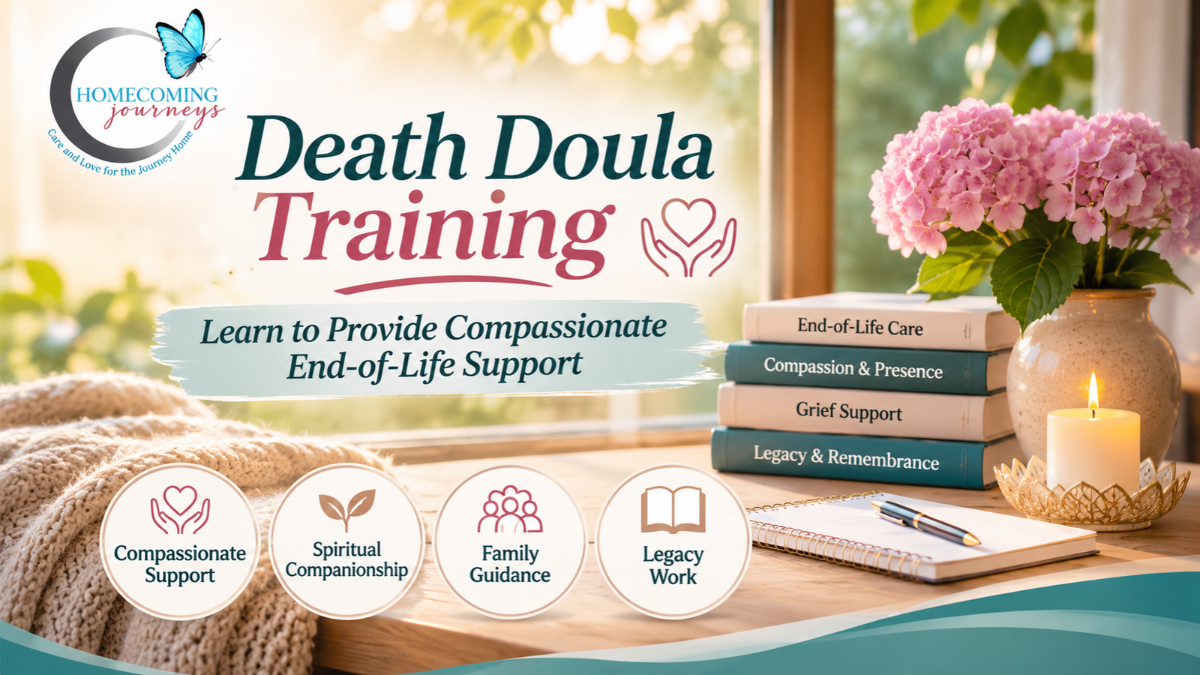
Whilst death is a normal part of life, there are many feelings, questions and uncertainties that could arise while planning for the end of life. It can help people and families to have someone who can listen, comfort and support them during this important time. This is where a Death Doula Training can come in.
The death doula training provides knowledge, skills and care to help a person in their dying process. It can help future death doulas to learn how to support a person, respect a person’s beliefs, and provide a serene presence to a family.
Serving others through death in the end of life is a calling – there’s an opportunity to engage in meaningful work, through empathy, dignity and human connection, by pursuing “death doula training.”
What Is a Death Doula?
A death doula (also known as end-of-life doula) is someone who provides a non-medical assistance to the individuals who are nearing death and their families.
Death Doulas are not doctors and cannot diagnose, prescribe or treat disease or illness. They are responsible for offering emotional, spiritual, practical and informational support.
Aspiring Death Doula Training can learn how to provide support without adding their beliefs and expectations. The intention is to get people to feel heard, respected and supported on their journey.
Why Is It Important to Train as a Death Doula?
Helping someone who is towards the end of life takes more than well meaning. It’s about understanding and dealing with difficult emotions, being able to communicate them appropriately, considering personal views and responsibilities, and recognizing boundaries of professionalism.
A framework of a death doula training program can introduce the student to death doulas.
There are some areas that are very important such as:
- Learning about the end of life doula’s role.
- Learning to listen with sympathy.
- Supporting family and carers.
- Knowledge of the nature of grief and emotional reactions.
- Respecting cultural, spiritual and personal differences.
- Identifying when medical/professional help is required.
Below are foundations which can inform and guide aspiring practitioners in practicing end of life support.
What Are You Going to Learn in the Training of a Death Doula?
The content of the subjects will be different depending on the educational programme but many learning pathways are based on some key areas of end-of-life care.
1. Knowing the Dying Process
Learners explore emotional, social and practical events that may occur for the person and family at the end of life.
Professionals can be educated on the dying process so they can understand that everyone’s experience of dying is different. Also assists them to not assume and respond to the needs of the individual.
2. Emotional Support and Compassionate Listening
The use of both emotional support and compassionate listening. Emotional Support & Compassionate Listening.
Fears, sadness, uncertainty, or a need to contemplate one’s life may be encountered by individuals who are nearing the end of life.
There is one set of skills that can be introduced to practitioners in Death Doula training that could contribute to creating a supportive environment, that of listening skills. Rather than attempting to solve all problems, a doula learns to be present, to support people to express the emotions they have.
3. Spiritual Companionship
Spiritual care is an important component of end of life care. But each person has his or her own beliefs, values and perceptions of death and life.
Future doulas can be taught how to care and support another in a respectful manner without religious or spiritual beliefs. This can be in the form of reflection, significant discussions, prayer (if asked), or presence.
4. Practical Planning and Legacy Work
Practical Planning and Legacy Work will be explored. End-of-life care is not just about the discussion, of course; there are also practice discussions and important activities.
These can involve:
- Exercising one’s preference and wishes.
- Supporting advance-care conversations.
- Help with letter writing or memory books or legacy.
- Discussing what it means to have rituals or to remember.
- Assisting with interpersonal communication.
The activities allow individuals to express what is significant to them.
5. Communication With Families and Caregivers
A communication with the families/caregivers has been created. The emotions, concerns and expectations of families can vary along an end-of-life journey.
A learning program can offer a chance for an aspiring doula to learn how to communicate, listen, and be non-judgemental towards the person being cared for, and the person doing the caring.
Different Pathways for Death Doula Training
There are several different pathways that can be taken with a death doula training. There are multiple routes to take with a death Doula training. It’s not a straight line – it’s available for any death doula to choose. The content, approach and focus of programs may differ.
Some offer online learning, some involve some live discussions, some involve practical learning, mentoring or supervised learning. Consider what type of training you want, what your objectives are, and what you would like to do as your responsibilities as a Death Doula Training.
Online Learning
Flexibility options may be available for students with work and/or family commitments for online programs.
Workshops and Group Learning
Workshops: opportunities for students to discuss a topic, ask questions and learn from other students. A Mentor will be given to each Group. Each Group will have a Mentor assigned.
In some learning pathways there will be opportunities to discuss and learn from authentic experience or mentoring. These can help students to become aware of their role and the emotional needs in end of life care.
How to Choose The Right Death Doula Training Program
You’re going to need to choose the program wisely. Courses provide no uniform curriculum, experience, and professional preparation.
Here are some factors to take into consideration before signing up for death doula training:
- Course content: See if the courses you are interested in include the topics you want to learn.
- Teaching approach: Be competent in the use of teaching methods (e.g., online lessons, workshops, discussions, mentoring).
- Instructor background: Gather information about the background of the instructor and other relevant experience.
- Finding ethics boundaries: Look for clarity on Death Doula Training status (non-medical).
- Practical preparation: Do they have activities, reflection or supervised learning?
- Continuous support: Inquire if learners have access to further resources or mentoring after completion of the course.
You can use a comparison of these details to help you decide what you would like to do.
Who May Consider Being a Death Doula?
A person with a diverse background in his or her business or life may become interested in this career.
For example:
- Individuals involved with compassionate caring.
- People who have experience in helping families.
- Caregivers who are interested in learning about end-of-life support.
- Spiritual-care practitioners.
- Individuals interested in grief and remembrance and in creating a legacy.
- Those who wish to make a difference in their communities.
It’s not necessary to have a medical background to pursue this career. It is important to be aware of the scope and scope of a professional.
It’s possible that if people are interested in this kind of work, but they want to do it slowly and on purpose, they can get started with death doula training.
Understanding the Role and Boundaries of a Death Doula
- A Death Doula is not a funeral director, or a midwife.
- A death Doula provides a non-medical support strategy and companionship. This is very important for practitioners and families.
- Death Doulas are not a substitute for doctors, nurses, hospice workers, therapists or other qualified healthcare workers.
- Instead they may be asked to work alongside the existing care team (if appropriate) recognising the responsibility of each member of the care team.
- A good death doula training program should describe these boundaries and clarify to the student when the concern calls for referral to a qualified person.
Homecoming Journeys and Compassionate End-of-Life Support
- Homecoming Journeys is an approach to end-of-life that is compassionate, present and respectful to individual beliefs.
- It has a philosophy of the fact that people have varying spiritual experiences and feelings that relate to death.
- Support should not be in the form of imposing a belief system upon others.
- If you are exploring the process of becoming a death doula, the first step is to listen and respect each person’s decision, and be present, without judgement.
- Companionship is not synonymous with having all the answers in end-of-life. It’s about creating space for emotional bonding, fun and dignity.
Frequently Asked Questions
What Does Death Doula Training Mean?
It is an educational journey that educates about the non-medical responsibilities, knowledge and supportive skills required to accompany people and families on the journey of life to the end.
Do You Have to Be Medically Trained to Be a Death Doula?
It is not essential to have a medical background. However, the role of the death doula is not the same as medical assistance, and it is important they understand their scope of practice and when medical assistance is needed.
What Is the Duration of the Trainings?
This may vary by provider, curriculum, format of the learning, additional practical requirements, etc.
Is a Death Doula a Spiritual Support Needed?
Yes. They can provide spiritual support when asked, and take care to not impose their views upon others.
Does Death Doula Only Have to Do With Death?
No. Support for family members/caregivers can also be provided during discussions, planning, remembrance and companionship about grief.
Final Thoughts
Supporting the dying process is worth while and patient work and requires some thought, empathy and respect. It’s not about changing people’s experience or providing answers to all the difficult questions. It’s about being there in a caring manner when people need you most.
Further information about death doula training can be found by examining what it involves and whether or not it is a training that can fit your interests and values.
At Homecoming Journeys, we aren’t here to judge people or make judgements about their experiences, we’re just here with them, nonjudgemental, spiritually open to them and celebrating them as individuals. The best thing that can be done is to listen, be present and give the person an opportunity to feel he or she is not alone.