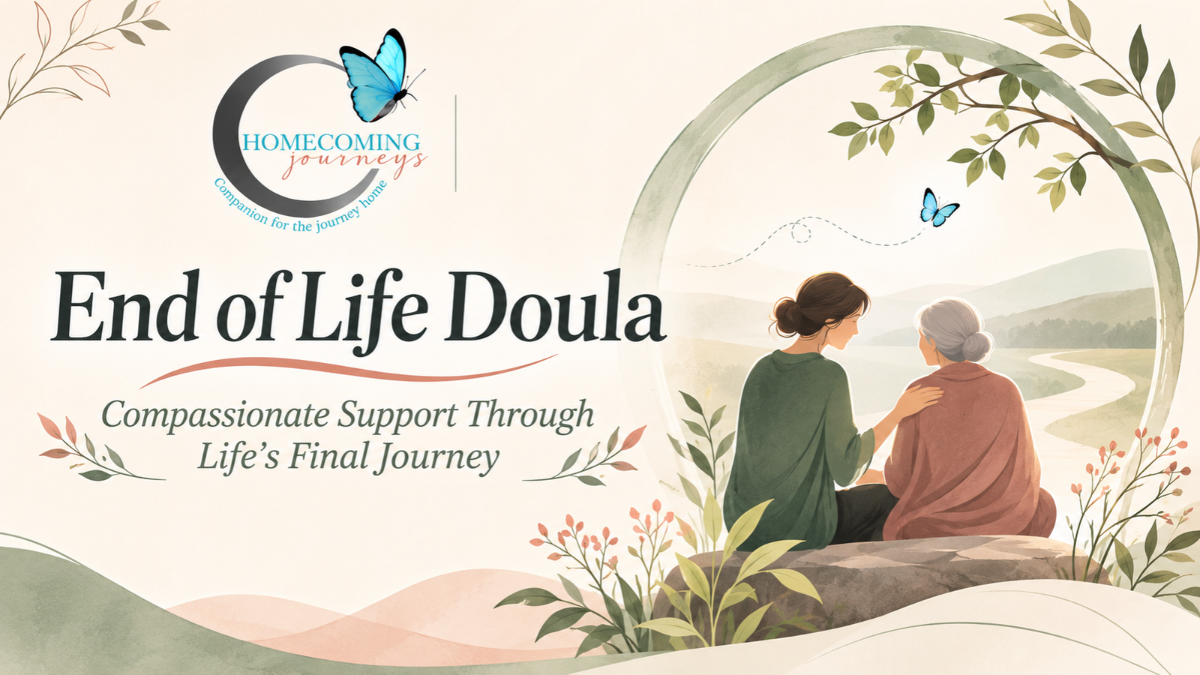
When we are seriously ill, when someone we love is seriously ill, or when someone we love dies, we may face a lot of feelings and questions. These are emotional times, and at times people need more than medical assistance. They might require an unjudgmental listener, a companion, and a sense of help to seek what is important to them.
An end of life doula is a person who offers this kind of non-medical assistance to one or more people and/or family during illness, dying, loss, and life transition. Compassionate care at Homecoming Journeys is rooted in presence, reflection, and respect for the beliefs and values of each person, their relationships, and their life story. All journeys are personal, and care is tailored to the needs and wishes of the individual.
What Is an End of Life Doula?
An end of life doula is a trained companion who provides emotional, spiritual, and practical support before, during, and after the end of life. Like healthcare providers, however, doulas cannot make medical diagnoses, prescribe medication, or provide medical treatment. They assist in the human journey at the end of life.
Some would like to talk about their anxieties and desires openly. Others may need a End of Life Doula quiet time to talk with family members, to think, and/or to have productive conversations. A doula enables these needs to be met in an unpressured manner.
This support is alongside hospice, palliative, and other healthcare services. It is not a substitute for medical professionals or care.
How an End of Life Doula Supports Individuals and Families
A doula can assist the person and family during the final stages in the following ways. Death and dying can be a frightening and lonely time. A caring ELD can help diminish feelings of isolation, loneliness, and unheard voices for people and families during this time.
Compassionate Listening and Emotional Support
If the person is sick and close to death, they might be afraid, sad, regretful, and grateful, and probably have a lot of questions that haven’t been answered. Having a neutral person who will listen to the person’s experience is important.
A doula does not attempt to solve all the feelings or get someone to come to a specific decision. Instead, they offer the opportunity for people to relax in a comfortable environment and speak at their own pace.
Reflection and Meaning-Making
Individuals might start to consider their personal identity, relationships, purpose, beliefs, and life. Such conversations can be facilitated through contemplative inquiry, mindfulness, silence, and thoughtful reflection with an ELD.
This support is non-judgmental about religion and spiritual beliefs, and does not impose any specific religion or spiritual views. The objective is to provide the opportunity for personal understanding, connection, and peace.
Remembrance and Legacy Projects
Relationships, memories, and stories are an integral part of a human being’s life. Such experiences can be recorded in legacy projects and shared with family and friends.
An ELD can assist with these activities and more:
- Writing letters or messages to family members
- Developing personal stories and memories
- Creating memory objects and memory activities
- Thinking about a meaningful life experience
- Carrying on the torch to the next generation
It may be beneficial for someone as an outlet to express emotions and create positive interaction with those they love.
Family and Caregiver Support
If a family member or caregiver is dealing with a serious illness, they may be stressed, uncertain, and overwhelmed. They may also have trouble talking about death and ways in which they can support their loved one.
An end of life doula can provide a place for us to talk, feel, and think together as a family. It may make it easier for family members to communicate their thoughts, understand what concerns them, and spend quality time together. Support from family might also involve talking about family members, discussing how to remember them, and providing an opportunity for family members to express their feelings.
Organizing A Vigil And Creating Personal Rituals
Others prefer to have a peaceful and quiet environment in the final weeks of life. This could include music, a story, prayer, silence, familiar objects, or loved ones.
An end of life doula can support the individual and/or family in considering this option and creating a vigil to honour their values and wishes. Rituals are personal. These can be spiritual, cultural, religious, or simply important to the individual and family. The purpose is to ensure the space is comfortable and respectful.
Grief and Bereavement Support
Grief starts in anticipation and continues following the loss of a loved one. Anticipatory grief, loss, and remembrance might evoke many emotions that are difficult to deal with. An ELD could provide support by engaging in reflective conversations, personal rituals, and opportunities to honour the deceased person. This support will not be a replacement for professional bereavement support if required. It can also provide human connection and space to grieve.
When Should You Consider an End of Life Doula?
Support can come in handy at many times in a person’s life—not only at the end of life. An end of life doula could be helpful to a person who:
- Has a serious illness or life-threatening condition
- Is considering hospice or palliative care
- Seeks to voice their own wishes for dying and death
- Is caring for an aged or seriously ill family member
- Is experiencing anticipatory grief or bereavement
- Desires to discuss spiritual issues or “what is it all about?”
- Wishes to create a legacy project or plan for a vigil
- Is interested in death and life in a purposeful way
Delays in starting dialogue could be the reason why some individuals have insufficient time to think, make connections, or ponder meaningful issues.
Homecoming Journeys
Homecoming Journeys is a ministry of reflection, not a clinical ministry, for people and families in the midst of sickness, death, loss, and the deep questions of life. The method, led by Ocean Phillips, PhD, MDiv, is focused on listening with compassion, reflecting spiritually, meaningful conversation, and honouring the person’s pathway.
There are no steps to take or benchmarks to meet to begin working with an end of life doula through Homecoming Journeys. There is no specific process or product of end-of-life doula work with Homecoming Journeys. The support is designed to meet the individual’s needs, readiness, beliefs, relationships, and wishes.
This can include offering spiritual support, being at the bedside, supporting during the night, creating a legacy project, supporting family and carers, setting up a ritual, and supporting grief care. At a free consultation, you will have the opportunity to speak about your situation and learn about the type of help you may require.
Frequently Asked Questions
What do you mean by an end of life doula?
An end of life doula supports people in expressing their feelings and finding ways to support their spiritual and practical needs as they go through serious illness, the dying process, and bereavement in non-medical ways. This can include listening, reflecting, legacy activities, planning for a vigil, and providing support for families.
Is an end of life doula a healthcare worker?
No. Doulas are not doctors, nurses, hospice workers, or other healthcare workers. Their care is provided in addition to clinical care.
Can family members be supported as well?
Yes. Families and carers can receive emotional support, communication support, opportunities for reflection, and ideas for meaningful activities to remember their loved one.
Should end-of-life support be only religious?
No. Support can respect religious, spiritual, secular, or personal beliefs. The process is based on the values and wishes of the individual.
Final Thoughts
Often, the final days of life are unpredictable, but sometimes they offer opportunities for connection, reflection, and conversation. Compassionate care can help an individual or family feel supported during this personal journey.
An end of life doula offers a non-judgmental and supportive space, recognizing the person, their story, relationships, and values. The themes of Homecoming Journeys include listening, reflecting, serving, leaving a legacy, and family support. You don’t need to go on this journey on your own. It’s not too early to discuss support, understanding, and connection. It can start with talking.