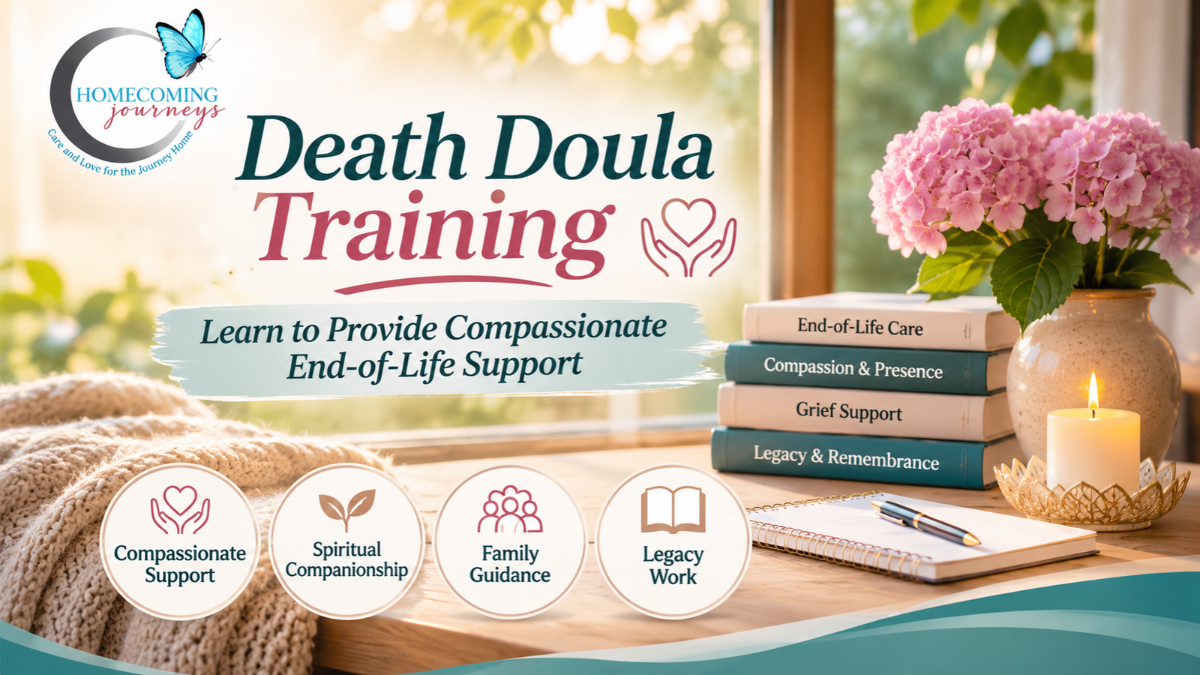

The role of a carer to the person at the end of their life is a very special one to undertake. Patience, being present, listening to and respecting the values and wishes of each person. For those who are interested in this practice, this training in the art of “Doula for the Dying Training” can provide a basis for supporting people or families as they experience death from an emotional, spiritual and practical perspective.
A person who provides end-of-life support to a person who is nearing death, and to their family and friends, is called a Death Doula, also known as an end-of-life doula. The learning for Doula for the Dying Training can give the participants an understanding of what the role entails, equip them with skills to assist the other, and teach them how NOT to control another person’s experience.
What Is a Death Doula?
A Death Doula offers comforting, supportive care before, at and after death. It is not intended to be a substitute for medical, hospice or mental health care. Rather, a doula can provide room for discussion, introspection, comfort, planning and connection.
People who train as individuals attend Doula for the Dying Training for a lot of reasons. Some aspire to make a difference in their community, some wish to develop new skills as a caregiver and some are interested in end-of-life work due to a personal loss. Clarification of role responsibilities and extent can be helpful with training.
Doula for the Dying Training Modules
Doula for the Dying Training is composed of the following modules:
There are a variety of programs, styles and depths. Many provide education on principles of end of life doula support and provide time for reflection on values, communication and practical support. An effective “doula for the dying training” program can help students understand what it takes to be a Doula for the Dying Training.
Understanding the Role and Its Scope
To develop an awareness of the role and its scope. To have an understanding of the role and its boundaries. It is one of the most crucial parts of the training that the dying doulas receive in order to understand what a dying doula can and cannot do. Doulas are not doctors, nurses or medical practitioners. They can work with hospice staff, other health care providers, spiritual care providers, and family caregivers, honoring their individual positions.
Setting boundaries makes a person receiving care, their loved ones and the doula safer. Confidentiality, consent, cultural humility, referral, when to use professional support could be included in the training.
Communication & Deep Listening
These conversations about end-of-life can evoke feelings of fear, uncertainty, regret, hope and questions regarding meaning. The most important thing the training has taught me about being a dying doula is to listen without rushing to judgment and to give reassurance.
They can learn techniques to ask questions, stand silently by, repeat what someone has just said and help others to communicate in the family. These skills can help to create an environment that allows people to raise their concerns.
Emotional and Spiritual Companionship
The care, comfort and understanding that is provided to them. Doula training for the dying may involve the practice of helping a person’s emotional or spiritual needs or helping to provide “calm presence.” This may be reflection, discussion or even a gentle ritual or simply sitting together.
A Doula is not pushing beliefs, or taking it as a given what is meaningful to another. Support depends on the support values, traditions and preferences of the person or individual.
Practical Planning and Legacy Work
There are some ELDs who help to discuss wishes for the future. This can include writing preferences, talking about what they’d like to see in their environment, or provide input to the conversations with family and care team.
This can also include a legacy project. People can write letters, put pictures in, make a memory book, or send messages to family members. During training for Doulas for the dying, opportunities can be provided to sensitively and at the person’s speed support these projects.
Vigil and Family Support
A doula can be present at a vigil to provide companionship, support and information to those around you or be present at an emotionally charged time to provide a constant support presence. Training might consider ways to assist the family without infringing upon the person’s wishes, culture or privacy.
Who May Benefit from This Training?
A training for Doula for the Dying Training can be meaningful for those that feel called to be with others when they are seriously ill, experiencing death and bereavement. Participants may include:
- Adults wanting to learn about end-of-life support and how to become an end-of-life doula.
- Family and community caregivers are seeking skills that assist them.
- Volunteers or outside the hospital environment looking at the complementary (not medical) support to the hospice environment
- Spiritual Care Providers and Community Companions
- People who have had a personal experience that has led to an interest in end of life care.
There is no specific background that equates with being able to be present with compassion. Learners should, however, be prepared for introspection of their beliefs, boundaries and emotional reactions.
Choosing a Training Program
When searching for a training program, keep the following factors in mind:
If you are considering doing a dying training with a Doula, do your research and find out what dying trainings offer and whether your intentions are aligned with the dying training you are considering.
| What to Look For | Why It Matters |
| Provides a clear description of the doula role | Clarifies that the role is not a medical one |
| Ethics, boundaries and confidentiality | Are maintained and caring and care giving is undertaken in a respectful and responsible way |
| Communication and listening skills | Goes with people without judgment as their assistant/doula |
| Respects/recognizes others’ values and traditions | Such as cultural differences and other beliefs |
| Practical topics and legacy work | Introduces approaches for supporting planning and meaningful connections |
| Mentoring or ongoing learning opportunities | Opportunities for reflection and development of skills |
The training curriculum and style should be described and expectations outlined, including any certification received at the completion of the program for a doula to attend a training programme for the dying.
Questions to Consider Before Enrollment
These are the types of questions that should be given some consideration prior to enrollment:
- Clearly communicates program is not medical care?
- Includes ethics, boundaries, consent and confidentiality?
- Does it contain skills in communication and listening?
- Does it include cultural humility and other perspectives on death?
- Do practical issues including ‘vigil’ support, planning and legacy work are addressed?
- Can there be any opportunity for reflection, for mentoring or for further learning?
- What are recommendations for completion, recognition or next steps in program?
The training is not uniform and maturing does not guarantee that a person will be immediately a medical or clinical provider or a licensed provider. Read the curriculum through thoroughly and inquire before signing up.
The Importance of Personal Reflection
Learning tasks are not the only things involved in the training for Doula for the Dying Training. It can also be an opportunity to consider one’s connection with death, loss, uncertainty and care.
Reflection can enable learners to identify their assumptions and become aware of their emotions and triggers, and to practice being in the moment without needing to control the outcome. The individual work is a way to address each persons individual experience in a respectful manner.
Many students use the doula for the dying training to learn to be more confident, but to also realize that everyone’s experience is unique. It requires modesty, openness and quest for further knowledge.
Homecoming Journeys’ Approach to End-of-Life Care
The approach of the Homecoming Journeys to end of life care is one of a kind. Homecoming Journeys’ end-of-life support is unique.
Homecoming Journeys upholds the importance of loving, non-judgemental fellowship, and celebrates the beliefs, wishes and lived experiences of individual persons. Takes a different perspective on end-of-life support and its attitude to there being no right or wrong answers. It is a matter of creating space for honest talk, relationship, meaning and caring.
A reminder to you if you are in doula for the dying training: the key is in being present. It is not only a matter of the practical, it is about being humble, listening and showing respect to the person and the family.
Frequently Asked Questions
What Is Doula for the Dying Training?
Doula For The Dying Training educates families on how to help their loved ones in the last days of their lives.
In the United States, Is a Death Doula a Medical Provider?
No. A death doula is not a substitute for a doctor, nurse, hospice team, or other qualified health care professional or services.
What Are the Training Requirements?
The positions are primarily full-time, part-time, and night-time jobs that are healthcare-related.
How Do You Train for Supporting Families?
In the Doulas for the Dying training, you might come across listening skills, communication techniques, planning and family support. Ongoing learning and self-reflection, and knowledge of the limits of scope of professional practice are also important.
How Do You Select the Right Program?
Many students want to know how to select the program that is best for them.
The Meaning of Learning and Serving Through This Activity
Selecting the right doula for the dying training can be a positive step toward providing loving and caring support when life’s most sensitive transition comes. The piece demands presence, respect, thoughtful communication and awareness of the boundaries of not being a medical person.
Curiosity and listening are the beginning points of learning; to accompany people and families on their end-of-life journeys, for anyone who is curious. The Doula for the Dying training can be a catalyst for developing positive skills and also provide an opportunity for reflection and continued learning to inform how these skills are offered.
Homecoming Journeys honors this kind of care with a venue to come together, to reflect and make a journey. The Doula for the Dying training will help students to appreciate how to be present with the person and family at the end of life through compassion, and how to prepare with sensitivity to people’s wishes and choices.