
When discussing end of life, many emotions, questions and decisions can arise for the person and their loved ones. This time can be a time of listening, caring and being together, not alone. An End of Life Doula offers non-medical assistance and counseling to the person who is dying and the family/friend(s).
An end of life Doula does not provide medical assistance, but provides emotional, spiritual, practical and relational support. They are there to provide room for significant dialogue, personal wishes, reflection and connection in a very personal time in life.
What’s an End of Life Doula?
An end of life doula is someone who supports individuals and families through the end of life process, before, during and after death. It’s not a medical function nor is it intended to replace doctors, nurses, hospice workers or mental health professionals.
An end-of-life doula can support the person in communicating their wishes, concerns and planning for their future, or create memorable experiences with family and friends. Support is based on the person’s values, beliefs, culture and preferences.
Each individual’s experience is unique. A Doula does not assume or presume what someone may need or want to believe. Rather, they provide listening presence and support in expressing oneself freely.
An End of Life Doula’s Job
These are the roles of an EoLD – they may differ from individual to individual and family to family. Assistance can be initiated if a person has a serious illness, or may be requested nearer the time of death.
Common elements of support are:
- Solving problems and resolving issues
- Promoting discussions about wishes, concerns and priorities
- Supporting families and individuals to face loss and adjust
- Making a positive difference in their lives, every day
- Support to legacy projects and memory making
- Helping to create a positive setting
- To be at a vigil (when requested)
- Showing respect towards cultural, spiritual and personal practices
An end of life doula is someone who operates within boundaries and who can collaborate with hospice, spiritual care, healthcare providers and family caregivers.
Emotional and Spiritual Companionship
Loss of a loved one can raise fears and uncertainties, sadness, hope, and questions of meaning at the end of life. Some want to talk about these feelings, others simply prefer to be with someone without discussing these feelings.
An EoL doula will provide a peaceful and nonjudgemental presence, allowing any emotion to arise without trying to resolve all the issues or the answers may not be there. Sometimes it is beneficial to listen and allow them time to discuss their thoughts and feelings on their own time and to listen and respect their voice.
Church does not have to be a faith-based organization. It can be reflecting, praying when asked, gentle rituals, nature, what the person loves to listen to or simply talking about what is meaningful to the person.
Implementing Plans and Performing Legacy Work
Preparing for the end of life can enable people to share their values. These discussions may be about favourite places, important people, special things or it may be about future wishes. An End of Life Doula can help you prepare for and ask questions for family members and/or caregivers. They can assist in discussions, but cannot make medical decisions or give legal advice.
Legacy work might include writing letters, making a storybook, creating a photo album, making a message for loved ones or gathering important mementos. These projects are always available and ought to be done based upon the person’s wishes and energy.
Support for Families and Caregivers
When someone is dying, there are lots of emotions in a family. They might feel love, uncertainty, fatigue, sadness and worry about making decisions. An end of life doula may provide emotional support to the family caregiver and accompany him/her, providing non-medical support.
This support can be through listening to concerns, helping families to plan conversations, providing a calm presence or providing opportunities for quality time. A doula can also assist families to realize that they don’t have to have all of the answers.
End of Life Doula Vs. Hospice Care
Although hospice and end of life doulas can offer support to the end of life patient, they can also have different roles. Hospice care focuses on medical and interdisciplinary care and didonas can provide complementary non-medical care.
With the kind of care provided by a hospice agency, a person will receive in-person support from a hospice and/or End of Life Doula.
| Area | End of Life Doula | Hospice Care |
| Primary Care Task | Emotional, spiritual, practical and relational support | Medical and interdisciplinary care |
| Support | Caring, listening, planning, legacy | Clinical care, symptom management |
| Treatment | Non-medical presence | Receive treatment by qualified health care professionals |
| Family Support | Family caregiver companionship | Family education and support in care plan |
When appropriate, an end of life doula works along side hospice teams respecting their role and the needs of the person.
Choosing an End of Life Doula
When deciding on which End of Life Doula to work with, you should consider the following:
A selection of an end of life doula is a personal decision. Discussing with a potential doula those areas of her training, approach, experience and boundaries can be beneficial.
Consider asking:
- What is the kind of support that you give?
- How do you respect the differences in beliefs and culture?
- How far does your non-medical responsibilities reach?
- What is your approach with families and care professionals?
- The type of services they offer and the costs of those services.
- What is your approach to confidentiality and consent?
The appropriate size should be respectful, comfortable and appropriate for the person.
Homecoming Journeys’ Approach to End-of-Life Care
Homecoming Journeys’ approach to end-of-life care is very special. This is what Homecoming Journeys does for end-of-life support that’s special.
Homecoming Journeys offers nonjudgemental, compassionate assistance, acknowledging personal beliefs, wishes and lived experience. In its way, it recognizes that dying is okay in all ways.
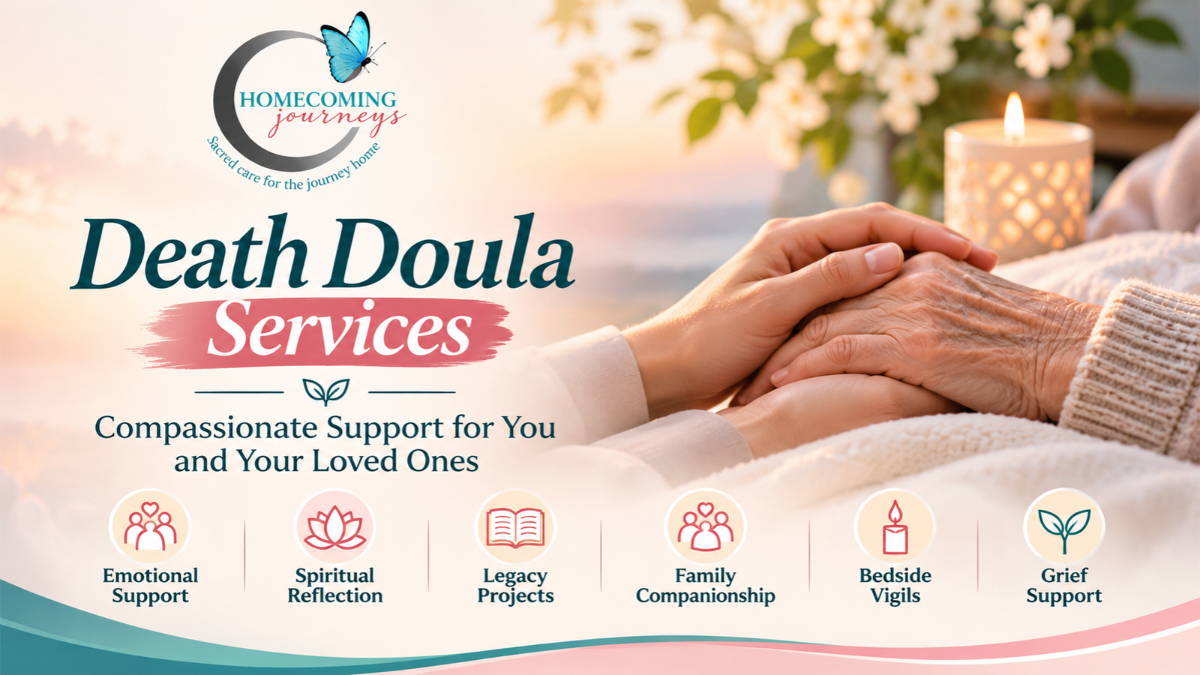
An EOLD can help open space for reflection, connection and care and can provide space for a conversation about the end of life. Homecoming Journeys isn’t about having to do everything right and think of all the right answers. This can include spiritual support, sitting by the bed, meaningful ritual, legacy projects, family support and talking about significance.
Frequently Asked Questions
Does an End of Life Doula Have to Be a Medical Professional?
No. An end of life doula is not a doctor, nurse, hospice or other health care worker, but can provide non-medical support.
When Do You Call on an End of Life Doula?
There’s no right time. Some seek support when they have been diagnosed with a major illness, some at the end of life or when family carers need additional support and company.
Can an End of Life Doula Support Family Members?
Yes. An EoLD Doula will listen, offer companionship, information and preparation, offer support to family members to facilitate meaningful discussion, respecting the wishes of the individual.
Compassionate Support Through Life’s Final Journey
A death of a loved one can cause grief, confusion, and anxiety for everyone. Losing someone we love can bring grief, confusion, and anxiety to all of us. Ending of life is a personal experience and should be treated with tenderness, respect and care. An end of life Doula can support and offer comfort, empathy, attentive listening and privacy for meaningful relationships.
Support for those and families who are going through this need not only be in the form of giving all the answers. It can be a matter of being there, of honouring wishes and of creating space for what is most important. Homecoming Journeys recognizes the need to take care of each other and offer personalized care. An end of life doula can assist individuals and families to feel accompanied in a tender way, with dignity, understanding and care as they go through this tender transition.