Going through a serious illness can be a difficult journey and leave you feeling uncertain, emotional and with many questions. There is also a need for persons and families to be given time to talk about, reflect on and be supported by medical treatment. A hospice doulas’ job is to offer (not medical) support to help individuals feel heard and supported during illness, in the process of dying and in the transition of loss.
Compassionate presence, spiritual reflection and respect for people’s values, relationships and wishes is the basis of care at Homecoming Journeys. Experiences are always unique and support is individualised to the needs of the person & family.
What Is A Hospice Doula?
A hospice doula is a companion in caring for the emotional, spiritual and practical aspects of the hospice and other systems of care. Doulas are not medical personnel, healthcare workers or doctors and nurses. They are called upon to assist others with their human experience when they are sick and dying.
Some wish to discuss their dreams and/or fears. Some may just want silence and peace, or assistance with engaging thoughts, or the opportunity to think. A hospice doula has room for these needs, without being threatening or judgemental.
This in addition to the care you are receiving from your doctor, nurse, hospice and other healthcare providers. It should not take the place of clinical care. A Hospice Doula can assist the person she cares for in a variety of ways such as:
- When you are sick it may bring up a lot of emotions – fear, sadness, thankfulness, not knowing, concern for others, etc.
- A Hospice Doula is someone who is non-judgemental, gentle, gentle and attends to the person as they share their experience.
Compassionate Listening And Emotional Support
Compassionate Listening and Emotional Support is the name of the group.This group is referred to as Compassionate Listening and Emotional Support. That’s something quite special when you don’t have to figure out what all the feelings are that are being listened to. A hospice doula facilitates conversations at the individual’s pace, and understands that sometimes there is no talking.
It is not in order to guide a person towards a certain act or thought. Reminds them that they are not alone and that they are seen.
Reflecting On And Making Meaning Of Religious Experiences
Reflecting on and making meaning of religious experiences.Reflection and meaning making of the spiritual. When they are ill, they might think about themselves, people they know, their religion, what they are doing and the purpose of life. Contemplative inquiry, mindfulness and prayer (when invited), quiet reflection are some examples of doula support. A person’s belief and preference make up his/her support. No particular religious or spiritual programme.
Honoring Personal Wishes
They may wish to discuss a topic they enjoy, with whom they would like to spend time, or how they would like to die. A hospice doula can facilitate the family members and care team to converse and discuss if appropriate.
Families can use these conversations to learn more about the person’s wishes, and to retain medical choices with the person and their healthcare providers.
Family and Caregiver Support
- Families/caregivers are well supported in the school.The school is highly supportive of the families/caregivers.
- Caregivers and/or family members of a seriously ill individual may become overwhelmed when caring for the individual.
- They could be stressed, in pain and confused.
- A hospice doula can provide families a safe place to discuss, reflect and share concerns.
- This can help to make communication easier between loved ones and allow them to spend time together.
Support can include:
- Attempting to feel the feelings and needs of family members.
- To assist in the thoughtful conversation preparation
- Celebrating times of togetherness and recollection
- Your foot is clear of the path the caregiver needs to walk, which will allow him/her to rest and express emotions.
- Discuss the ways in which they can show respect for the person and their life:
A hospice doula is not a substitute for family, caregivers and/or clinical staff. Rather, you are meant to be there to be a companion and offer support of the experience.
What Actions Are You Taking to Make Meaningful Moments and Rituals?
Big moments are in small moments in hospice. It is helpful to have familiar music, a favorite story, prayer, quiet presence, photographs or treasured objects to help create a comfortable atmosphere. A hospice doula can support the person or family in considering personal rituals that can help to communicate values, culture or spiritual perspectives. These activities may be quite basic and adaptable, and can mirror what is appropriate for the here and now.
A bedside vigil or reminiscing as a family may be appropriate for some. Others would prefer to avoid hearing and speaking. Emphasis is placed on respecting their choices.
Remembering the Past Through Writing
Remembering the past through writing is a way of commemorating it.Remembrance and Legacy go hand in hand with the legacy project. Stories and memories are significant aspects of an individual’s life. Legacy activities can offer an opportunity to connect, share love and meaningful messages.
A hospice doula can help with activities like:
- Writing notes or leaving a message for loved ones.
- Discussing experiences with the family/family history.
- Creating a memory book or keepsakes –
- Engaging with, and reflecting on, life experiences that have made a difference
- Passing on values, lessons or traditions
These activities are voluntary, and may not be done if preferred. These can be modified to accommodate the person’s energy, interests and readiness.
Grief And Emotional Care
Grief may start before the death and proceed following the loss of a loved one. Grief reactions can include grief, concerns/fears and altered family dynamics. A hospice doula can provide empathetic support, reflective dialogue and remembrance and personal rituals. This support can assist individuals to recognise their emotions and provide room for connection.
A hospice Doula can also serve as a reminder for people to seek professional advice if they need to for the mental health or bereavement care they need. Doula care is NOT counselling or clinical treatment.
At What Time Might Hospice Doula Support Be Beneficial?
A hospice doula can be beneficial for the person or family, who:
- Care in a hospice or in Palli Care.
- Seek to be emotionally, spiritually connected to others
- Says he or she wants to be helped to talk about his or her wishes for the end of life.
- Have difficulty with family relationships?
- Interest in creating a meaningful ritual and/or legacy project
- Thinking and feeling distressed by loss events which have not occurred
- Hope to ease an sense of loneliness when ill
Support can start at any point when an individual or family are prepared. A journey and there’s no right time there’s only one way to do it.
Hospice Doula Support At Homecoming Journeys
Hospice Doula Support is provided at Homecoming Journeys.Hospice Doula Support is offered at Homecoming Journeys.
Homecoming Journeys is a period of reflection and meditation, without a medical diagnosis of serious illness or death, or profound life questions of loss. Listening with empathy, reflecting on the spirit, open conversation and respecting the life of each individual.
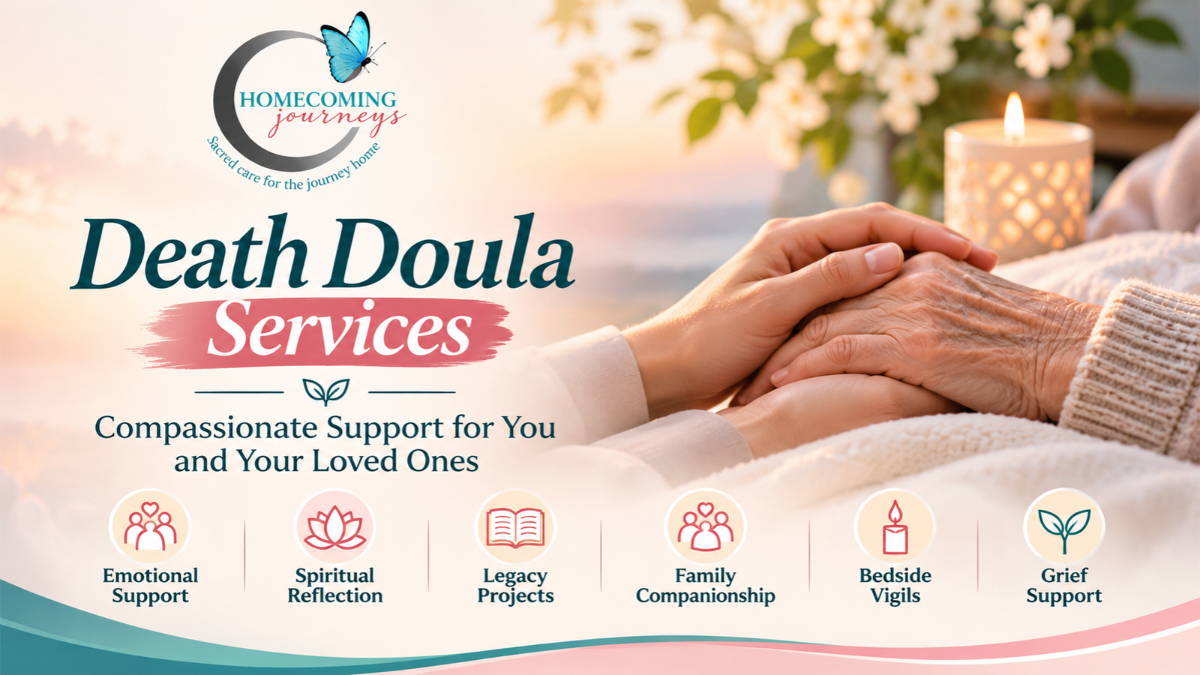
Hospice Doula Services provided by Homecoming Journeys are not a “cookie cutter” service. Support is customised to meet the person’s need and readiness, values, relationships and wishes. These may include spiritual support, being at the bed, family support, arranging for vigils, legacy activities and grief care.
It may be helpful to talk about this in a consultation, and determine if you have any support that you require. Care should be complementary to the hospice and health care services and is conceived to honor the person and those who love and care for the person.
Frequently Asked Questions
What does it mean to be a hospice “doula”?
A hospice doula is a nonmedical, emotional, spiritual and practical helper to the person providing end-of-life care who has a serious illness. Support involves listening, reflecting, talking with families, Legacy activities and personal rituals.
Can a Hospice Doula be a healthcare worker?
No. A Hospice Doula is not a doctor, nurse, hospice team or medical professional and is not able to provide medical care.
Are there family members that can be supported?
Yes. A hospice Doula will listen, reflect, communicate and do meaningful remembrance with the family members and caregiver(s).
A do it yourself “hospice”, to comfort a dying person, is religious?
May be spiritual, religious, secular or personal, depending on the one’s preference. A hospice doula respects the individual’s beliefs and does not impose a specific worldview on the individual.
Final Thoughts
Although the hospice journey can be complicated, with loving care, there may be opportunities for connection, reflection and connection. Respect the values and experiences of people and households in how they should be supported.
A hospice doula is someone who is nonjudgemental, non-punitive and can come to him/her and offer medical attention. Homecoming Journeys helps to create space for what’s most important through listening, spiritual reflection, family support and rituals, as well as legacy work.
This does not need to be done by yourself. Discussing it with someone can be a starting point towards getting support, understanding and bonding.